Some life stories don't follow a straight line. Ours certainly didn't. It went from a simple life in Germany, first to a corporate office in Hong Kong to a bush camp in Botswana, from managing safari lodges in Uganda to a dive site in Palau — and eventually, to a house at the beach on Sal, where we now run two rental villas and call this Atlantic island home.
This is the story of how we got here. It's not a typical travel blog post. It's the context behind everything we write about on this site — and if you've ever wondered what it actually takes to leave a well-paid life behind and go all in on something different, keep reading.
Hong Kong: The Life That Looked Perfect From the Outside
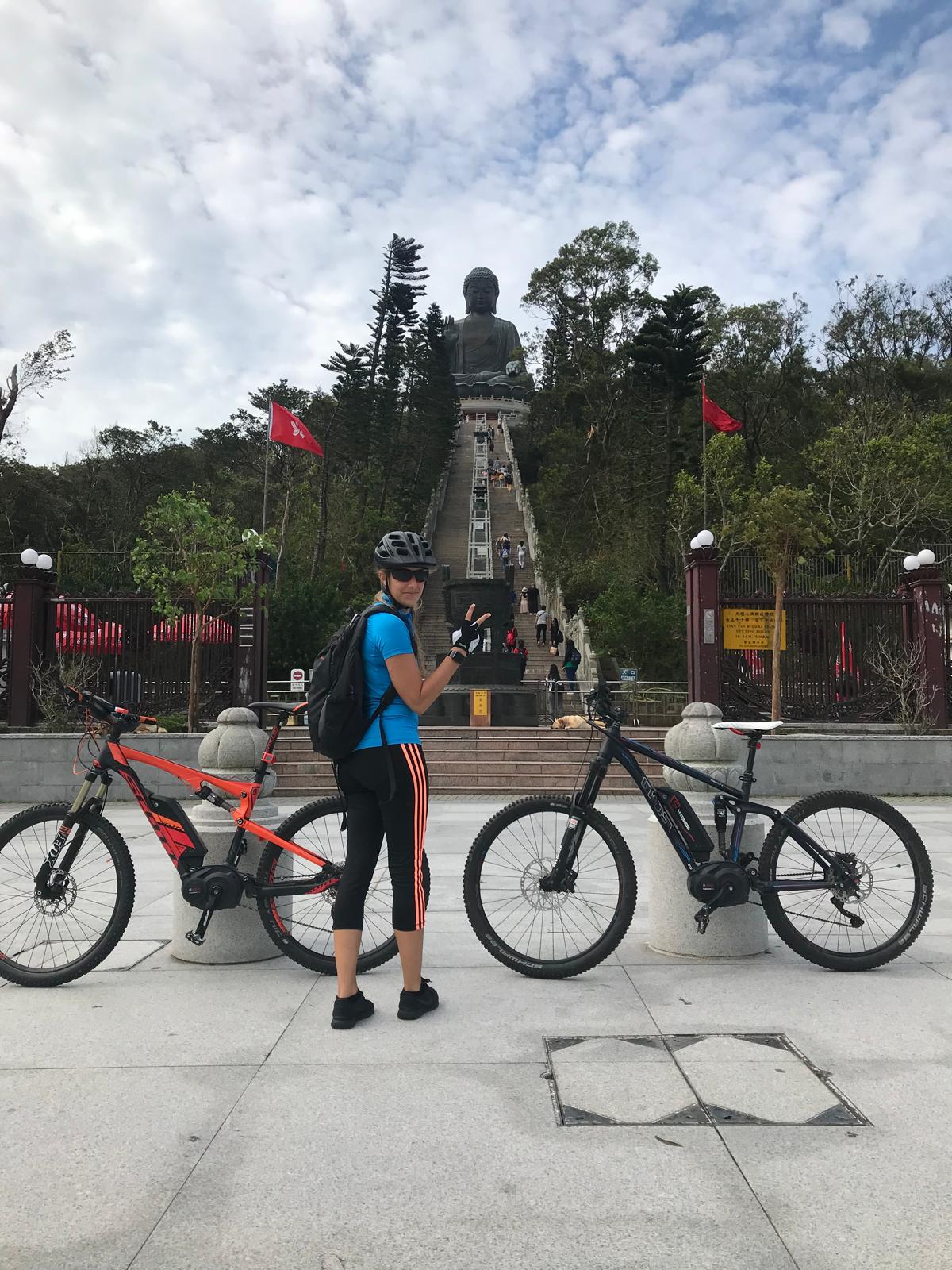
For several years, we, Chrissy and Ralf worked in Hong Kong in the corporate automotive industry. The city has an energy that's hard to describe until you've lived it — a place that never really slows down, where deals close at midnight and the harbour lights make the skyline look like it was designed to impress.
Hong Kong is one of the world's great expat cities. The international community is enormous, the restaurant scene is exceptional, and there's a social life that can swallow your entire weekends if you let it. For ambitious professionals in their 30s, it ticks a lot of boxes.
But we were never quite standard expats. While most colleagues lived in high-rise apartments on Hong Kong Island or in Kowloon, we chose to live on Peng Chau — a small, car-free island in the outer harbour with a population of a few thousand people only. Every morning, we commuted to the office by ferry. It added time to the day, but it also added something else: a bit of distance, quite literally, from the relentless pace of the city. Peng Chau felt like the real Hong Kong that most expats never discover — local wet markets, narrow lanes, fishing boats, and neighbours who actually knew your name.
Even so, the corporate world kept us busy. And whenever we got a few days free, we got on a plane.
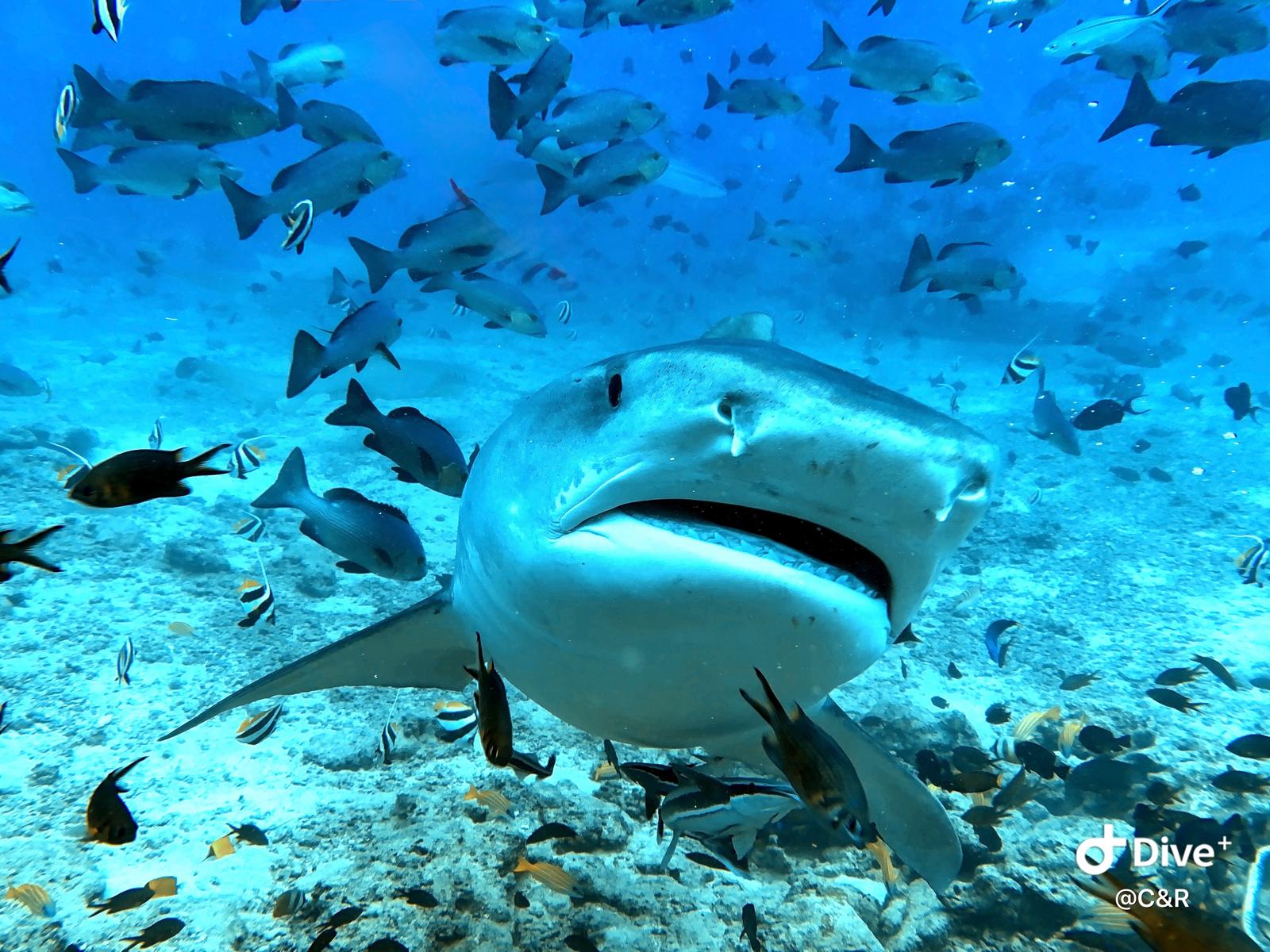
Diving the World on Every Long Weekend
Living in Hong Kong put us within a few hours of some of the best dive sites on the planet, and we made full use of that. Sipadan Island in Malaysian Borneo, consistently ranked among the world's top dive destinations, was on the list. Palau — a destination serious divers spend years planning for — we just went for a Christmas trip. Layang Layang, an atoll in the South China Sea known for hammerhead sharks and near-total remoteness, was another stop. We dived various spots across the Philippines more times than we can easily count, always chasing something new: different currents, different marine life, different walls dropping into the blue.
In between the dive trips, we explored Southeast Asia more broadly — wherever we could get to within a long weekend or a week of annual leave.
It was during one of those trips to the Philippines that we got married. Our wedding wasn't a small affair — guests came in from across the world, from Germany, Asia, the US, and beyond. It was exactly the kind of party you'd imagine two people who'd spent years collecting stamps in their passports would throw. We had the time of our lives.
But even then, somewhere in the background, a different kind of adventure was taking shape.
The Idea That Wouldn't Go Away
Africa has a way of staying with people. For Ralf, it wasn't abstract — he had lived in South Africa back in 2008 and 2009 for an internship, and the country had left a mark. That mix of raw wilderness, vast open space, and road tracks that stretch to the horizon without another vehicle in sight is not something you easily forget.
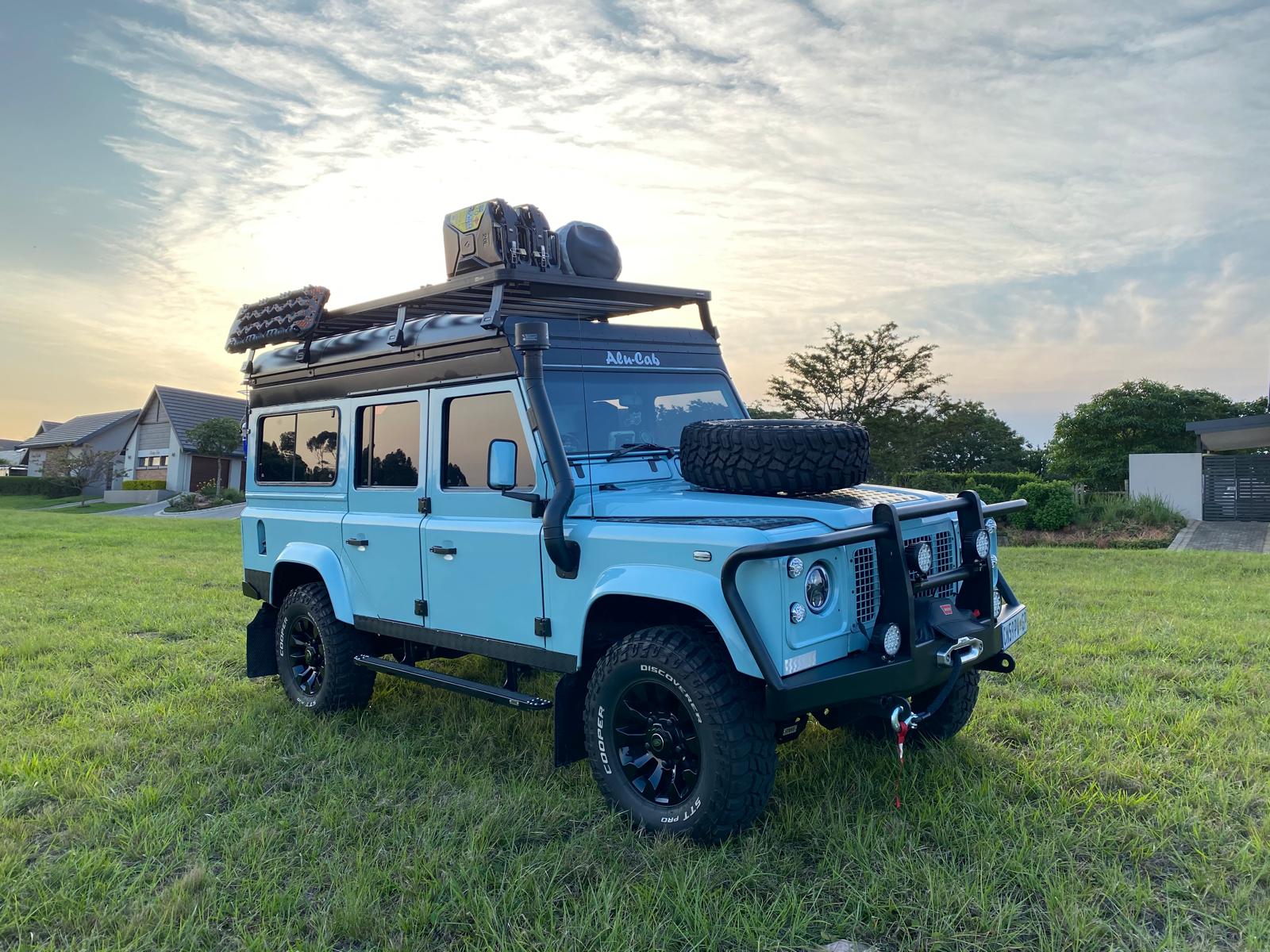
For years, the idea of overlanding Africa — buying a proper expedition vehicle, building it out, and driving through the continent for months — lived in the background. It was one of those dreams that stays on a shelf until the right moment.
The moment arrived when our company decided to move its headquarters to Japan. Both of us received a decent financial redundancy package — the kind that doesn't come along often, and that most people use to buy a safer car or renovate a kitchen. We looked at each other and made a different decision.
Choosing the Right Vehicle — and Why We Went Old
South Africa was the logical starting point. We knew the country, we had contacts there, and it's one of the best places in the world to buy and build an overlanding vehicle. The Defender had always been the plan — it's the icon of African travel for good reason — but the question was which one.
Initially, we looked at newer models. More comfort, more features, better fuel economy. But after talking to several experienced mechanics and overlanders in South Africa, the advice was consistent and clear: go old, go simple.
A modern vehicle is full of electronics — sensors, control units, modules that a bush mechanic in rural Zambia cannot diagnose or fix. An older mechanical diesel, by contrast, can be repaired by anyone with basic tools and a decent understanding of engines. The fewer electronic components, the fewer things that can fail in places where a recovery truck is three days away.
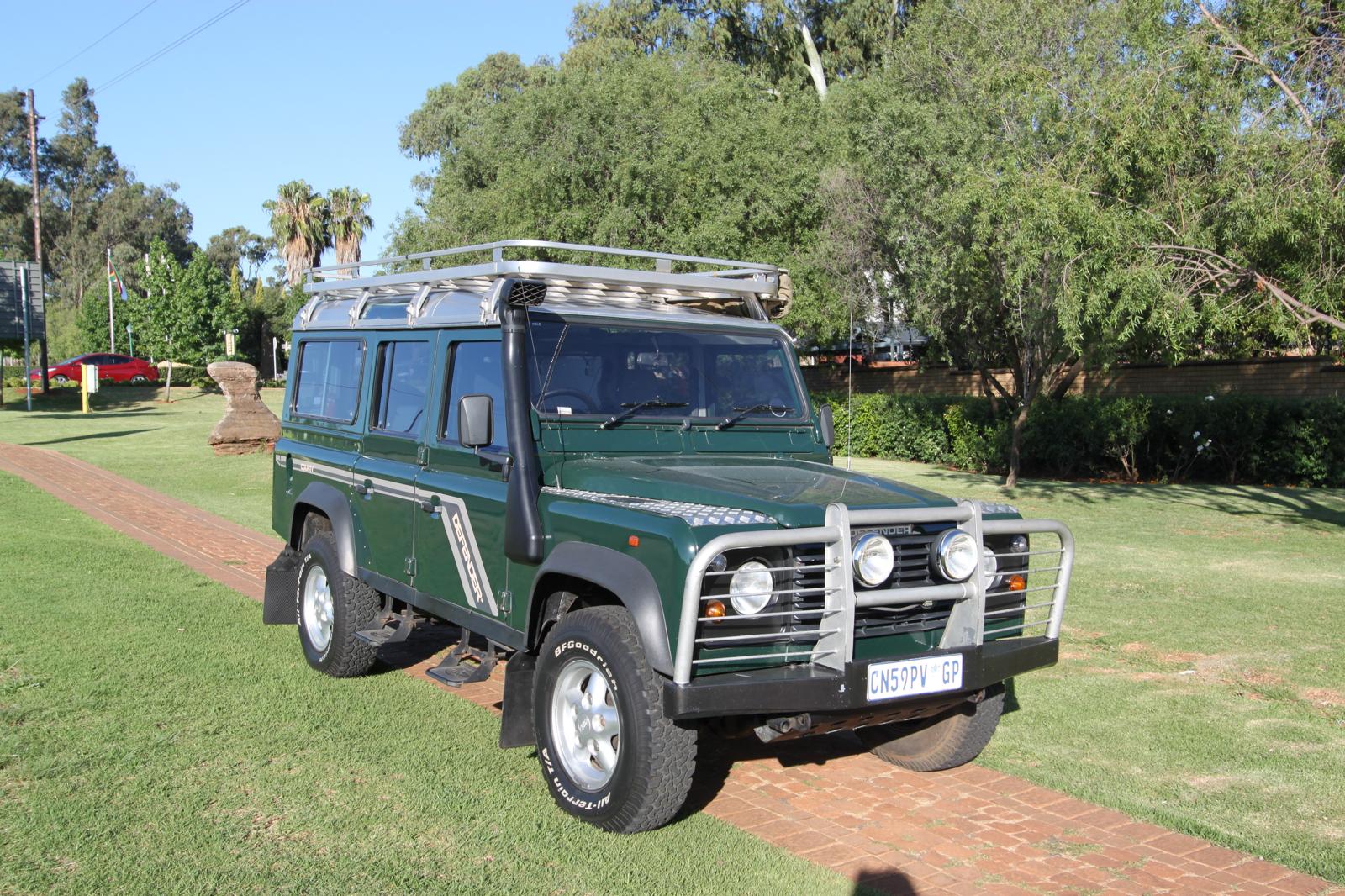
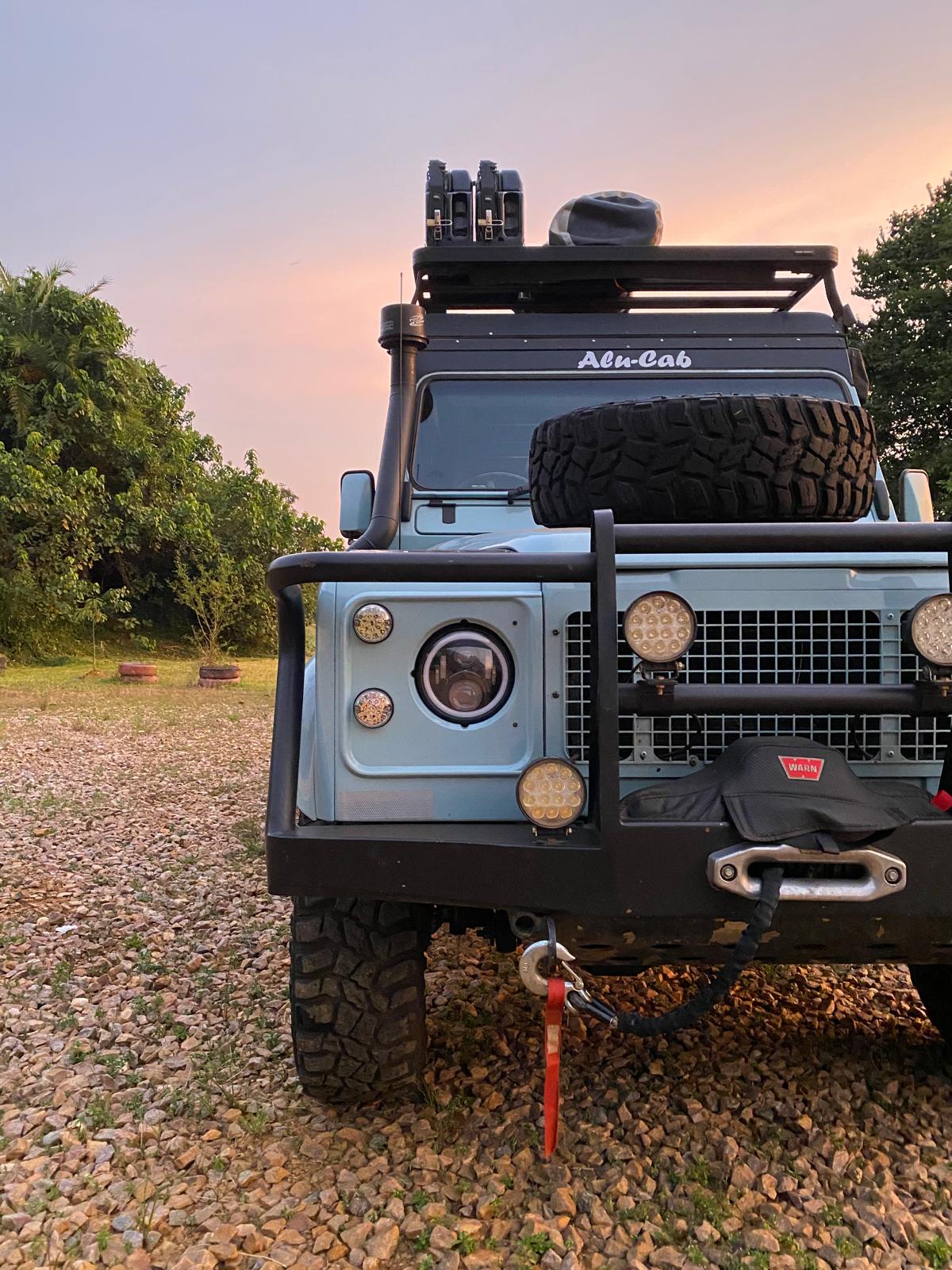
We found our vehicle and named her Ntombi: a 1997 Land Rover Defender TDI. Old, yes. But solid, honest, and in good condition. We bought her roughly six months before our planned departure, which gave us time to build it into exactly what we needed.
Building the Defender: A Project in Its Own Right
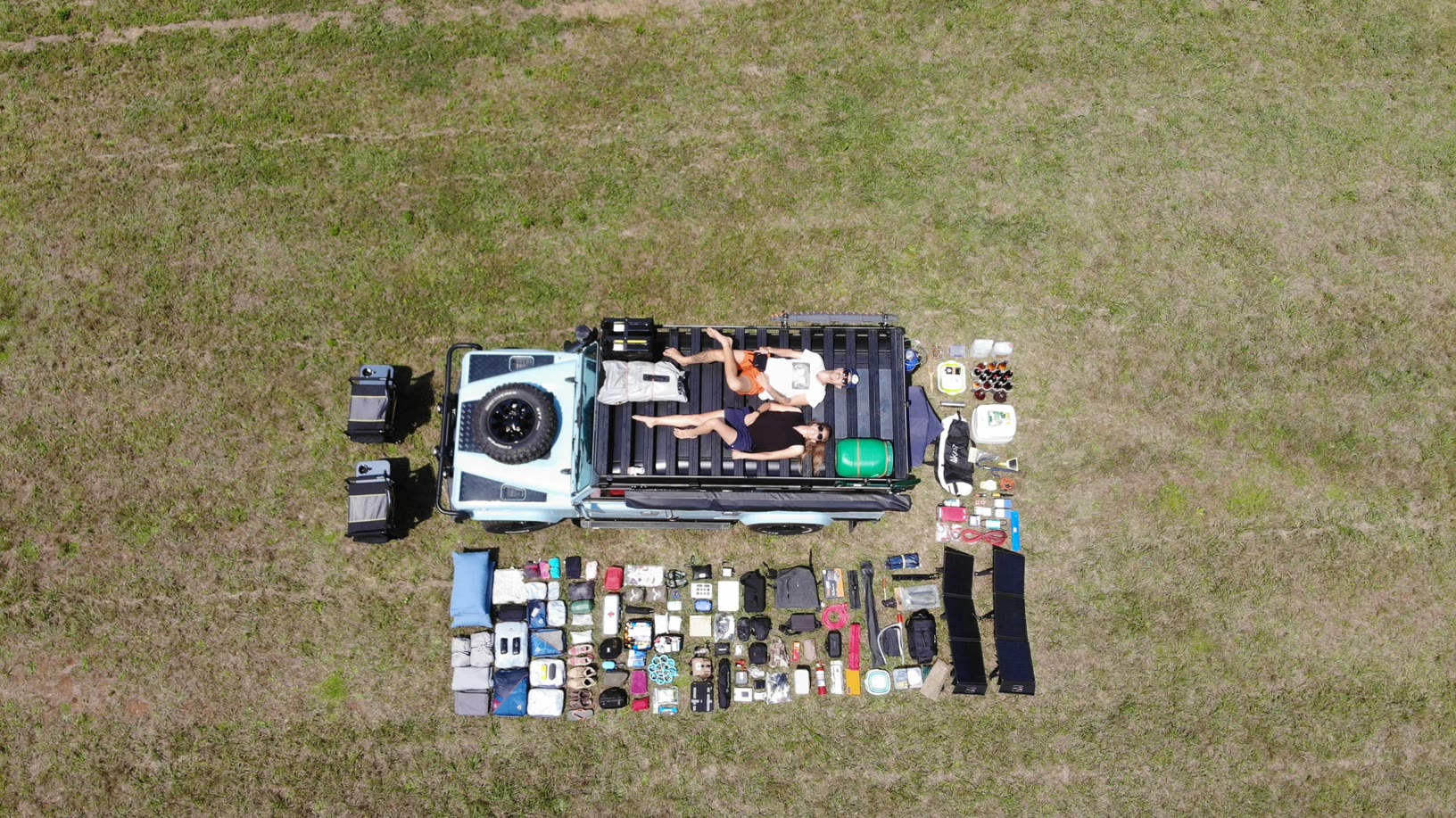
The build was one of the most satisfying projects either of us had taken on. With a background in the automotive industry and two people who took project management seriously, we approached it the same way we would any major brief: clear objectives, defined budget, no compromises on the things that mattered most.
We set ourselves firm budget limits — both for the vehicle build and for the overall trip. What we didn't set was a time limit. The plan was simple: we travel until one of us genuinely doesn't want to continue, or until the budget runs out. No return flights booked. No end date pencilled in anywhere.
The Defender was built out with a strong emphasis on self-sufficiency and what we'd describe as a modest wow factor — the kind of setup that turns heads at a campsite, but that could also be fixed with a spanner and an afternoon if something went wrong. We'll cover the full build in a dedicated post, because it deserves that kind of space.
Two Years, Eight Countries, One Defender
We had a rough route sketched out, but we gave ourselves full permission to change it. If we loved a place, we stayed. If a track looked interesting, we took it. If someone at a campfire mentioned a waterhole or a border crossing worth making a detour for, we considered it.
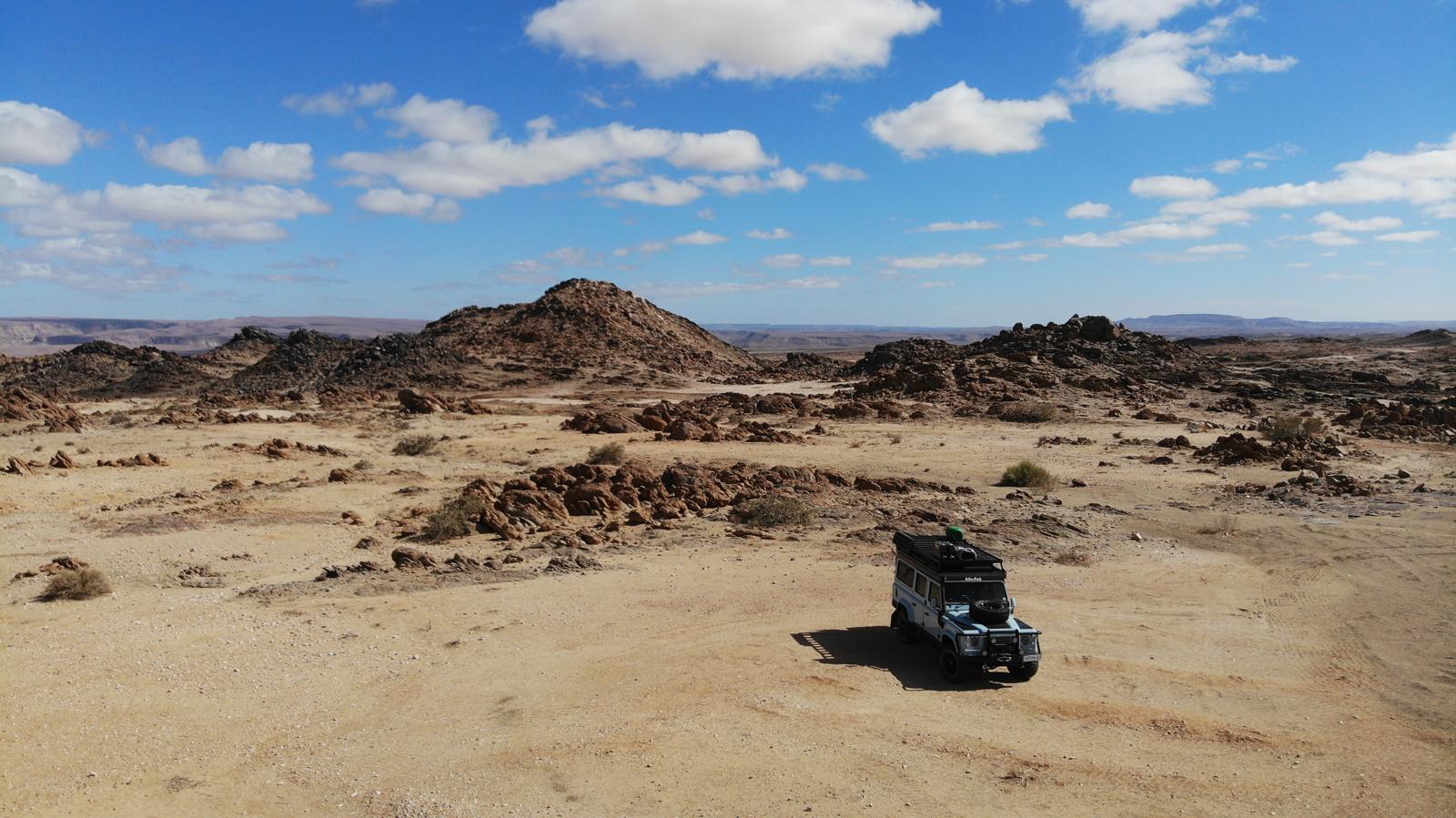
The route we ended up driving took us through South Africa, Namibia, Botswana, Zambia, Tanzania, Uganda, Kenya, and Malawi. Just over two years on the road. Dirt tracks, border crossings with a lot of waiting, sunsets over pans and savannah, wild camps with no other vehicle in sight for miles, and more than a few moments that tested us — the vehicle, our nerves, and occasionally our relationship.
We'll write about each country and each significant leg of the journey in separate posts, because trying to compress two years into a few paragraphs would do it no justice. What we can say here is that it delivered everything we had hoped for, and quite a few things we hadn't expected.
The trip came to a natural close when one of our closest friends — who had moved to Japan from Hong Kong — flew out to South Africa to spend Christmas and New Year with us. For the first time in two years, we had a fixed point on the calendar: we needed to be somewhere specific at a specific time. We had enough budget left to make choices, and we started asking ourselves, seriously, what came next.
Thailand, Job Applications, and a Different Answer
We spent two months in Thailand while we figured it out. The corporate world was one option — but it was the height of post-Covid caution, and companies were hesitant to hire people who weren't already physically present in the country they were hiring for. Europe felt like a step backward. Asia and the Middle East were appealing, but nothing clicked in the right way.
So we made a different call: build something of our own that could be run from anywhere.
Back to Germany we went, briefly, to get a business officially founded and to start thinking about where to base ourselves. The checklist was practical: good weather year-round, reasonable infrastructure, a manageable time zone difference from Europe where we expected our first clients to come from, and a visa situation that wouldn't require yearly bureaucratic marathons.
We started researching Cape Verde.
The Recky Trip That Changed Everything
Cape Verde had been on our radar but not on our list. We decided to go and see it properly before making any decisions — a recky trip, the kind of recon approach we'd learned to trust after years of making travel decisions based on real information rather than website photos.
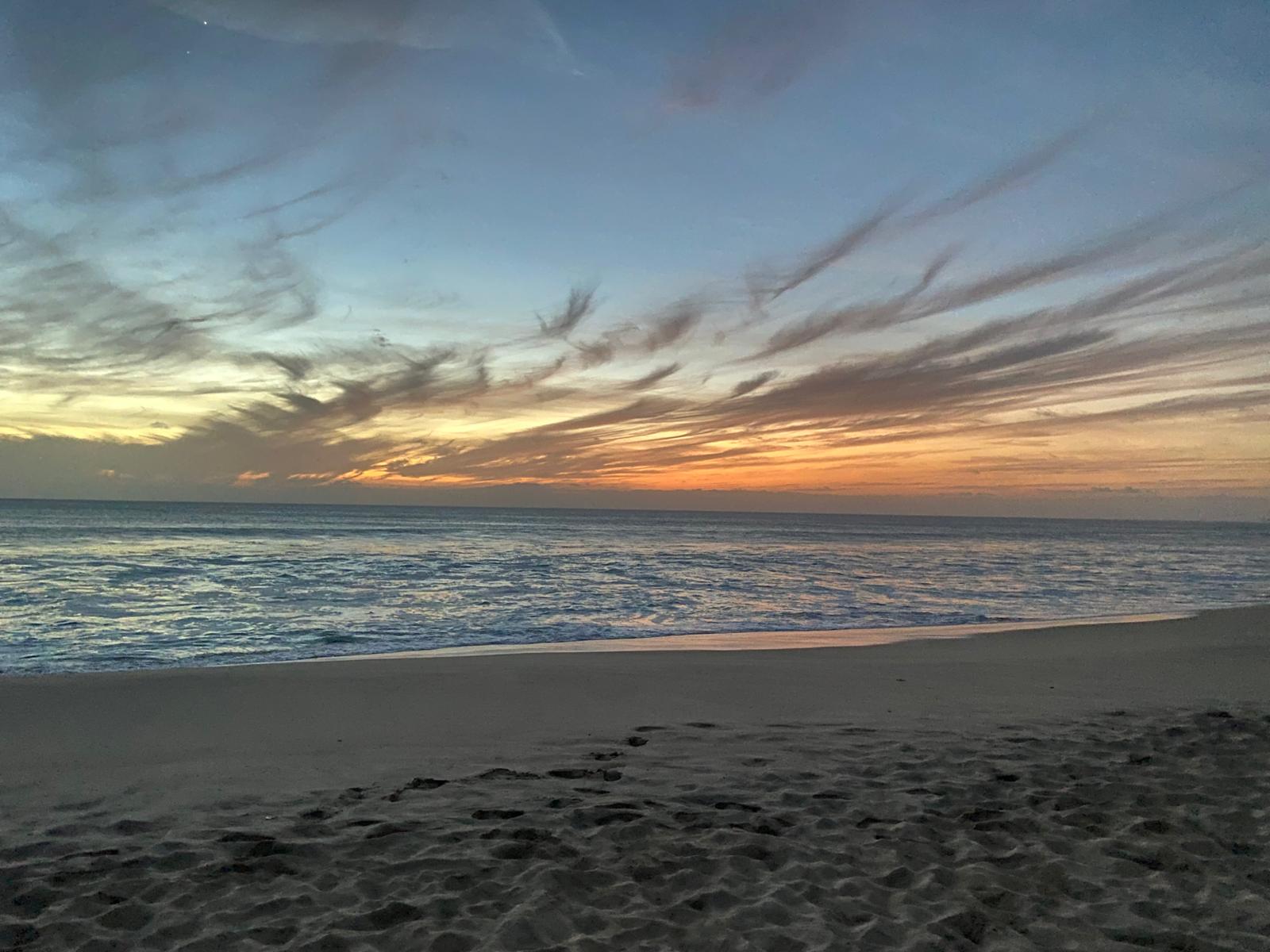
Sal Island was the one that kept coming up. It had the infrastructure, the weather (sunshine for most of the year, reliable trade winds off the Atlantic), a small but growing international community, and a pace of life that felt like the right antidote to the years of corporate intensity.
We found a house at the beach in Palmeira. We bought it.
That was the decision that turned into  — two rental villas, a webcam looking out over the Atlantic, and a neighbourhood where we're as close to the ocean as we were to the water on Peng Chau all those years ago, just with better weather and a lot more space.
Why We Write About This
We started this blog because we have stories worth telling and knowledge worth sharing. Whether you're planning your first overland trip through Southern Africa, thinking about building an Overlander, or wondering whether Cape Verde could be the place for your next adventure holiday — or even your next chapter — we've been through versions of all of those questions ourselves.
Everything we write here is based on what we've actually done, seen, and lived. No invented routes. No gear reviews for equipment we haven't used. No glossy version of a trip that was, in reality, equal parts extraordinary and hard.
Just honest stories from the road — and from the island where the road eventually brought us