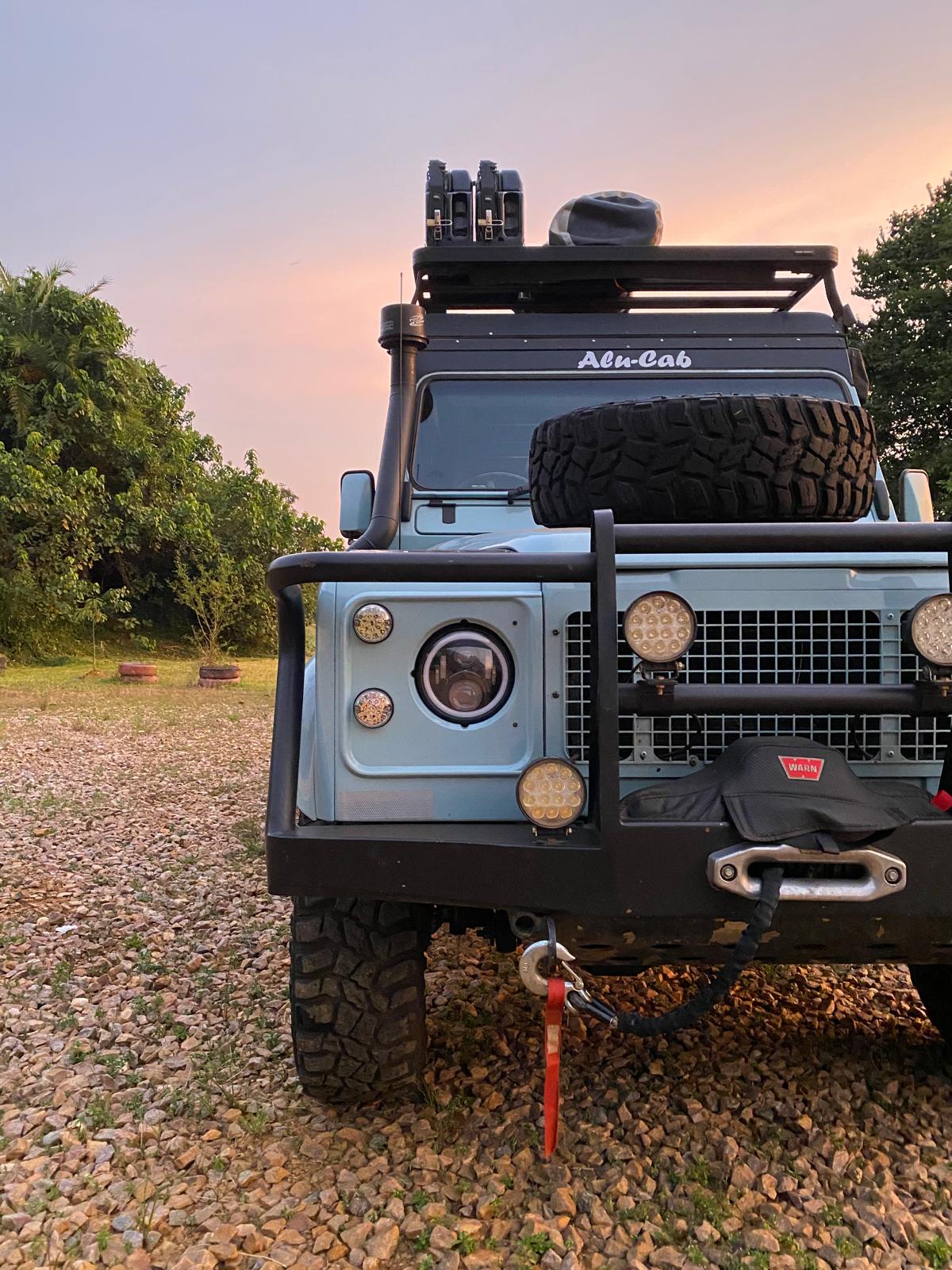
Building an expedition vehicle for a multi-year Africa overland is not something you do in a weekend. It's a project that takes months of planning, a network of trusted people on the ground, and the willingness to make a lot of decisions without the luxury of time. This is how we built Ntombi — our 1997 Land Rover Defender TDI — into the vehicle that carried us through eight countries over more than two years.
Why a Defender — and Why Not a Land Cruiser
The age-old overlander debate. Here's where we landed, and why — though we'll give the Cruiser its proper hearing in a separate post.
Before we get into the build itself, a quick word on the vehicle choice. The Defender vs. Land Cruiser debate is one of the great discussions of the overlanding world, and both vehicles have earned their reputations the hard way. We'll write a proper comparison post later. For us, the decision was personal before it was practical.
We've always loved Defenders. Ralf had owned one back in Germany — a 90 — that he could never quite bring himself to sell. That car eventually got shipped to friends in Zambia rather than listed for sale, which probably tells you everything about the emotional pull a Defender can have on its owner. The 90 was too small for a full expedition setup, which is why we needed to start fresh with a 110. But the DNA of the vehicle choice was already decided long before we started looking at listings.
The Search: Johannesburg, Durban, and Gumtree at Midnight
How we found our car — the compromises we made, the criteria we changed, and the evening that made the decision.
In September and October 2019, we started the remote search for a Defender 110. The plan was to depart on our Africa overland in April 2020, which gave us a realistic but not generous timeline for finding a car, getting it converted, and shipping it or collecting it. Our go-to platform was Gumtree South Africa — the country's most active classifieds market for used vehicles — and we had a contact on the ground who could do preliminary mechanical checks before we flew down.
Initially, we were targeting something newer: a Defender 110 from 2008 onwards. Better interior, slightly more refinement, and in theory less that could be worn out. We had a few cars checked remotely and they looked promising enough to justify a trip to South Africa in November 2019 — one week for Chrissy, two for Ralf, with the extra week reserved for meeting suppliers, planning the conversion in detail, and getting everything organised on the ground.
We landed in Johannesburg. A mechanic picked us up at the airport and we went straight to the first dealerships. We looked at several cars over two days — a couple of which were genuinely good vehicles. But nothing clicked. Not in the gut-feeling way that a decision like this needs to click when you're about to live in a vehicle for an open-ended period.
After two days without a decision, we flew to Durban. We had a network there, and Durban was going to be the base for the conversion regardless of where we found the car. Losing more time in Jo'burg didn't make sense.
In Durban, a conversation with several experienced overlanders and mechanics changed our thinking on the spec. The advice was consistent: stop looking at newer Defenders and go older. A post-2008 Defender has significantly more electronics — sensors, modules, control units — that are difficult or impossible to diagnose and repair in the field. A bush mechanic in rural Zambia can fix a mechanical diesel. He cannot plug in a laptop to diagnose an ECU fault three hundred kilometres from the nearest town. The fewer electronic components, the shorter and simpler the spare parts list, and the more likely you are to find someone who can help you if things go wrong.
We updated our criteria. Now we were looking for a TDI — the older, naturally aspirated diesel engine with minimal electronics. Suddenly the asking prices dropped considerably, but the budget for the conversion would need to go up to bring the older car to the standard we needed.
And then one evening, sitting at a friend's place in Durban, glasses of whisky in hand — a well-established evening ritual in South Africa — Chrissy found the car.
Ntombi: One Owner, Under 200,000 km, Found on a Thursday Evening
The car that stopped the search — not the prettiest, but full of the right kind of potential.
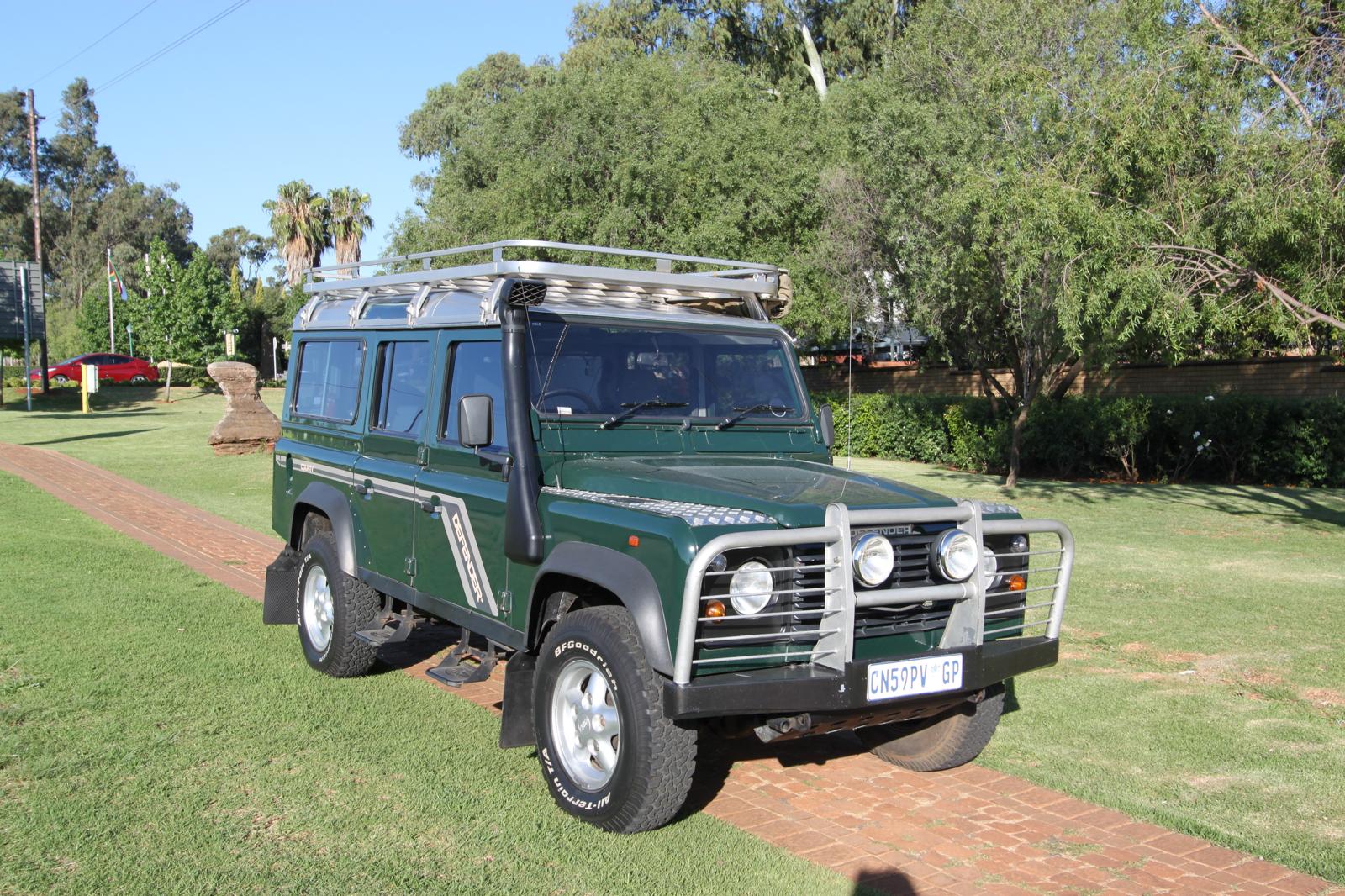
A 1997 Land Rover Defender 110 TDI. Less than 200,000 kilometres on the clock. One owner from new. It wasn't a looker from the listing photos — the paint and especially the interior had lived a life — but the details in the ad told a different story. It already had an extended range fuel tank, a water tank, and a basic camping equipment base. Someone had bought this car with adventure in mind, and it had been looked after rather than abused.
There was only one problem. The car was in Johannesburg.
The mechanic we'd been working with drove out to inspect it. Green light on the mechanical condition. We booked flights back to Jo'burg, bought the car, and Chrissy flew home to Hong Kong. Ralf drove the Defender from Johannesburg to Durban with a friend — the car's first proper road run under new ownership — and that was the moment the project began in earnest.
We named her Ntombi. In Zulu and Xhosa, the languages spoken across much of South Africa, ntombi means "girl" or "young woman" — and in some interpretations, "princess." For a vehicle that was about to become our home, the name fit perfectly. She had character before we'd spent a day with her. She just needed some work to show it.
The Build Team: Three Specialists, One Vision
Who built Ntombi, how the work was split between them, and why the right network matters as much as the right budget.
The conversion was handled by three specialists, each brought in for what they did best.
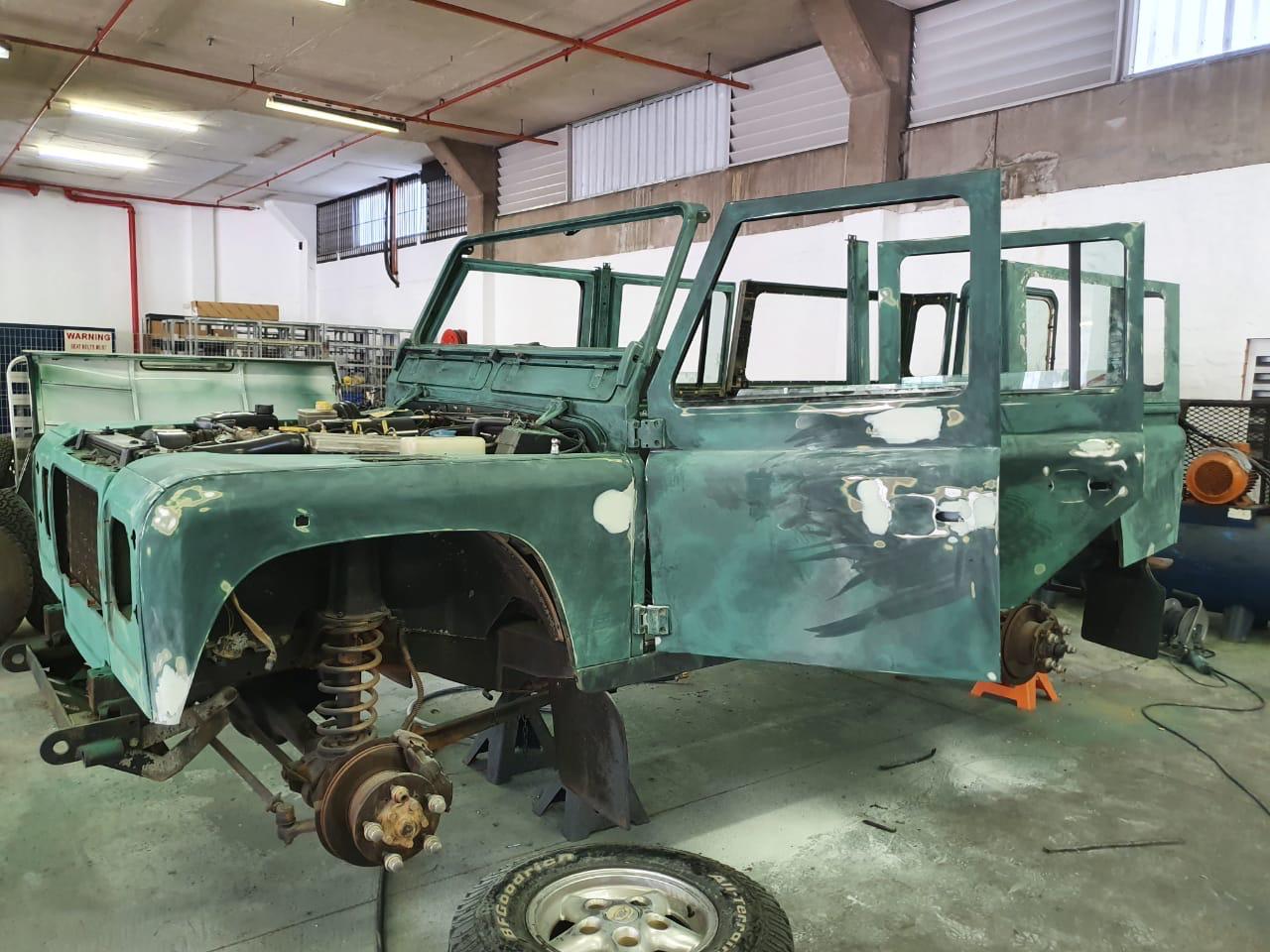
R2R Workshops was the first stop. A specialist in trucks and commercial vehicles, they had their own spray booth and full workshop capability for structural and mechanical work. The car went there first: stripped back, assessed, and prepared as the base for everything that would follow.
4x4 Megaworld in Durban was where the major equipment conversation had already started. Ralf had been in contact with them for months before the trip, and their reputation is well-earned — they are one of South Africa's leading outlets for serious overlanding equipment, carrying ARB, Old Man Emu suspension, AluCab, Front Runner (now Dometic), and Engel fridges among others. The team there was genuinely helpful from day one, not just in selling equipment but in thinking through what the build actually needed for two people on an open-ended African overland.
The third supplier was a conversion specialist from within R2R's network — a company that builds police vehicles, ambulances, and high-end custom conversions. They were brought in for what no off-the-shelf product could solve: the interior.
The AluCab Icarus: The Roof That Changed Everything
Why we chose a pop-up roof conversion over a standard roof tent — and what it actually means to live in one.
One of the first major decisions in the build was the sleeping solution. The AluCab Icarus pop-up roof conversion was the choice that shaped everything else about the interior design.
The Icarus is not a roof tent. It is a full roof replacement — the original Defender roof is removed, and the Icarus unit is mounted in its place. When deployed, it raises on gas-pressure springs to create standing headroom of up to 2.8 metres inside the vehicle. The sleeping area is accessed from inside the car, not via an external ladder, which matters more than it sounds when it's 2am and raining in the Ugandan bush. The bed is 237 cm long and 125 cm wide — more than adequate for two people — and the unit features integrated mosquito nets, ventilation openings, and insulation built into the structure.
AluCab manufactures the Icarus in Cape Town, which meant lead times needed to be factored into the plan from day one. The roof is made from 2mm aluminium, uses a 400g UV-resistant Rib-Lock waterproof canvas, and adds a net weight of approximately 70kg once the original roof is removed — comparable to, or often lighter than, a standard roof tent on crossbars. The Icarus has been available as a kit for Defender 110s from 1984.
We will dedicate a full post to the Icarus — the installation process, what it's like to live with it day to day, and what we'd consider before making the same choice again. But in the context of the overall build, it was the single piece of equipment that defined the character of the vehicle most clearly.

The Interior: Aluminium Cabinets, Wooden Finishes, and Built to a Design
A custom interior made to order — and why it was worth every rand.
While the roof was being manufactured in Cape Town, Ralf designed the interior. The brief was practical storage combined with a finish that felt considered rather than purely functional — aluminium-framed cabinets with wooden surfaces. Not the kind of setup you'd see in most overlanders, but closer in quality to what the conversion specialists were used to building in their luxury campervans.
The custom conversion team took the design and executed it exactly as drawn. Separate posts will cover the bush kitchen setup and the fridge installation (we ran Engel fridges, which earned their reputation on this trip and several times over) — but the foundation of the interior was this custom cabinetry work.
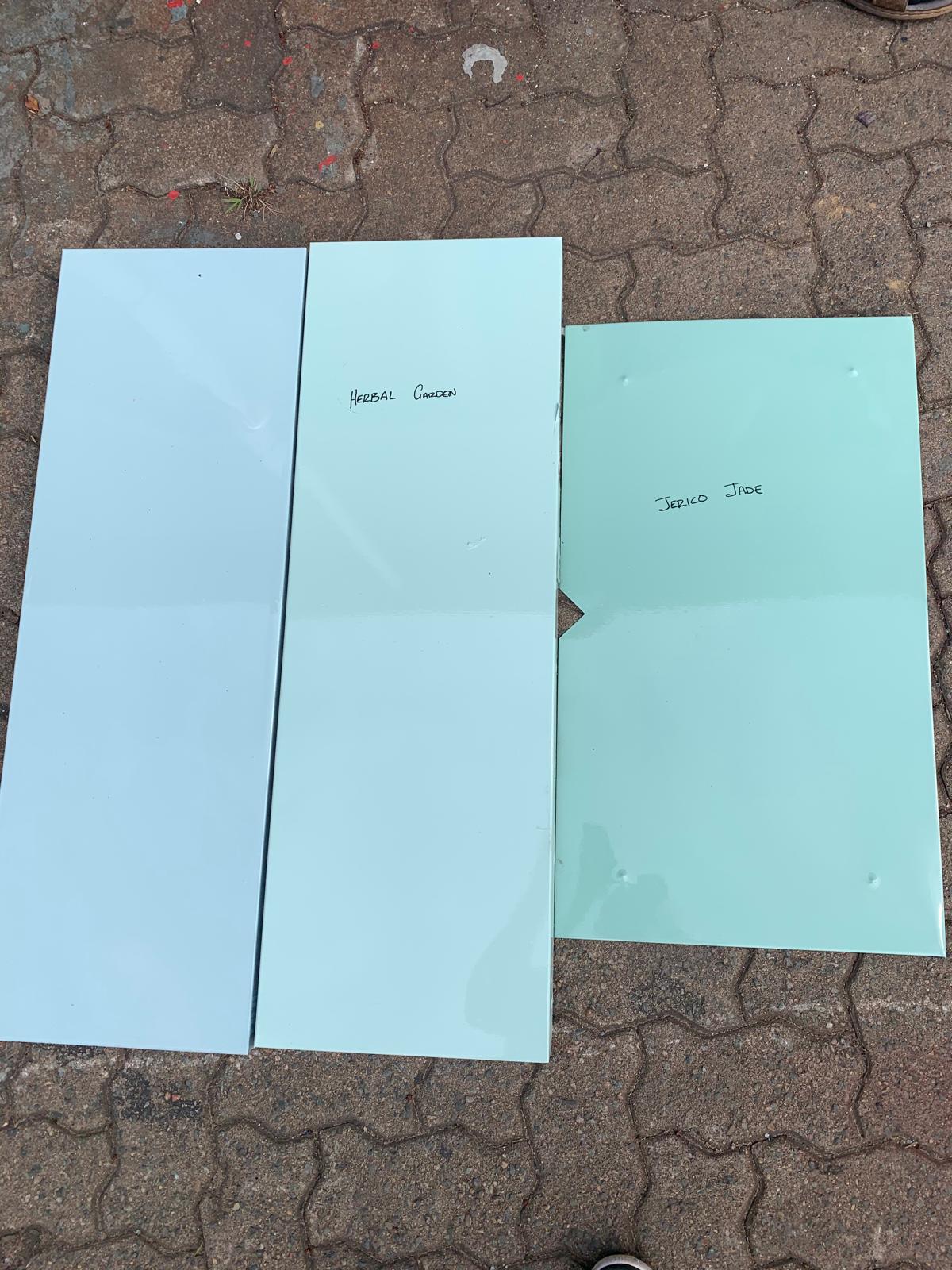
Choosing Ntombi's Colour: A Decision Made Over Many Video Calls
How two people on opposite sides of the world choose a paint colour for a 1997 Land Rover.
Chrissy was already back in Hong Kong by the time the paint decision needed to be made. What followed was a series of video calls and paint sample tests that could generously be called thorough.
The brief was clear: a colour that stood out against the African bush — something with contrast and presence — but that was also forgiving with scratches, inevitable on any vehicle spending extended time on rough tracks. The final colour was a custom mix that we settled on after several rounds of testing on sample panels. It gave Ntombi her identity as clearly as her name did.
After paint, it was back to 4x4 Megaworld for the suspension work. We ran Old Man Emu — the same brand 4x4 Megaworld had specified as their preferred suspension supplier for years — tuned and matched for the loaded weight of a fully equipped expedition vehicle. A dedicated post will cover the suspension setup in detail.
March 2020: Almost Ready — Then the World Stopped
The COVID lockdown, the scramble to get as close to Ntombi as possible, and the seven months that tested every bit of patience we had.
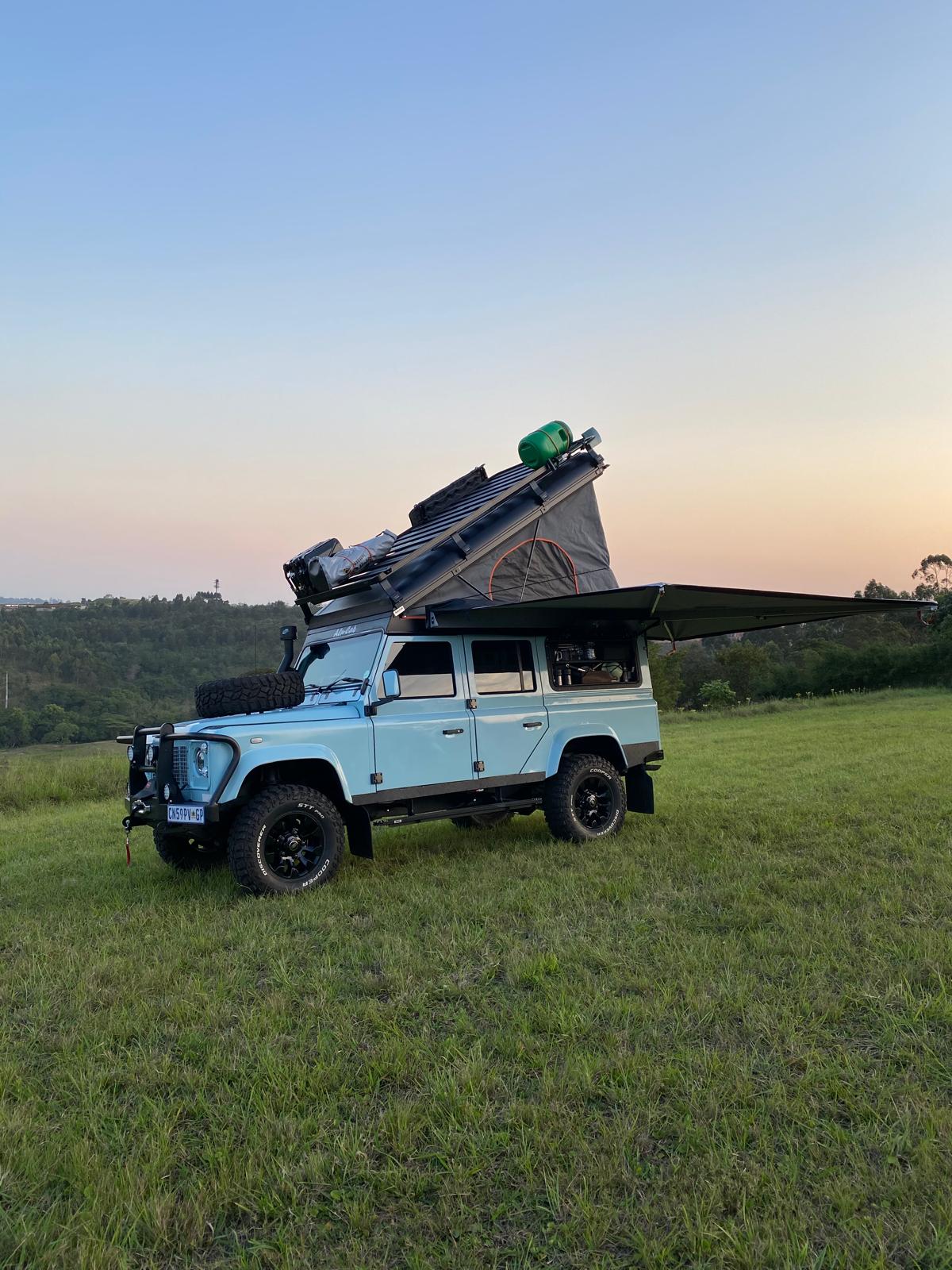
By March 2020, Ntombi was nearly complete. The AluCab Icarus roof was installed. The interior cabinetry was finished. The mechanical and paint work was done. The gullwing window was in. The Engel fridges were mounted. The bush kitchen and final flooring were still outstanding — but she was close. April 2020 still looked achievable.
Then South Africa went into COVID lockdown.
We had flights already booked from Hong Kong to Johannesburg — with a stopover in Germany to see friends and family — and a decision to make fast, before country after country started closing borders. The last place either of us wanted to be stuck was Hong Kong or Germany with Ntombi sitting in a workshop in Durban.
The thinking was simple: get as close to the car as possible, then figure out the rest. We had friends in Zambia. Zambia it was.
What followed were probably the most expensive flights we have ever booked privately. The route went Hong Kong to Bangkok, Bangkok to Addis Ababa — and while we sat in Addis, we watched flight after flight to different destination all over the globe get cancelled as more countries announced lockdowns. Eventually our routing from Addis to Zimbabwe, which was already closed to tourists but allowed transit, and from there to Lusaka was announced and we could board. Arrived in Zambia friends had organised a vehicle and — as it turned out — what we will always remember as the finest quarantine location imaginable. That story deserves its own post.
It took seven months before we could finally get to South Africa, complete the build, and start the trip we had been planning for over a year.
What the Build Taught Us
The process of finding, buying, and converting Ntombi taught us more than we expected about what an expedition vehicle actually needs to be. The budget discipline worked — we stayed within the numbers we had set for both the vehicle and the build, despite going significantly further on the conversion than originally planned. The team we worked with in Durban — R2R, 4x4 Megaworld, and the conversion specialists — delivered work that held up across 8 countries and more than two years of real use.
The choice to go older and simpler proved itself dozens of times over. Not because the car was perfect — no 1997 Defender is — but because when things needed attention, we could deal with them. That matters more than any amount of onboard technology when you're a long way from anywhere.
Ntombi was not the prettiest car in the listings when Chrissy found her on a Thursday evening in Durban. But she turned out to be exactly the right one and after the conversion the looker she is till today.
Coming next in the build series: Recovery Gear and Vehicle Protection on a Two-Year Africa Overland: What We Carried, What We Used, and What Saved Us