Recovery gear is the category of overlanding equipment where honest experience matters most. Everyone has a list of what they carry. Far fewer people have actually used all of it — and fewer still have been in the situations where it mattered whether the kit was premium quality or a budget compromise. After 45,000 kilometres through eight countries, across sand, mud, gravel, rocks, and salt roads, this is an honest account of what we carried, what we used, when things worked, and when nothing did.
We'll also cover vehicle protection in this post — because the best recovery is the one you never need, and a well-protected vehicle spends far less time in dangerous situations than an unprotected one.
The Warn Zeon 10-S Winch
Covered in full in a dedicated post — but it starts here because it anchors the whole recovery philosophy.
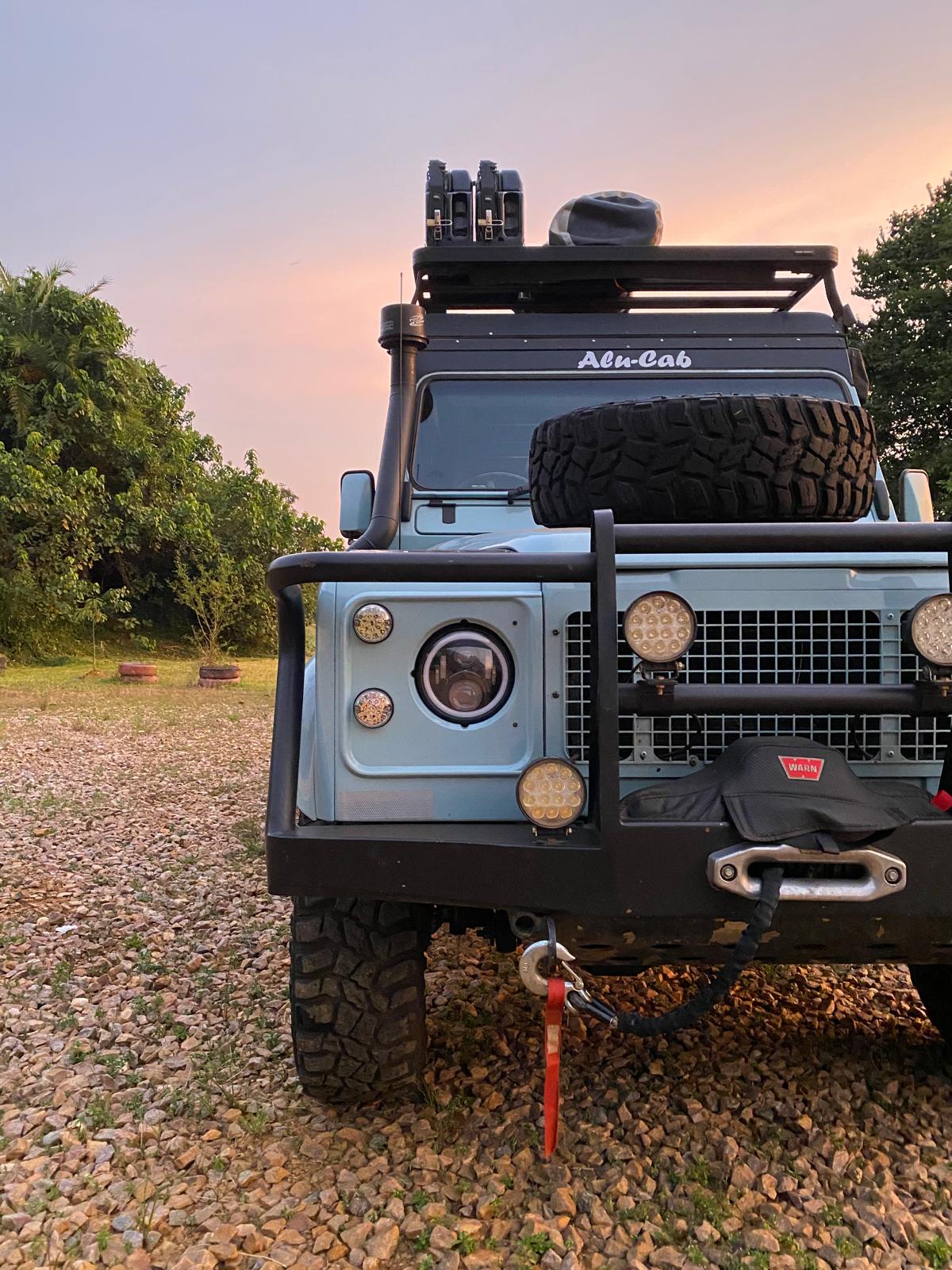
The Warn Zeon 10-S with Spydura synthetic rope was the most significant single piece of recovery equipment on Ntombi. We've dedicated a full post to it — the research process, why synthetic rope, how we sourced it from China before it was available in South Africa, and the custom bullbar built around it. Read it here - The Warn Zeon 10 Winch and Ntombi's Custom Bullbar: Why We Fitted It, How We Sourced It, and What Two Years Taught Us.
In the context of recovery gear: the winch is the last resort. Everything else in this post is the first resort. In two years, we never needed the winch for a recovery — but its presence on the front of Ntombi meant we could tackle terrain with a degree of confidence we would not have had without it.
ARB Essentials Recovery Kit RK11
Everything you need for assisted recovery in one well-made bag — and the two times we actually needed it.
The ARB Essentials Recovery Kit contains the core components of any vehicle recovery: a 17,600 lb snatch strap with genuine 20% stretch to absorb shock, an ARB 19,800 lb ultralight snatch block for redirecting winch pulls or doubling mechanical advantage, two 4.75-tonne rated galvanised bow shackles, a 26,500 lb rated 10-foot tree trunk protector, leather recovery gloves, and a 600gsm heavy-duty recovery bag with multiple compartments that keeps everything clean, dry, and accessible.
The 20% stretch in the snatch strap is not marketing — it's the functional detail that separates a recovery strap from a tow rope. When a snatch strap is used to extract a stuck vehicle, the stretch absorbs the shock load of a running pull, reducing the jerk force on both vehicles and their recovery points. A tow rope or chain transfers that force directly. On a heavily loaded expedition vehicle with custom recovery points, that difference protects the vehicle.
We used the ARB kit twice during the trip.
The first time, Ntombi developed an engine problem that required a workshop — not a roadside fix. With no recovery service coming, we used the snatch strap and shackles to tow her to a workshop using another vehicle. Clean, controlled, no drama.
The second time was a moment we still talk about. Deep in Murchison Falls National Park in Uganda, we came across an old Land Rover Defender — a battered safari vehicle that had seen better decades — broken down and left for better times as it seamed. Us managing the lodge it belonged to, we wanted to get it back „home“. We connected the snatch strap, pulled the old girl clear, and got her moving again. Watching that Defender get towed by another Defender, in the middle of a Ugandan national park, with hippos in the water nearby, was one of those moments the trip delivered that no itinerary could have planned for.
The ARB kit is compact, comprehensive, and built to the quality standard ARB has maintained across decades of serious off-road use. Every overlander should carry one.
→ ARB Essentials Recovery Kit RK11 on Amazon
ARB TRED Pro Recovery Boards
The most-used recovery item on the whole trip — and not just for getting unstuck.
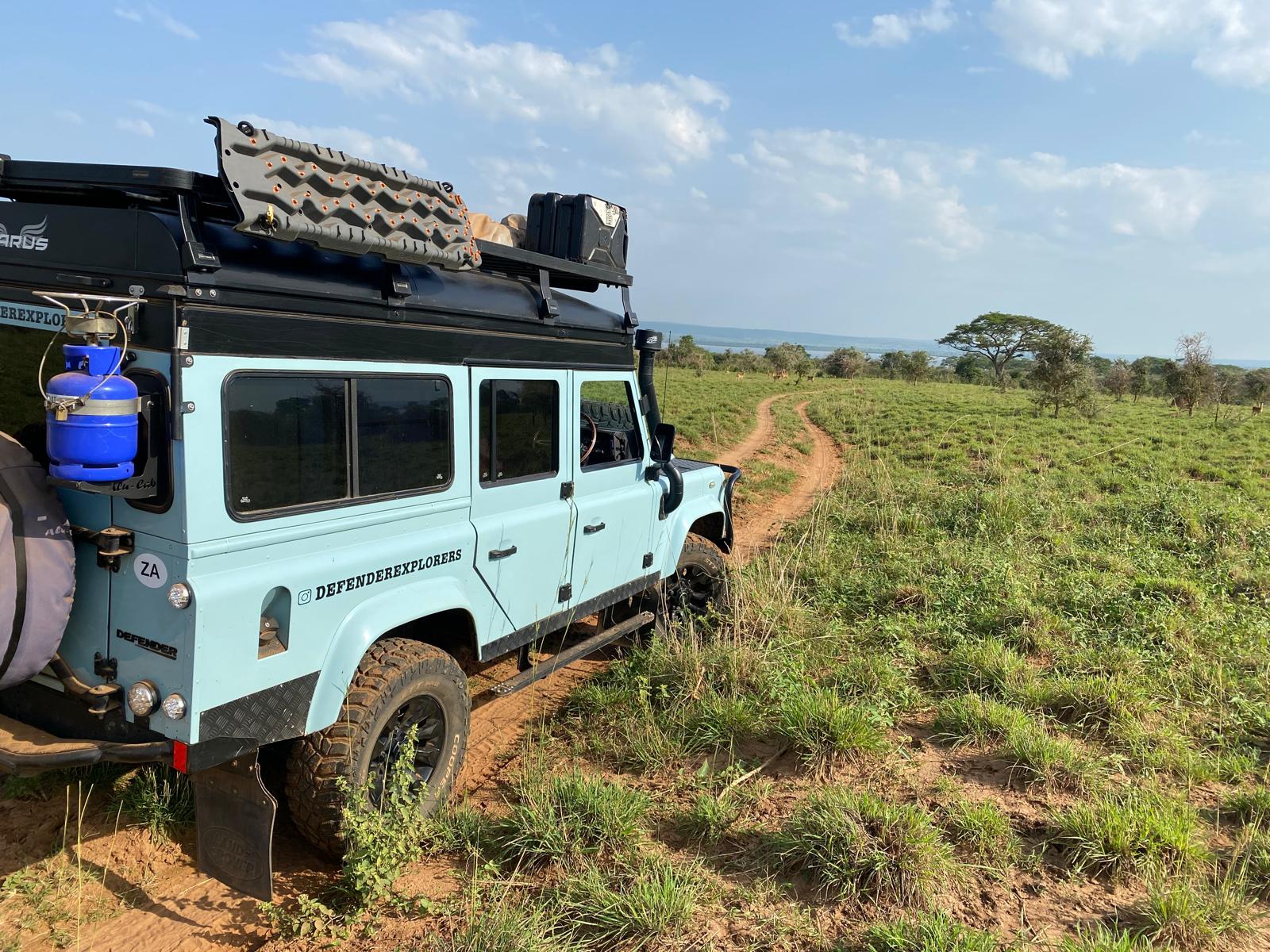
The TRED Pro boards from ARB are high-modulus nylon recovery boards designed to provide traction under wheels in sand, mud, or loose ground. They're available in black and orange — the colour combination we ran, matching Ntombi's orange Icarus trim detail. Mounted on the rear of the Slimline II roof rack in Front Runner recovery board holders, they were always accessible and always in plain sight.
We used them far more for levelling camp than for actual recovery. On the uneven ground that characterises wild camping across Southern and Eastern Africa, getting Ntombi level — for sleeping comfort in the Icarus, for fridge efficiency, for basic stability — was a near-weekly task. The TRED Pros slid under the appropriate wheel in seconds and gave us the levelling adjustment we needed. Practical, quick, and worth carrying for this reason alone even if you never get stuck.
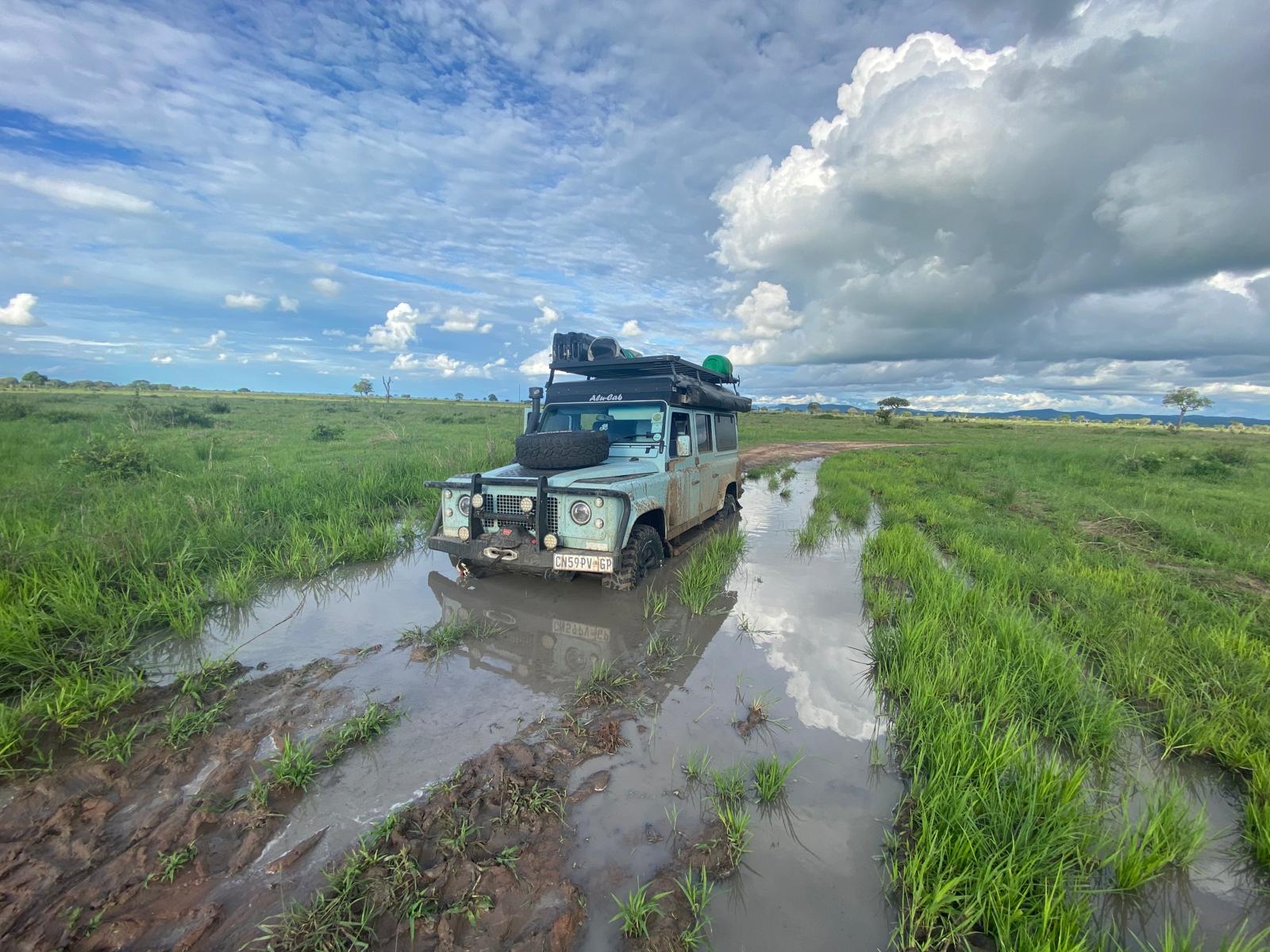
We did use them once in a genuine recovery attempt — the deep mudhole in western Tanzania that ultimately required rangers to tow us out. The mud was so waterlogged, so deep, and so completely without structure that the boards simply had nothing to bite into. They sank. We sank. The situation was beyond what traction boards can solve.
That's an honest assessment of what traction boards do and don't do: they work exceptionally well in sand, on soft but structured ground, and in situations where wheels are spinning without grip. In truly liquid mud without any solid substrate beneath, they are not the tool. Nothing is, except external assistance or a winch anchor point — and we had neither.
We had previously used rollable sand ladders in Namibia with a rental camper. They couldn't get us out of even moderately soft sand. The TRED Pros are in a different league entirely. They still look almost new after 45,000 kilometres. We recommend them without reservation.
→ ARB TRED Pro Recovery Boards on Amazon
The Shovel
Low-tech. Essential. Used more than expected.
A standard expedition shovel, mounted on the left rear of the Slimline II in a Front Runner shovel holder. Used multiple times across the trip — primarily for levelling ground under wheels, clearing drainage channels from a campsite, and the unglamorous but entirely necessary bush camping tasks. Used once in a genuine recovery attempt, in the same Tanzanian mudhole where everything else also failed. The shovel has its limits in liquid mud, but on every other surface it earned its place.
The Heavy-Duty Air Jack
Lighter than a high-lift. More versatile than you'd expect.
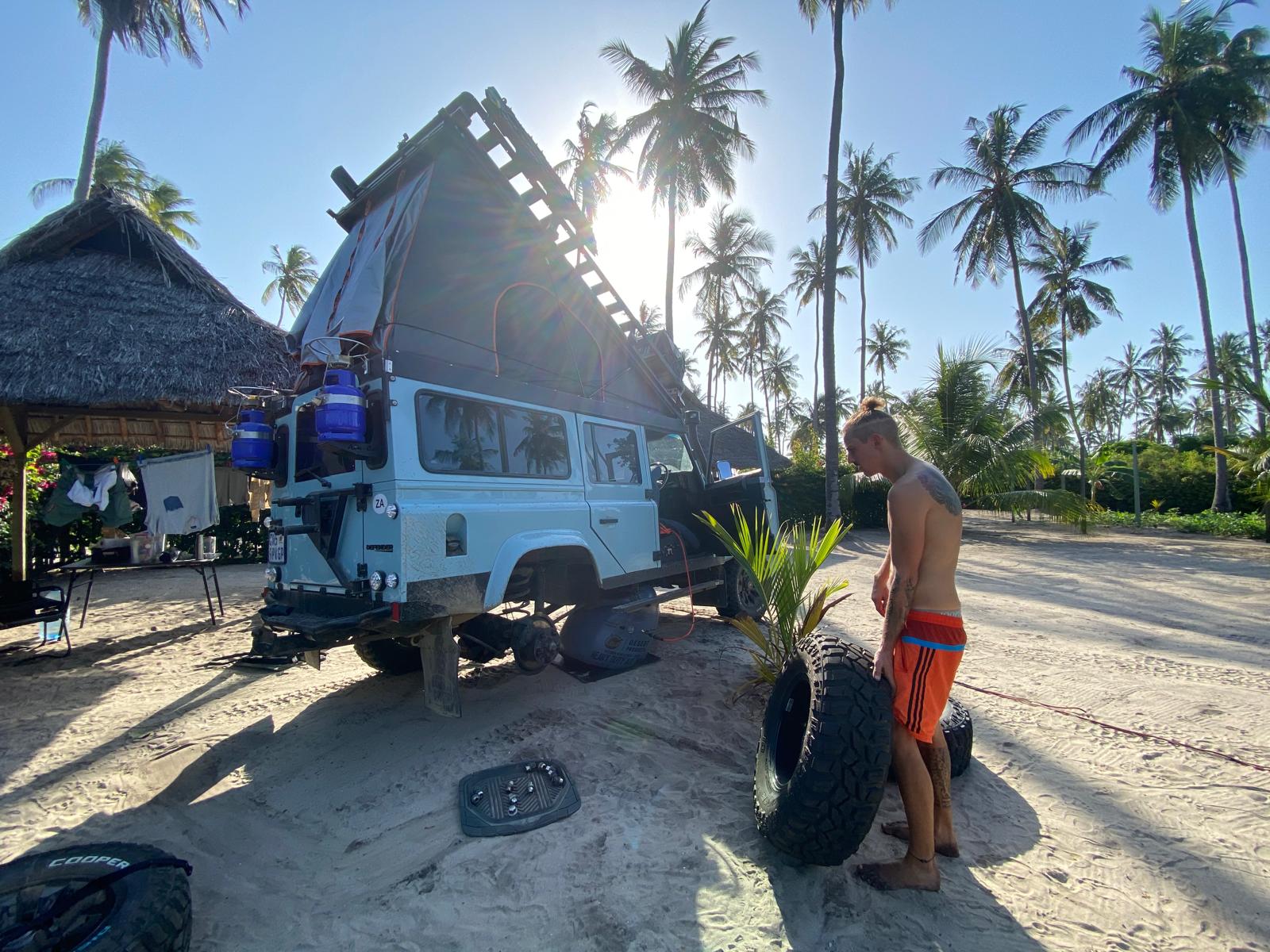
The air jack was one of the more considered choices in the recovery kit. A traditional hi-lift jack is capable, widely used, and weighs significantly more — relevant on a vehicle that was already managing its weight carefully. The heavy-duty air jack inflates using exhaust gas from the vehicle's exhaust pipe or easily connected to the compressor, lifting the vehicle without requiring a solid jack point in soft ground. That capability — being able to lift a vehicle in sand or loose ground where a mechanical jack would simply sink — is the specific advantage that makes it worth carrying.
We used it several times to change tyres and on a few occasions to create extra clearance when working underneath Ntombi. In the Tanzanian mudhole, with water and mud around the wheels, we honestly didn't attempt to use it — the vehicle was too deeply embedded and the ground too liquid to make an air jack lift productive.
The weight saving compared to a hi-lift was meaningful, and the tyre-changing use case alone justified carrying it across the entire trip.
→ Heavy Duty Air Jack at 4x4 Megaworld
Vehicle Protection: Keeping Ntombi Whole on Africa's Tracks
The kit that prevented damage — and why prevention beats recovery.
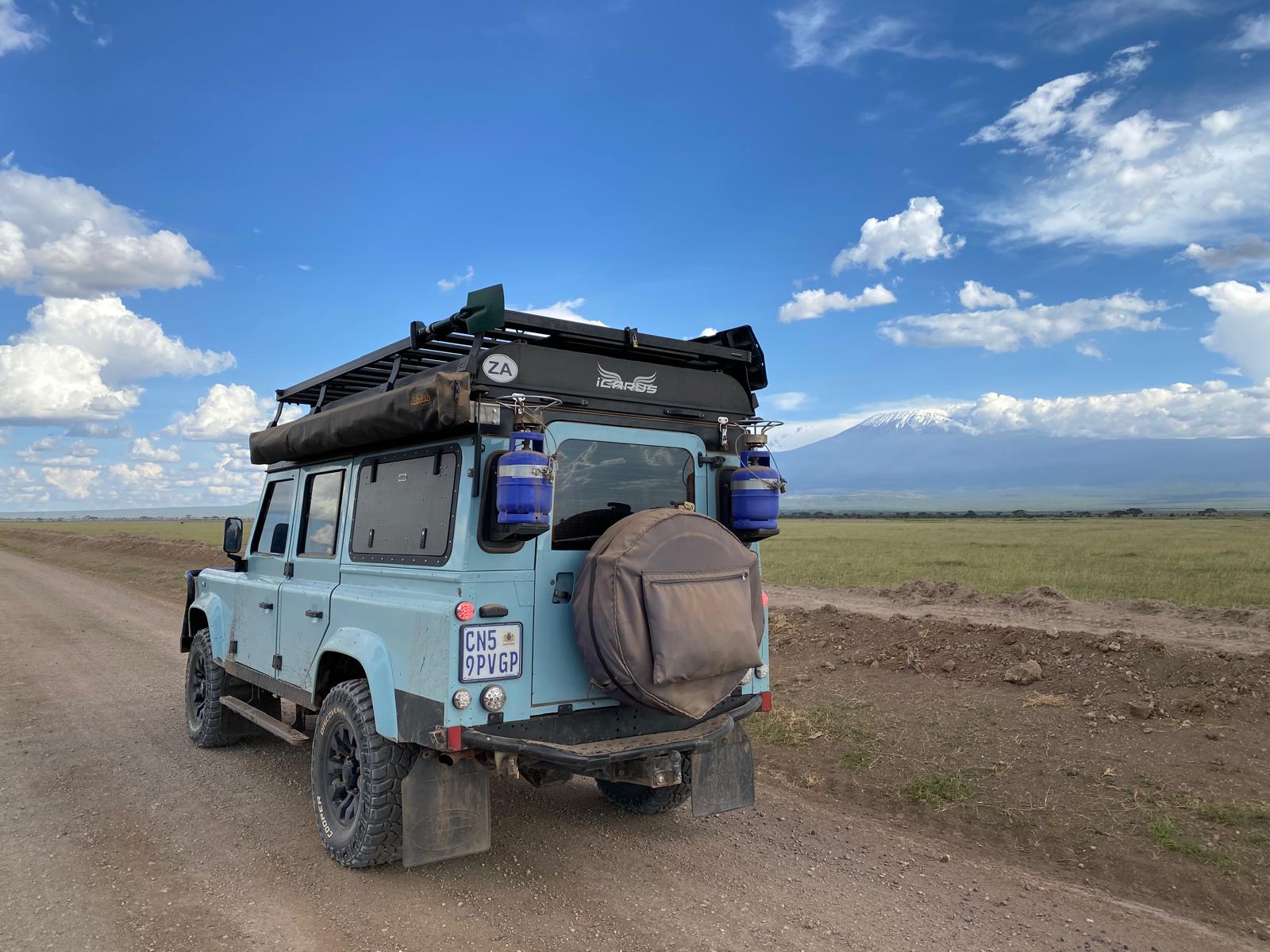
Recovery gear gets you out of situations. Protection gear keeps you out of them. We took vehicle protection seriously from the start of the build, and the investment paid off across 45,000 kilometres of mainly rough roads.
Original Land Rover Heavy Duty Bash Plate
The standard Land Rover heavy-duty bash plate was already fitted to Ntombi when purchased and remained in place throughout the trip. The bash plate protects the engine sump — the most expensive single component that can be damaged by a rock strike on rough ground. On the tracks we drove in southern Tanzania and northern Zambia especially, rocks embedded in rutted tracks are an ever-present hazard. The bash plate absorbed contacts that would otherwise have meant a serious repair in a location with no workshops for hundreds of kilometres. We never noticed it until we got underneath the car and saw the marks. It did its job quietly and completely.
Stone Accessories Front Differential Guard
The front differential on a Defender 110 sits low and exposed. Stone Accessories' full slider differential guard bolts directly to the vehicle and provides a steel skid plate over the front diff — the component that, if struck on a rock or ridge, can result in a diff fluid loss or structural damage that ends a trip immediately. We specified this during the build on the recommendation of experienced Defender overlanders and never regretted it. Combined with the bash plate, the front underside of Ntombi was properly protected.
→ Stone Accessories Front Differential Guard
Stone Accessories Rear (Salisbury) Differential Guard
The rear axle on the Defender 110 uses a Salisbury differential — larger than the front, and equally exposed to ground strikes on rough terrain. Stone Accessories' rear diff guard protects it with the same bolt-on steel construction as the front unit. The combination of front and rear differential guards, along with the bash plate, gave Ntombi a protected undercarriage that let us tackle rough ground with confidence rather than anxiety about what was happening underneath.
→ Stone Accessories Salisbury Differential Guard
Rock Sliders
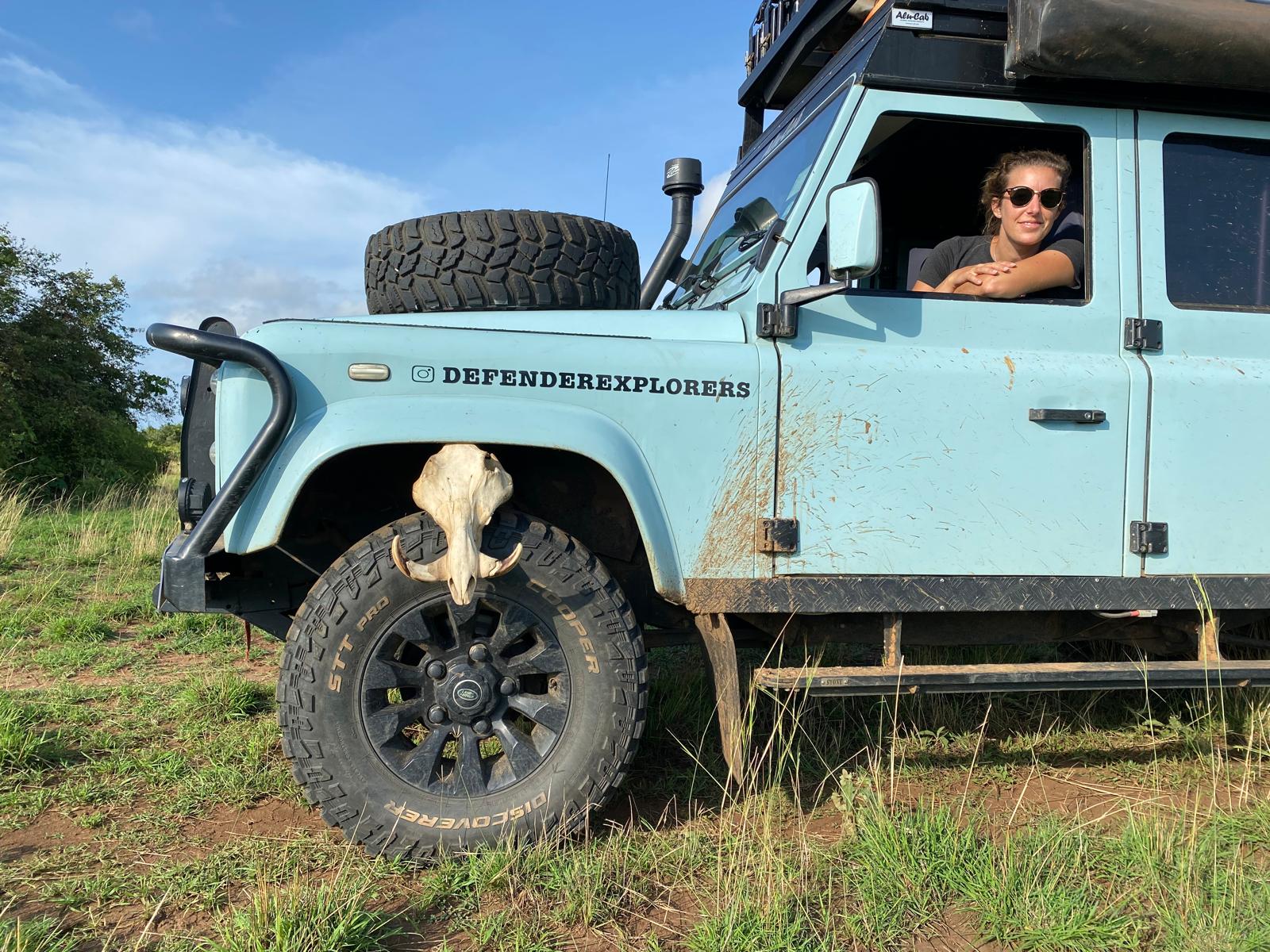
Stone Accessories rock sliders ran along the sills of Ntombi — the aluminium chassis sections that are the most vulnerable part of the Defender's understructure on side obstacles and step-overs. The sliders serve a dual purpose that becomes immediately apparent in daily use: they protect the chassis from side impacts and rocks, and they function as a step to get in and out of an elevated vehicle. On a Defender sitting on an OME lift and 18-inch Cooper STT Pros, the step height is meaningful. The rock sliders, visible in the photo alongside this post, made the daily entry and exit routine significantly easier — and look properly integrated with the vehicle in a way that adds to the visual character of the build.
Note: Stone Accessories appears to have discontinued the rock slider product. For equivalent protection, check current offerings from their range or equivalent fabricators. The diff guards remain available.
Custom Rear Step with Corner Protectors
The rear step was a custom fabrication by R2R Workshops — designed specifically for Ntombi rather than an off-the-shelf product. The brief was straightforward: a step at the right height to push the AluCab Icarus up comfortably from the rear, sized to also function as a bumper extension, and with integrated corner protectors covering the rear chassis corners — the area of the Defender that is most vulnerable to reverse parking impacts and track-edge contacts. The corner sections of an older Defender are a known weak point; integrating the protection into the rear step design rather than leaving them exposed was a detail the R2R team executed cleanly.
The Tyres: Why This Was Not the Place to Save Money
Six Cooper STT Pro tyres. Two flats in 45,000 km. Still good for more.
Of all the decisions in Ntombi's build, the tyres might have delivered the best return on investment of anything we fitted. We ran six Cooper Discoverer STT Pro tyres — four on the vehicle, one on the bonnet and one as the rear-mounted spare — and we rotated them throughout the trip to even out wear.
The Cooper STT Pro is a serious mud-terrain tyre built around three proprietary technologies. The Armor Tek3 construction provides tread and sidewall durability on tough terrain, with reinforced sidewalls that resist damage from the kind of embedded rocks and sharp debris that characterise African bush tracks. The Rock Climber Sidewall technology provides added strength and impact protection for the toughest terrains, while the Stone Armor technology promotes self-cleaning to quickly expel mud and debris.
In practical terms over 45,000 kilometres: two punctures. One was caused by a metal piece of more than 15 centimetres — the kind of object that would destroy any tyre without question, and the STT Pro simply held long enough to allow a controlled stop and tyre change. The other was a standard nail. No cracked sidewalls. No structural failures. No blowouts on the corrugated gravel that generates the impact forces that blow sidewalls on budget tyres. At the end of the trip, the profile was still in good enough condition for further use.
On rocky and technical terrain, the compound's ability to grip is impressive — where other vehicles would slip, the STT Pro's Rock Climber Sidewall allows the tyre to use its sidewall as a contact surface on difficult obstacles. On the Ugandan highland tracks and the rocky descents in Malawi, we experienced exactly that.
We kept tyre pressure deliberately on the softer side for the majority of the trip. Lower pressures on gravel increase the tyre's contact patch and absorb corrugations more effectively — better grip, more comfort, less fatigue for both vehicle and occupants. The fuel consumption penalty is real but modest, and we consistently chose grip over the small economy gain from harder pressures. On longer stretches of tarmac, we pumped up accordingly, but the default setting was soft.
Six Cooper STT Pros. Worth every rand.
The ARB Twin Compressor: Recovery and Daily Tool
The ARB twin brushless compressor permanently installed under the driver's seat connected the tyre management routine with the recovery capability. Deflating for sand or soft ground, reinflating for tarmac, inflating a repaired tyre after a puncture — all of it done with a compressor that ran reliably for the duration of the trip. We've covered it in more detail in the power and electrical post, but its place in the recovery toolkit is direct: without a capable compressor, tyre pressure management stops being practical and recovery from soft ground deflation becomes a serious inconvenience.
→ ARB Twin Air Compressor at 4x4 Megaworld
What the Complete Setup Taught Us
The recovery and protection setup on Ntombi reflected a philosophy we'd describe simply: carry what has a clear function, make sure it's quality enough to work when needed, and protect the vehicle so that the recovery gear stays in the bag.
In two years and eight countries, we used the ARB recovery kit twice — both times for towing rather than winching. The TRED Pros went under wheels more times than we counted for levelling and a handful of times for soft ground support. The shovel and air jack each had their moments. The winch, despite being the most capable piece of kit on the vehicle, waited patiently through the entire trip.
The protection gear worked silently in the background across every kilometre. The bash plate absorbed contacts we never noticed until we looked. The diff guards kept the most vulnerable components intact on the roughest tracks. The rock sliders made the vehicle easier to live with every single day while protecting the chassis beneath.
And the tyres — six Cooper STT Pros — absorbed everything Africa put under them across 45,000 kilometres, with two punctures to show for it.
That's a record worth building to.
Coming soon in the build series: Old Man Emu Suspension on a Defender 110: Why It Matters, What We Ran, and What 45,000 km Taught Us