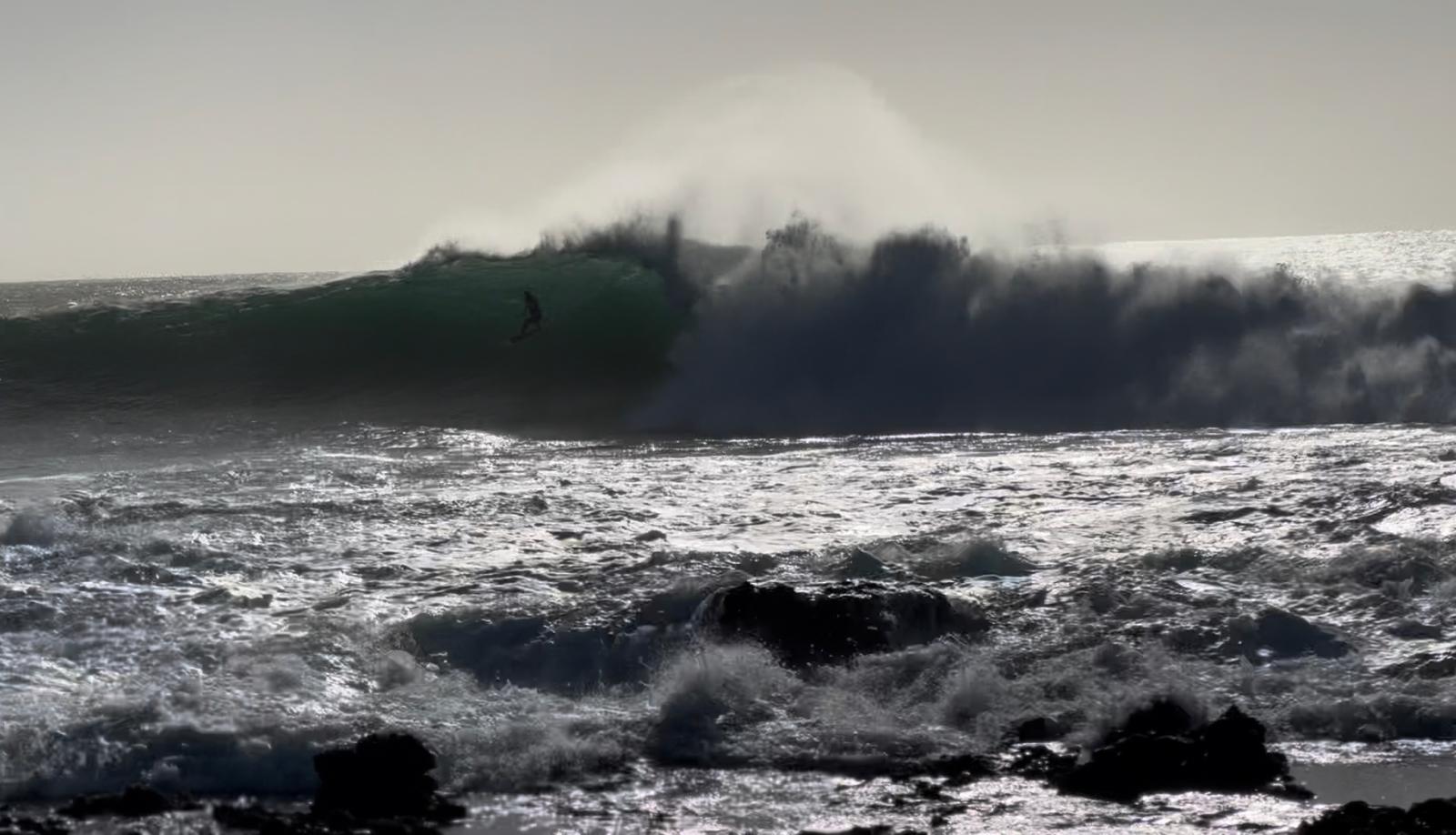
After two years overlanding eight African countries, we needed a new home base to run a business from. The checklist was short and specific. The answer turned out to be a small, sun-baked island in the Atlantic we had never visited.
After almost two years on the road and seven months on a Zambian farm before that, we were both genuinely ready for something different. Not restless — ready. The overland had given us everything it promised and then some. But we were also two people who had built careers in the corporate world, who knew what structured professional life felt like, and who were honest enough to admit that we missed parts of it. The freedom of the bush is real. So is the satisfaction of building something, managing something, doing work that compounds over time rather than dissolving when you move camp.
We came back to Germany in early 2022 and started applying for jobs.

The Job Search That Didn't Work — and What It Taught Us
Thailand in February and March 2022 was the staging ground. Cheap to live in, beautiful weather, good internet, and a timezone that worked for both Asia and the Middle East — the two regions where we focused our search. We each went through several interview processes. Final rounds, promising conversations, genuine interest from both sides.
And then, every time, the same conclusion: not being physically present in the country with a valid work visa was too uncertain a situation for employers in the post-COVID hiring environment. They wanted people who were already there, already legal, already reduced risk. We weren't that. Two months of applications and interviews, no offer either of us was willing to accept.
Thailand was never supposed to become home. It was always an interim chapter — a good one, but temporary.
We reassessed. If the corporate job wasn't the path, then running our own business was — and we had the skills, the track record, and the savings to do it. The question was simply: from where?
The Checklist
The criteria were practical and non-negotiable.
Good timezone for our target client base — primarily German-speaking: Germany, Austria, Switzerland. Direct flights back to Germany in a few hours, not a day of travel. Warm weather for the majority of the year. After Hong Kong and two-plus years in Africa, neither of us had any appetite for cold German winters. And a visa situation that wouldn't require annual bureaucratic upheaval — straightforward residency for people starting a business and buying property.
We wrote the list and looked at the map. There are not many places that satisfy all four conditions simultaneously. The Canary Islands are the obvious candidate. Madeira. Portugal itself for those willing to compromise on winter. And then, further south and west, Cape Verde.
We had never been.
The Recky Trip: One Week on Sal, One Week on Santiago
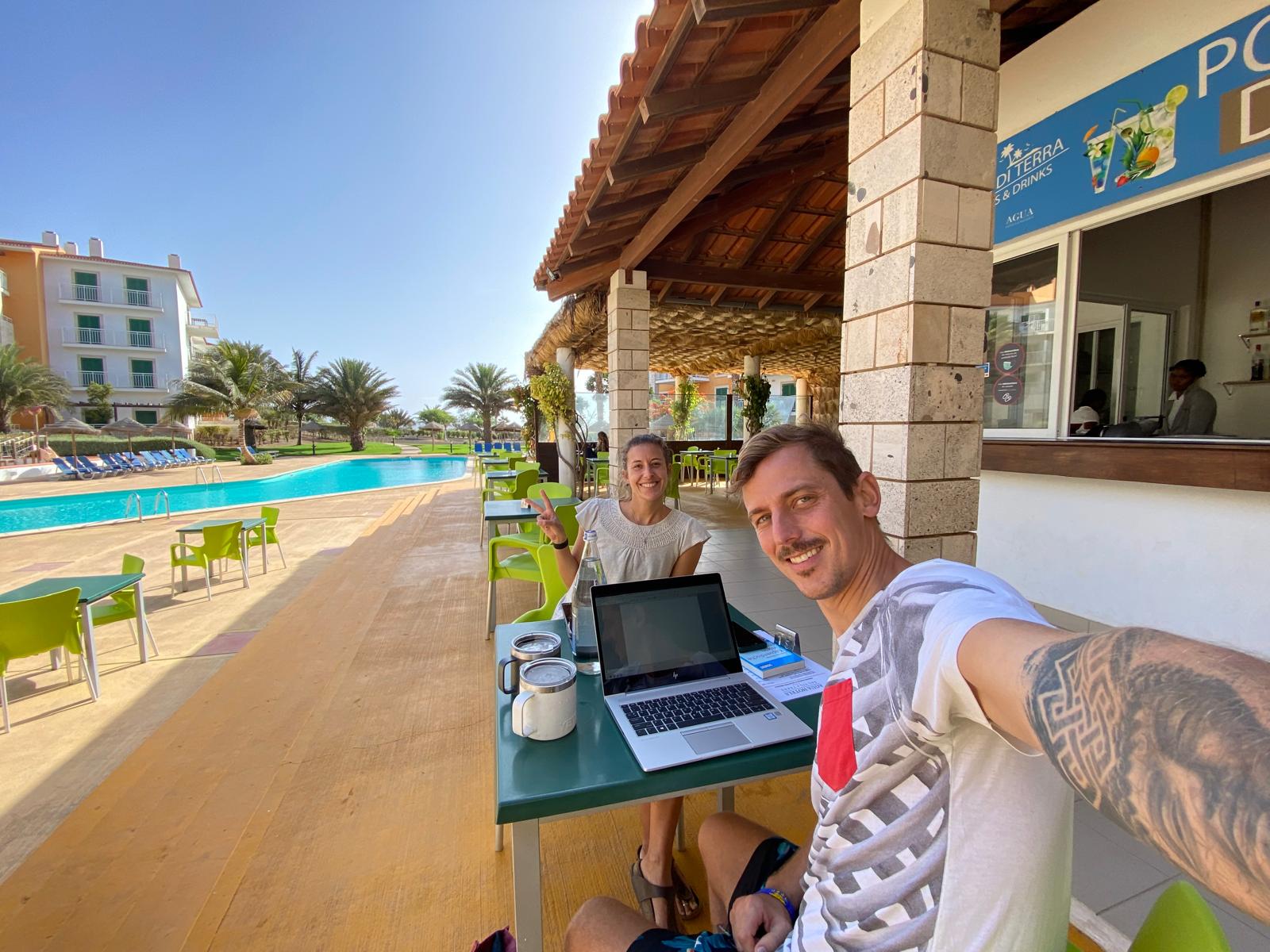
In May 2022 we booked two weeks in Cape Verde — structured as a proper recky rather than a holiday. One week on Sal, one week on Santiago. We had already started looking at property listings before we left Germany and arranged viewings on both islands. Domestic flights booked, schedule set.
The logic for looking at both islands was sound. Santiago — with the capital Praia — is the administrative and commercial centre of Cape Verde. Most expats running international businesses base themselves there, and it has the infrastructure that comes with being the country's capital. Sal, by contrast, is where approximately 90% of Cape Verde's international tourism arrives. Almost every long-haul flight into the country lands at Sal's Amilcar Cabral International Airport. If connectivity to Europe matters — and for us it did, fundamentally — Sal has a practical advantage that no other island comes close to matching.
Our international flights arrived on Sal. We had a few days there first before the domestic connection to Praia.
Sal: First Impressions Were Not the Full Story
We stayed at Villa Verde in Santa Maria — the main tourist village on Sal's south coast, built almost entirely around the beach resort economy. Post-COVID in 2022, tourism was considerably quieter than its normal volume, and even so: we hated it. "Hate" is a strong word that we use deliberately. The tourist infrastructure of Santa Maria felt artificial in a way that the places we had spent the previous two years could not have prepared us for. Package holiday aesthetics, restaurants oriented entirely towards European visitors, a beach scene that was undeniably beautiful but surrounded by an environment that felt constructed rather than lived in.
We looked at a few properties in and around Santa Maria. We couldn't imagine living there.
With slightly diminished expectations, we flew to Praia.
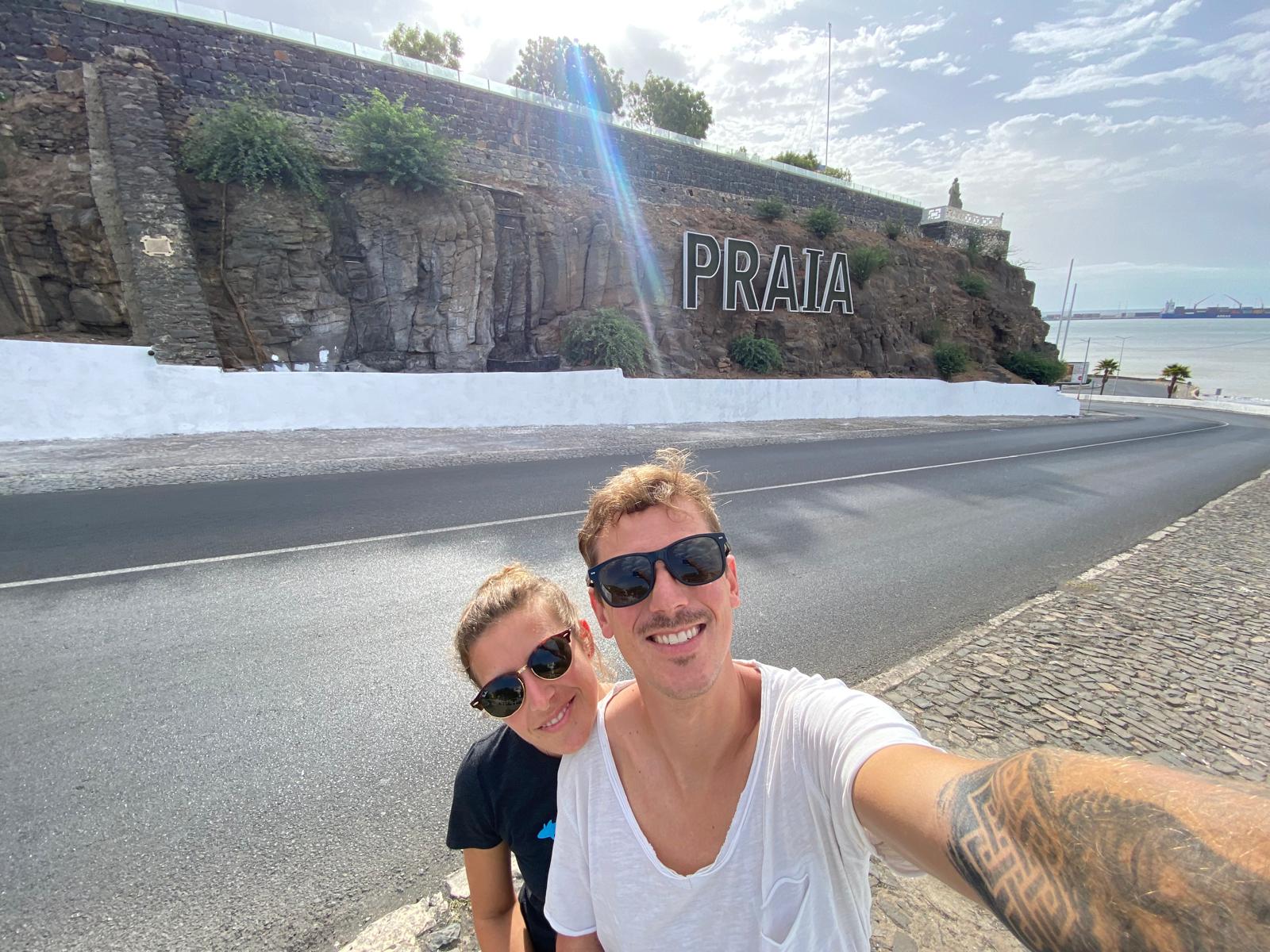
Santiago: Beautiful Island, Wrong City
Praia felt, on arrival, like a return to a familiar kind of African city. Traffic, dust, the functional chaos of a working capital. We had never enjoyed most African cities in their own way during the overland — and we had also just spent two years living in the bush, and a dense urban environment was not the version of Cape Verde we were looking for.
We looked at a couple of properties in Praia that had real merit — well-positioned, interesting buildings, the kind of bones that a good renovation could transform. But the city itself didn't fit. We flew back to Sal with two property viewings still on the schedule, both of them 20 kilometres from Santa Maria, in a village called Palmeira.
Palmeira: The Part of Sal That Changed Everything
Before the viewings, we went to Espargos — the actual capital of Sal island, where most of the local population lives. Espargos is not a tourist destination. It has supermarkets that function as supermarkets, a town square with a real rhythm to it, people going about their lives in a way that has nothing to do with the resort economy to the south. Decent enough infrastructure. Authentic enough character.
That mattered. We needed to know there was a local life on this island beyond the tourist strip.
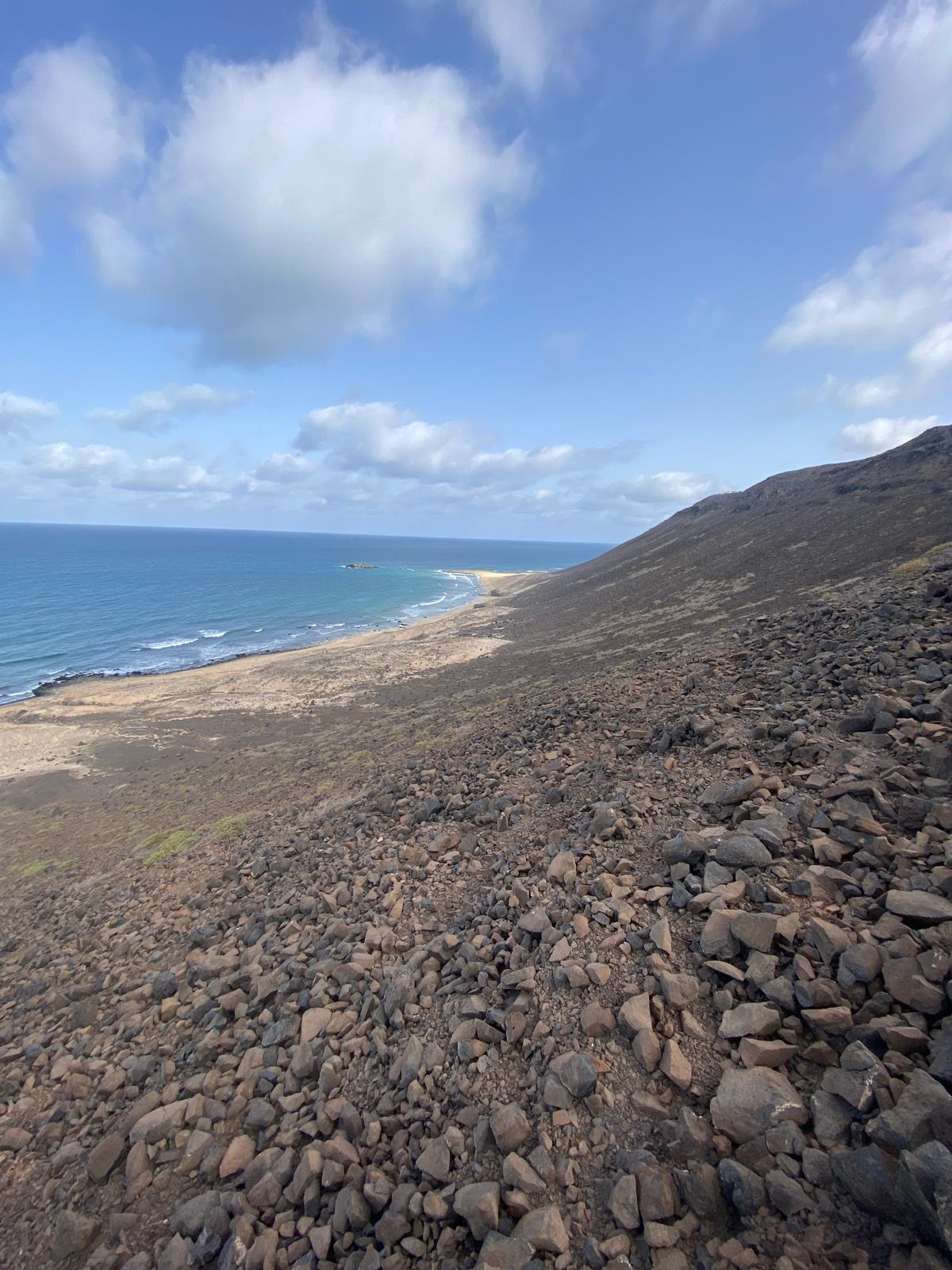
Then we drove to Palmeira. The village sits on the northwest coast of Sal, directly overlooking the international port and marina, with the Atlantic horizon in front of it and the dry volcanic interior of the island behind. The scale is immediately different from Santa Maria — quieter, less constructed, with the feeling of a place that exists for its residents rather than for visitors.
We viewed L'Ancora first.
L'Ancora had been built as a bed and breakfast, and the attention to detail that went into it was immediately apparent. Every finish considered, every view framed deliberately. A small infinity pool positioned to look directly over the harbour. The harbour light at different times of day — morning mist, afternoon glare, the golden hour before the Atlantic sunset — was something that was clearly central to how the property had been conceived. Due to COVID it had never operated as a B&B. The owners' family had been living in it instead.
We loved it. We still love it.
The second villa was a semi-detached two-storey property. Larger plot, enormous pool, genuinely impressive bathrooms. It had sat empty throughout the COVID period, unloved and unattended, and it showed. It needed serious renovation. The potential was equally serious — the proportions were right, the position was right, and the price reflected the work it would require.
Within one hour in Palmeira, we had found two properties we could genuinely imagine living in. We made offers on both that same day.
The Decisions That Followed
The deal on the second villa — the one needing renovation — was too good to walk away from. We bought it. We went through the renovation and now live in it.
Not even a year later, L'Ancora was still on the market. We bought it too — this time as a home for Ralf's parents to spend the German winter months, with one guest room available for rental. Another year after that, the other half of our semi-detached villa became available. We bought that as well, put it through another renovation, and it now operates as part of  as premium Guesthouse.
Three properties in Palmeira. None of them planned from the beginning, all of them acquired because the opportunity was right and we had learned, if nothing else from two years in Africa, to take good opportunities when they appear rather than overthinking them.
What Sal Actually Delivers
We have now lived in Palmeira for several years. The checklist from 2022 holds up completely.
Timezone: Cape Verde runs on GMT-1 year-round — two hours behind Germany in winter, three in summer. Client calls work. Video conferences work. There is no timezone penalty.
Flights: Direct connections to Stuttgart, Frankfurt, Munich, Düsseldorf, Hannover, Amsterdam, London, Lisbon and a growing number of European destinations operate from Sal's airport. The flight to Frankfurt takes approximately five and a half hours. Europe is genuinely accessible, not merely theoretically so.
Weather: Sal receives approximately 350 days of sunshine per year. The trade winds keep temperatures comfortable even in summer — rarely above 30°C, rarely below 20°C at night. The winter months, when northern Europe is at its most difficult, are the best time to be on the island.
Residency: Cape Verde has a structured and functional residency process for property owners. It is not simple, but it is predictable and manageable. Eventhough we still haven’t got an official document, travelling in and out the country is no problem.
The Part We Didn't Expect
What the checklist didn't capture — couldn't have captured, because we hadn't been here yet — was Palmeira itself. A fishing village that is genuinely a fishing village, not a performance of one. A neighbourhood where the neighbours know your name. A view from the terrace that changes with the light and never stops being interesting. The kind of daily life that makes the concept of "work-life balance" feel like a question asked by people who haven't found the right place yet.
We thought we were making a practical business decision. We were. But we also found a home in the genuine sense — a place that fits in the way that very few places fit, and that we still love.
The trip brought us here. Africa taught us what to look for. Palmeira delivered it.
Want to experience Sal from the right base? Both villas are available for rental — see L'Ancora and Surf House for availability and details.