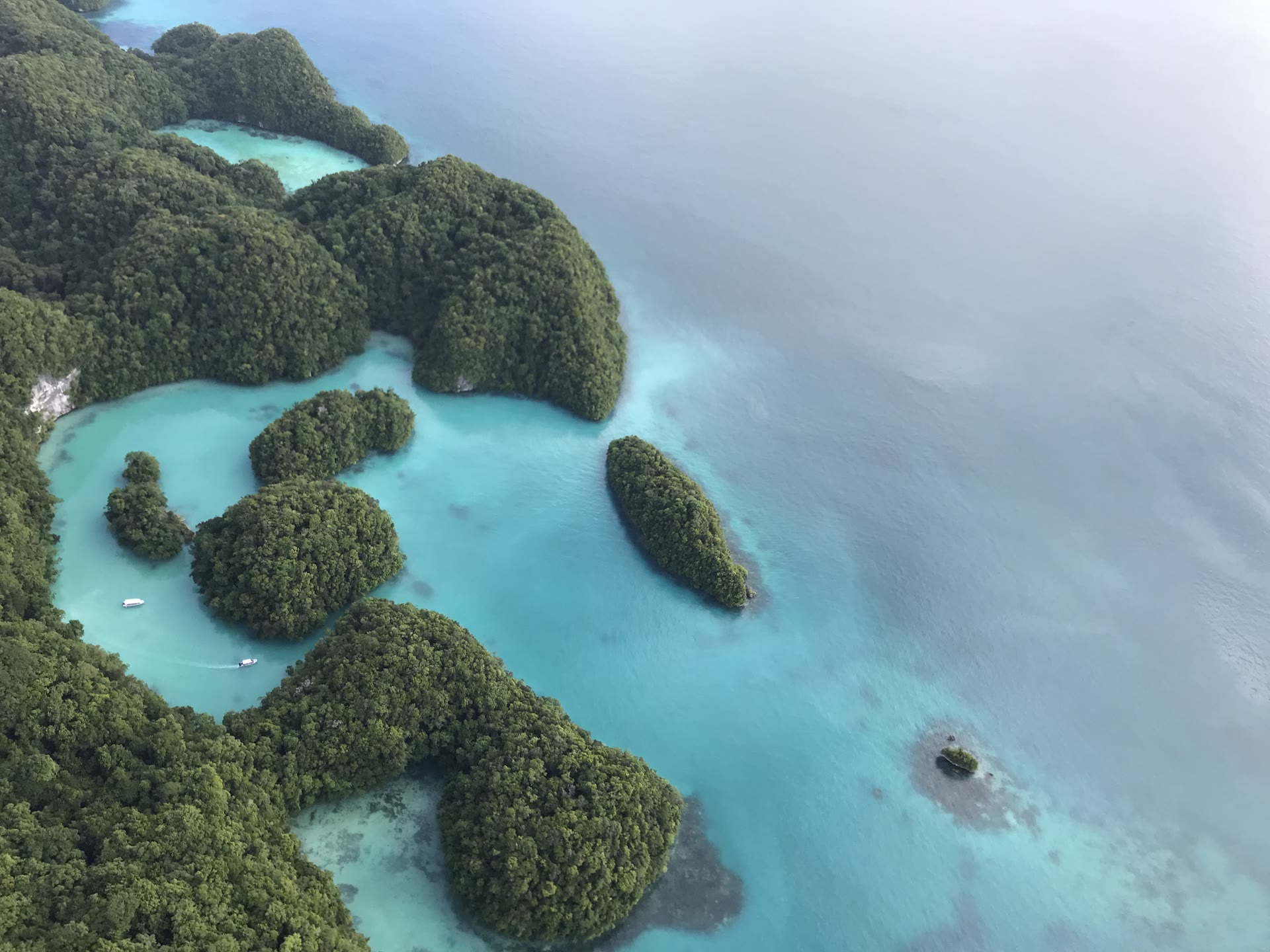
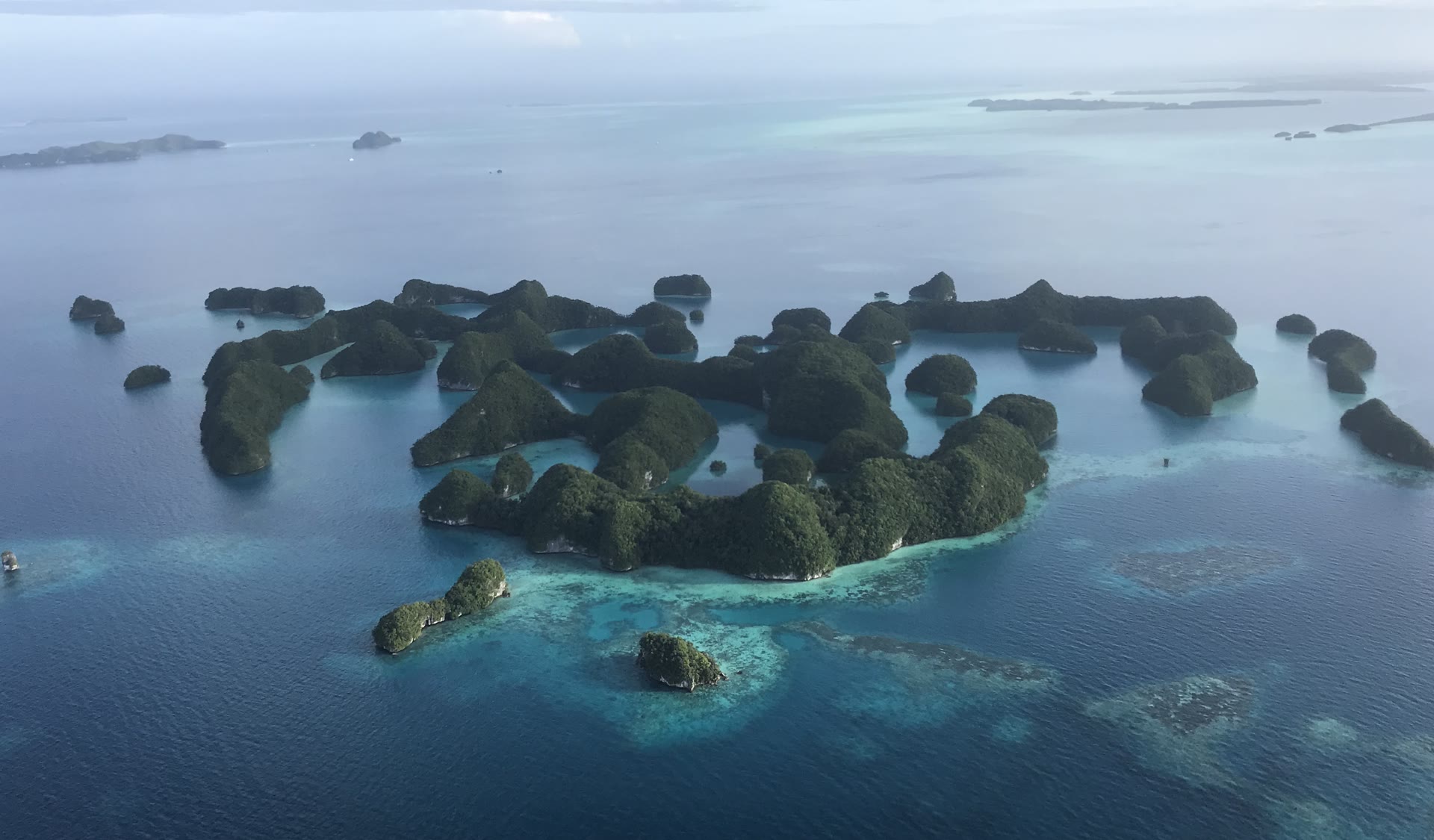
Mention Palau to most people and you get a blank look followed by "where is that exactly?" Show them an aerial photograph of the Rock Islands — hundreds of limestone mushroom formations wearing green jungle hats, surrounded by water in every shade of turquoise the Pacific can produce — and some of them recognise the image. Almost none of them know the name. Palau is one of the great unknown dive destinations of the world, and we spent Christmas and New Year 2018 finding out why the people who do know about it keep going back.
What and Where Palau Is
Palau is an island nation in the western Pacific Ocean, part of Micronesia, roughly 800 kilometres east of the Philippines and about 1,300 kilometres south of Guam. It consists of over 500 islands — most of them uninhabited — with a permanent population of around 18,000 people concentrated primarily on the main island of Babeldaob and the smaller island of Koror, which serves as the commercial and tourism centre.
What makes Palau extraordinary is the combination of its geological history and its marine protection. The Rock Islands Southern Lagoon is a UNESCO World Heritage Site. Palau established the world's first shark sanctuary in 2009 and has a long history of proactive marine conservation. The result is an underwater environment that has been protected with genuine seriousness for decades — which is directly visible in the health of the reefs, the density of marine life, and the presence of large pelagic species that have long since disappeared from less protected dive destinations.
From Hong Kong in 2018, no direct flight existed. We found a routing via Guam, which turned a transit into a bonus destination.
Guam: The Stopover Worth Making
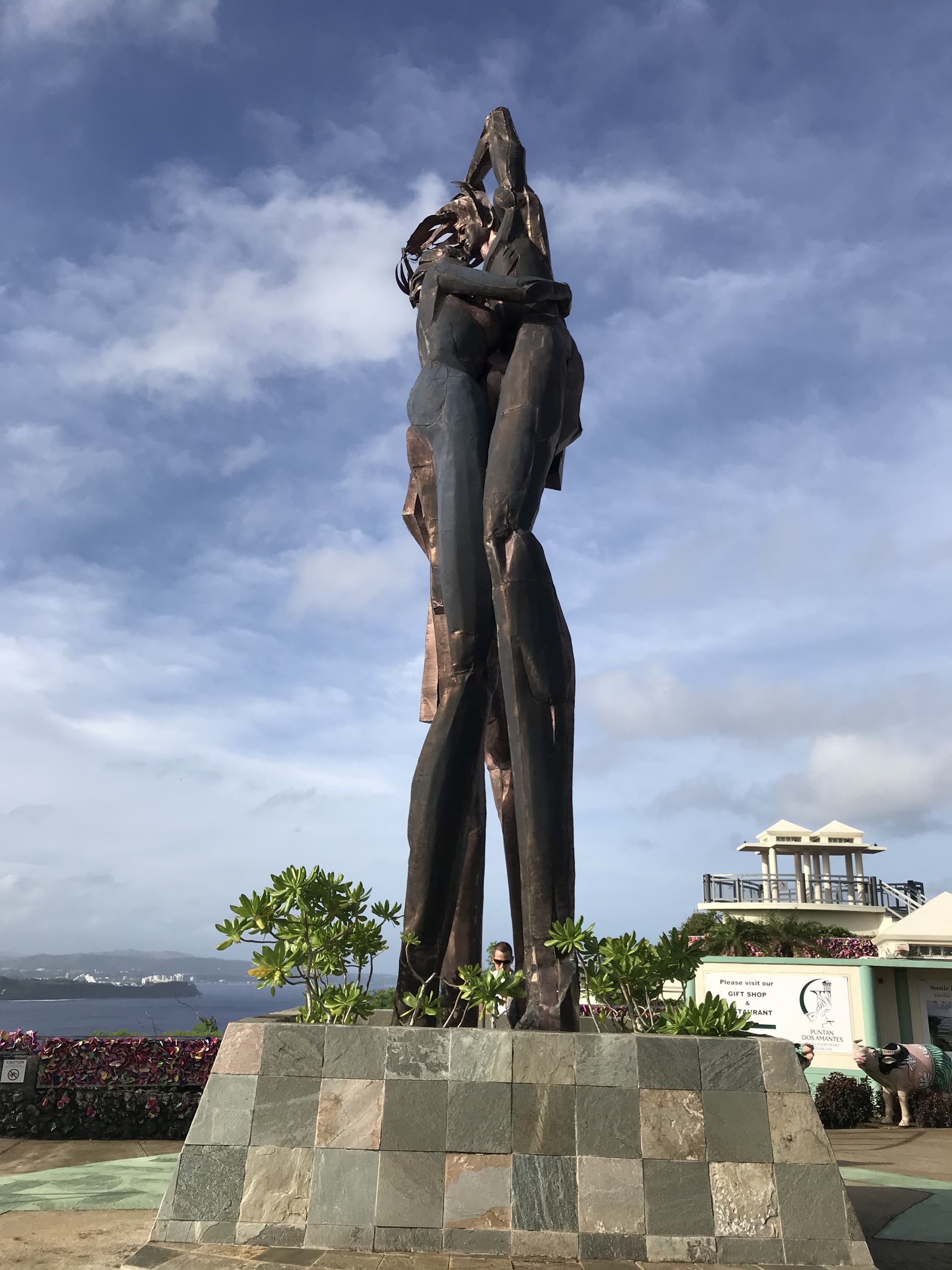
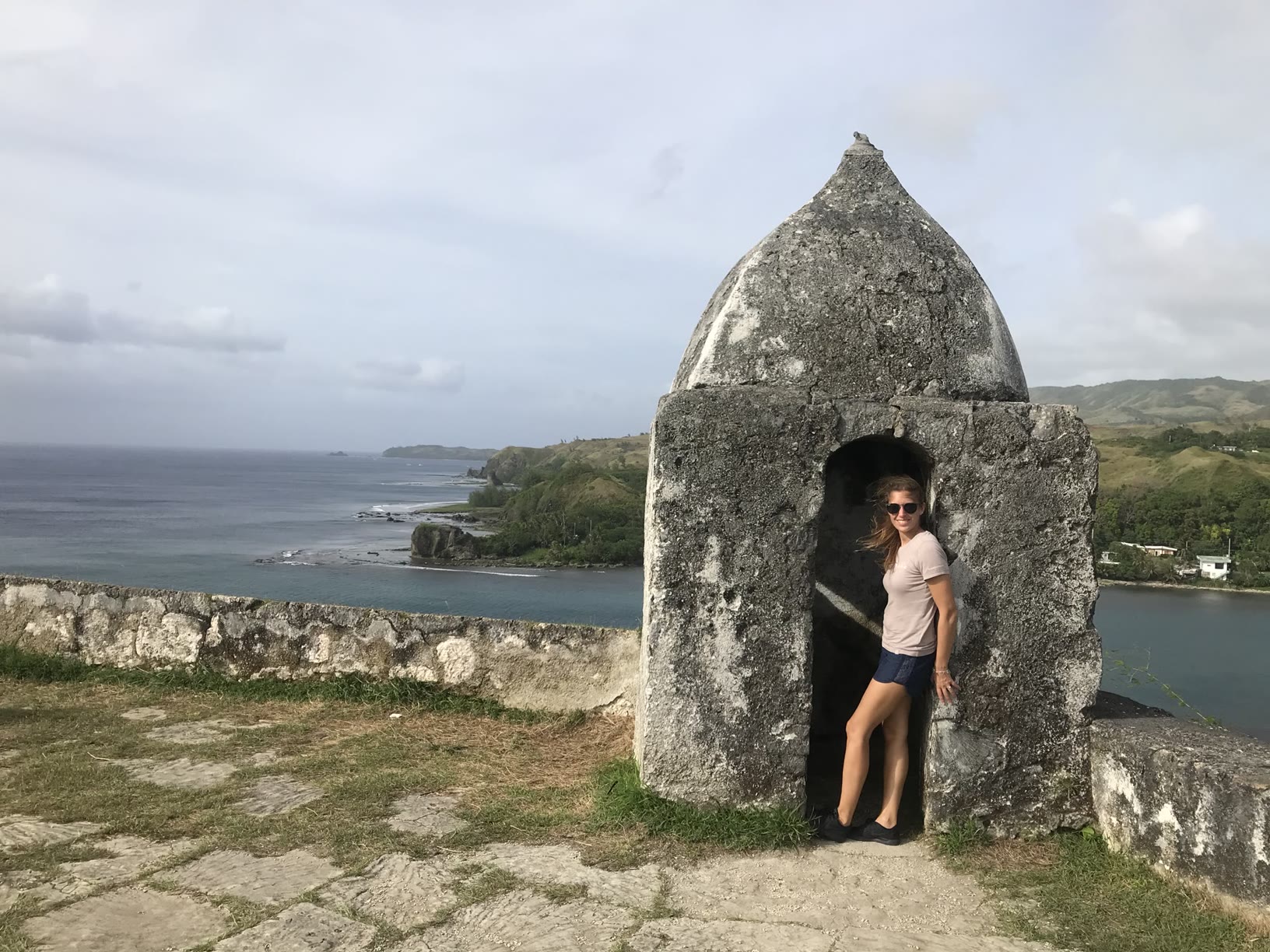
Guam is an unincorporated territory of the United States in the western Pacific — the largest and most populated island of the Mariana Islands group, covering about 209 square miles, with a population of around 173,000 residents. The indigenous inhabitants are the Chamorro people, who settled the archipelago approximately 4,000 years ago, and the island came under US control after the Spanish-American War in 1898, later experiencing Japanese occupation during WWII before becoming a US territory in 1950.
The American infrastructure sits on top of a Pacific island character that is neither purely American nor purely Micronesian but a specific blend of both. The food is good, the roads work, the beaches are attractive, and the military presence is very visible.
We rented a convertible and drove the whole island in a day. Guam is divided into a northern limestone plateau and a southern chain of volcanic hills, which means the drive from coast to coast delivers different landscapes within a short distance. The ocean views from the southern cliffs, the WWII memorial sites, the pace of a Pacific island running on American infrastructure — it all added up to a worthwhile stopover rather than dead transit time. The vague Hawaii feeling is real, and if you are routing through Guam on the way to Palau, build in at least a full day.
Flying Into Palau: The First Wow
The approach to Koror delivers the first indication that Palau is going to be different. From the air, the Rock Islands archipelago is one of the more arresting things visible from a commercial aircraft window. The chain of islands' proximity to Southeast Asia and Japan made it the location for several fierce battles in WWII, and from altitude the geography that made it strategically significant is immediately apparent — a dense, complex arrangement of reef and island and deep blue water that covers an enormous area.
We stayed in Koror in a guesthouse slightly up the hill from the main waterfront area, booked as part of a package with Palau Dive Adventures. Koror itself is not a particularly beautiful town — functional, sprawling, a commercial centre without much in the way of aesthetic charm. The beaches accessible from Koror are not why you come to Palau. You are here to get on a boat every morning and go into the water. Everything else is logistics.
The Diving: What Makes Palau Different
The core logistical reality of diving Palau from Koror is that the best dive sites are not close. Every morning means an early start and a substantial speedboat ride to reach the outer wall sites and the channels. You spend the day — including lunch — on the boat. It is not the relaxed beach-entry diving of the Philippines or Thailand. It is an expedition each day, rewarded accordingly.
Palau Dive Adventures organised our days well, and the guides knew their sites and their timing with the precision that comes from diving the same waters for years. The cost is higher than almost anywhere else we had dived by that point — only Fiji and the Bahamas would later exceed it. The quality justifies it.
The German Channel: History Beneath the Surface
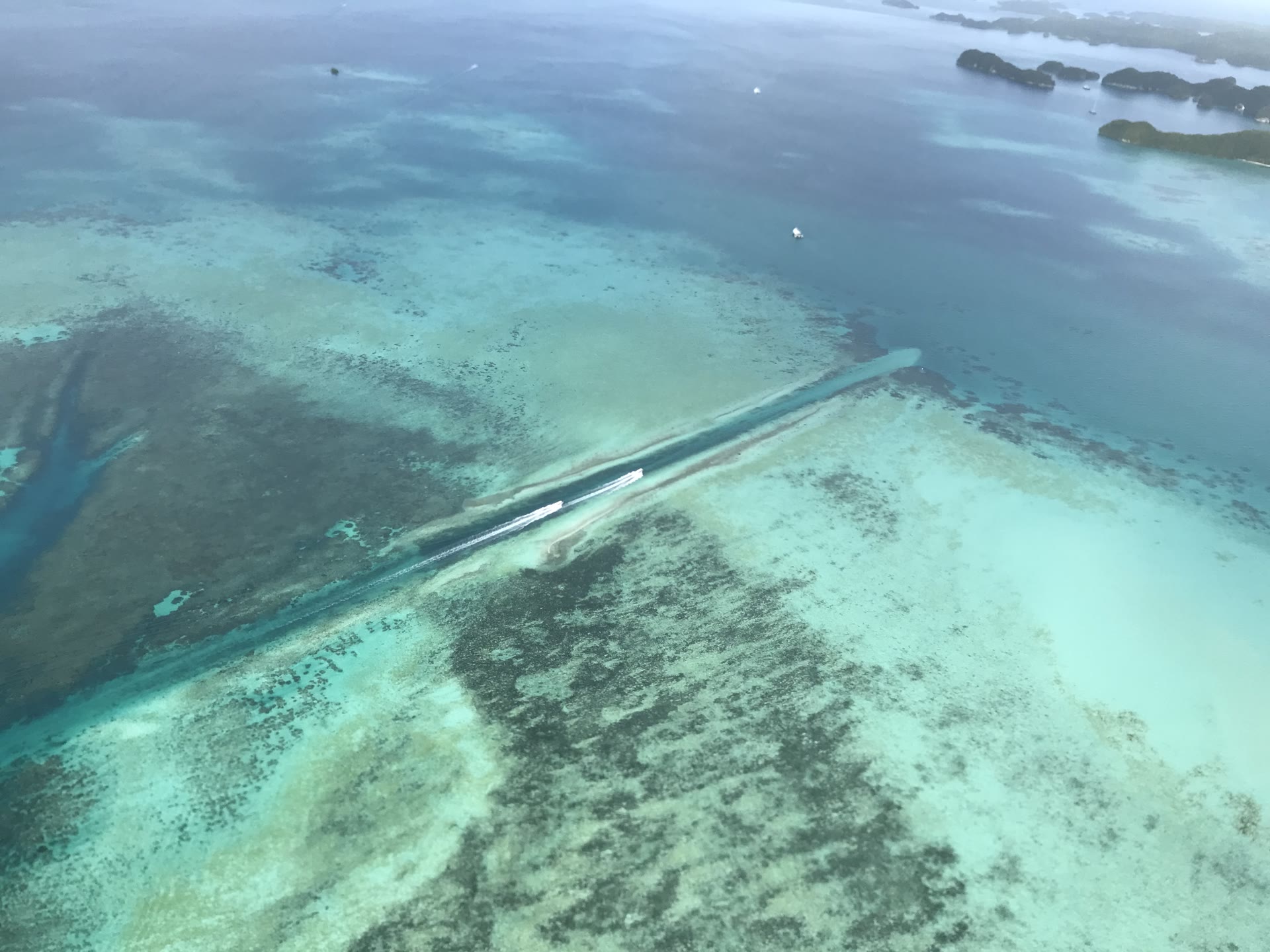
The German Channel is a man-made passage constructed during the German colonial period in the early 1900s to facilitate phosphate transportation, connecting the inner lagoon to the open ocean. It has evolved from a practical necessity into one of the world's premier dive destinations, best dived between November and May.
Today, boats transport tourists and divers through what is known as the German Channel. Manta rays and other sea life have accepted the shortcut into the lagoon, and divers see a healthy growth of coral and abundant marine life.
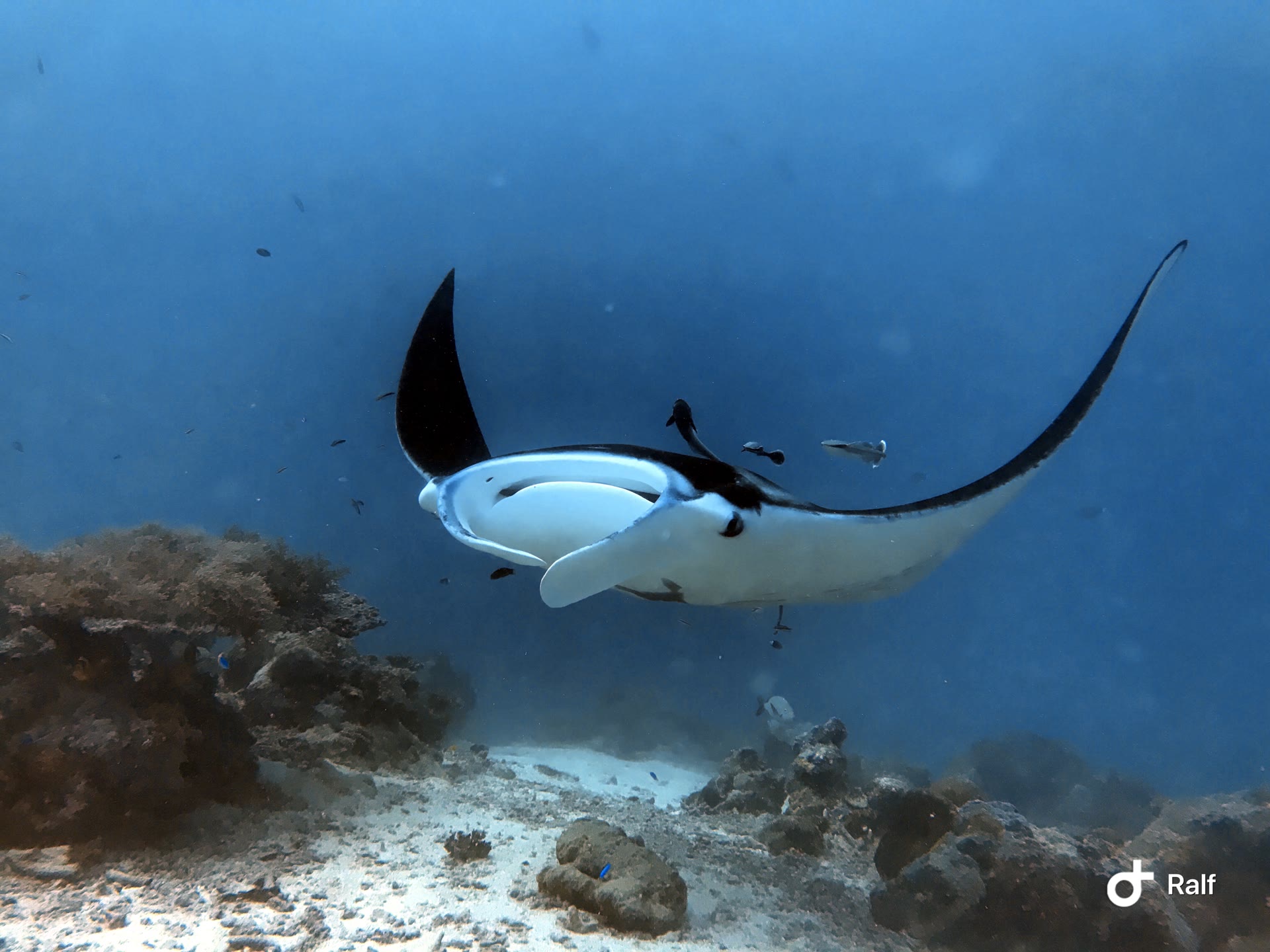
The drift through the German Channel when conditions are right is among the most joyful diving experiences either of us has had. With correct buoyancy you move at a speed that feels impossible — faster than you could swim, covering distance with zero effort, the reef walls passing beside you as if the ocean is scrolling. The manta ray cleaning station sits at a depth of about 20 metres on a wide sandy plateau with rocky outcrops, where manta rays and grey reef sharks are cleaned by cleaner wrasses. We had mantas at the cleaning station — circling, flipping, entirely absorbed in the business of being cleaned, close enough that managing your distance from them required active thought.
The surrounding sea has earned the poetic nickname "Seven-Colour Sea" — where coral reef meets sandy seabed and sunlight bathes the reef flat, and that description is not an exaggeration when you are drifting through it.
The WWII Wrecks: War Become Reef
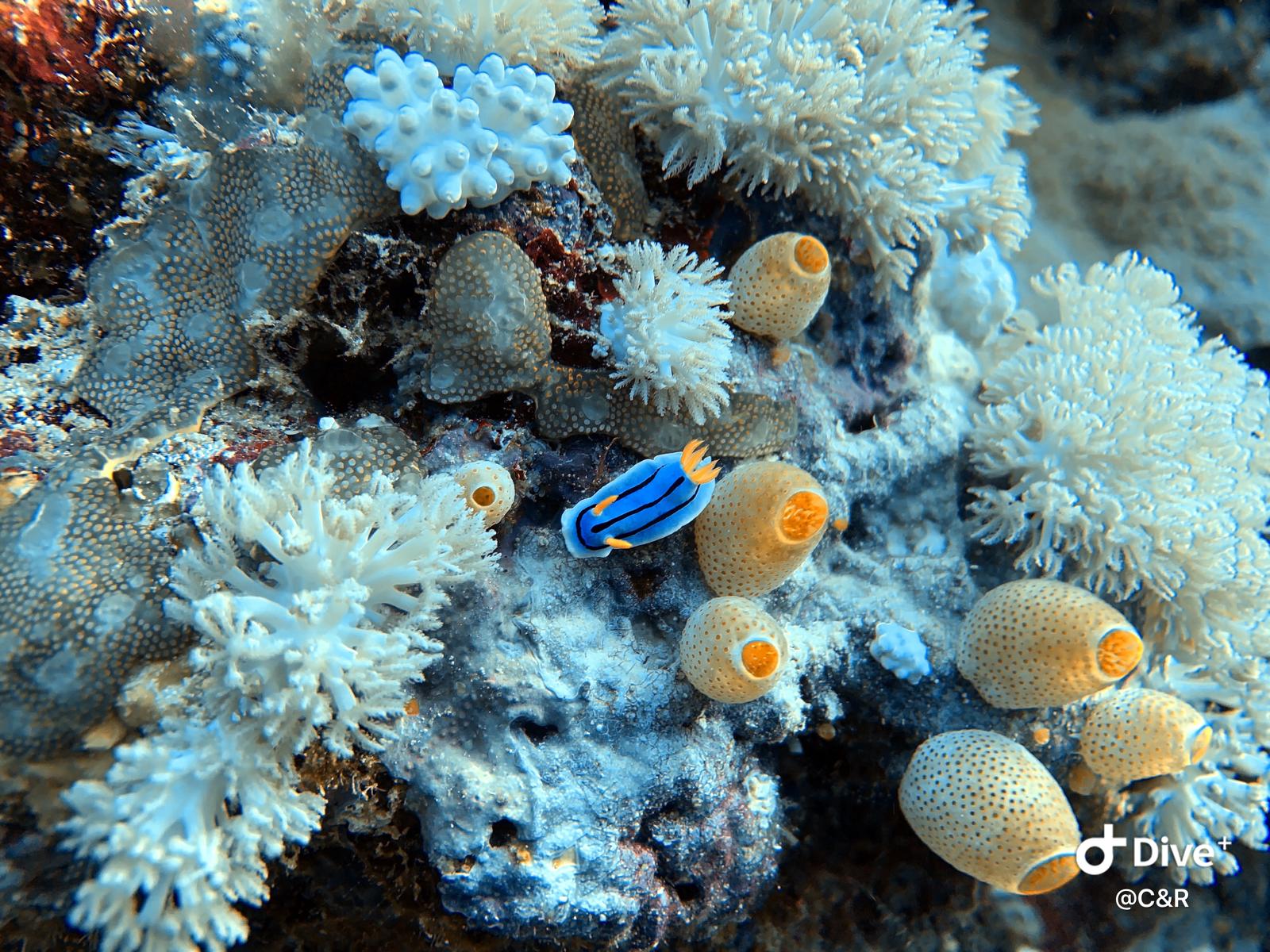
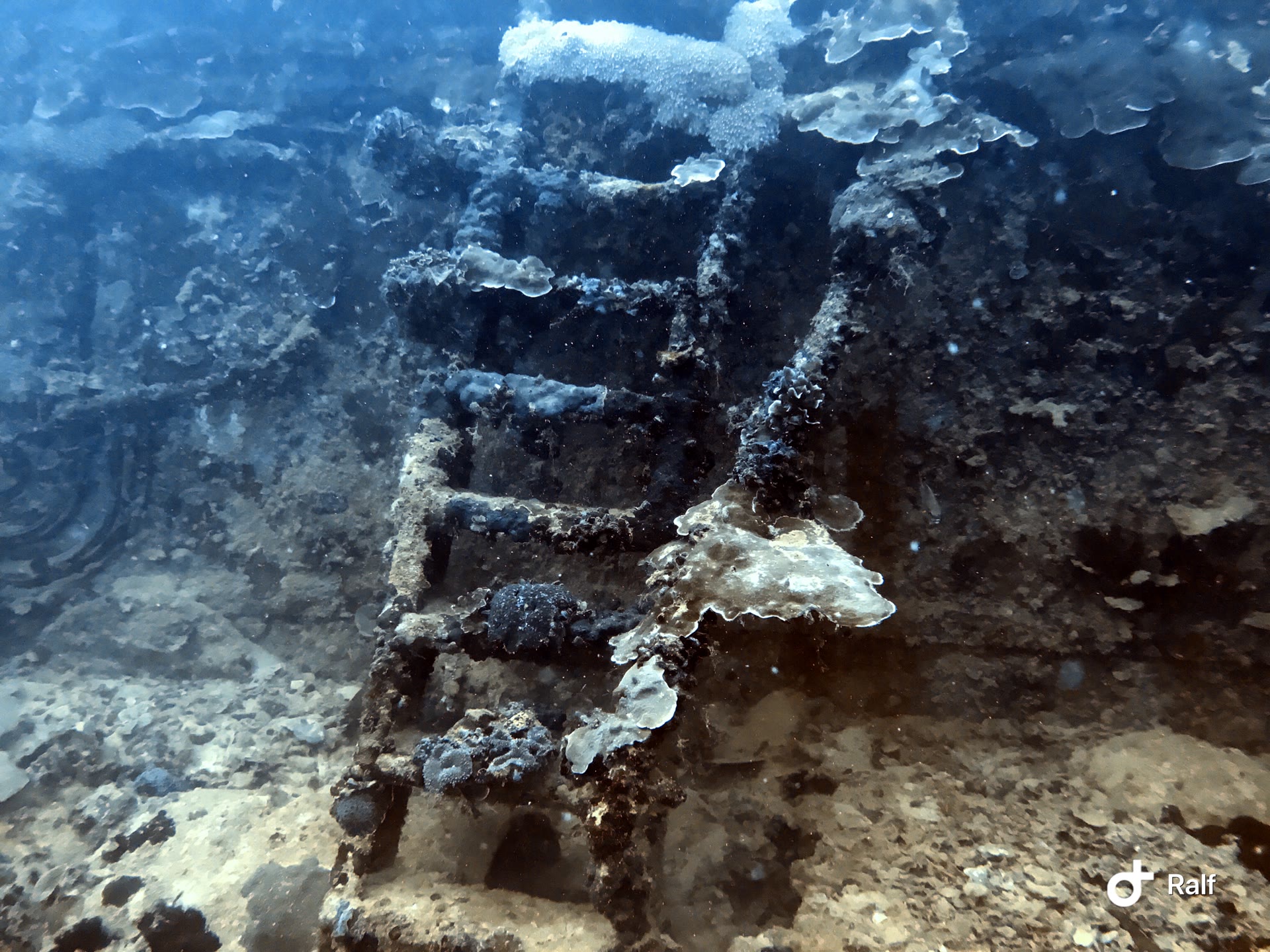
Palau's seafloor is littered with WWII shipwrecks and aircraft lost in battle. The chain of islands' proximity to Southeast Asia and Japan made it the location for several fierce battles. Today the remnants of ships, planes, tank tracks, bullets, and guns are left behind — coral-encrusted and an incredible sight for divers.
The transformation of war machinery into artificial reef over decades produces a specific combination of historical weight and natural beauty that is unlike any other dive environment. A gun turret covered in soft coral, a cargo hold now inhabited by lionfish, the silhouette of an aircraft wing at 30 metres — these dives carry a different quality of attention than reef dives.
The Blue Hole: Gateway to the Corner
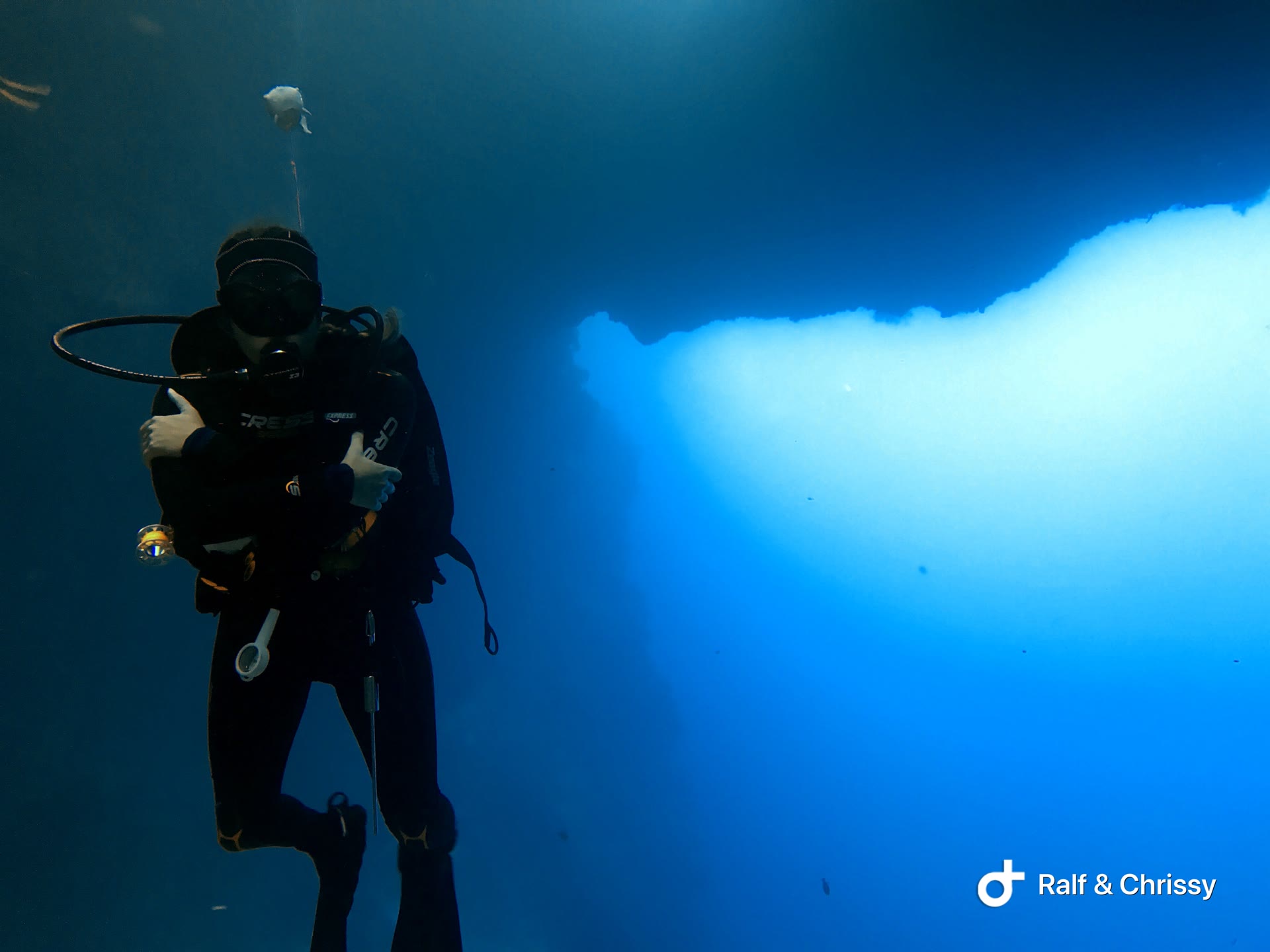
The Blue Hole is a large cavern system in the reef, entered from above and exited through a window in the wall that leads directly to open ocean. The walls of the cavern are filled with sponges, crustaceans, black corals, and reef fish. Inside the Blue Hole, divers exit by the "window" and do a drift dive, finding their way to the Blue Corner dive site. The transition from enclosed cavern to open blue water is immediate and dramatic — one moment you are in a cathedral of rock, the next you are on the wall.
Blue Corner: The Best Single Dive Site We Have Ever Been To
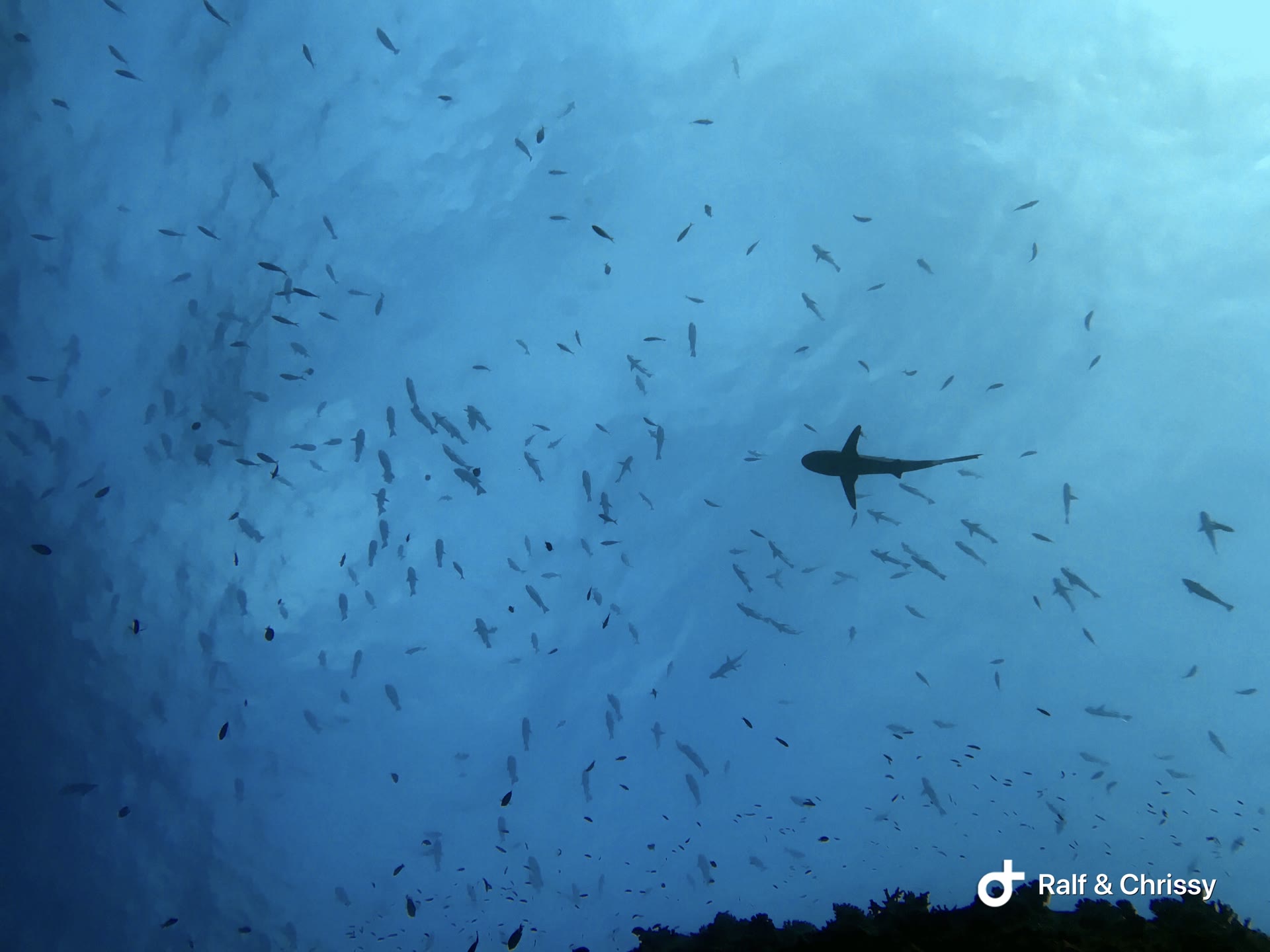
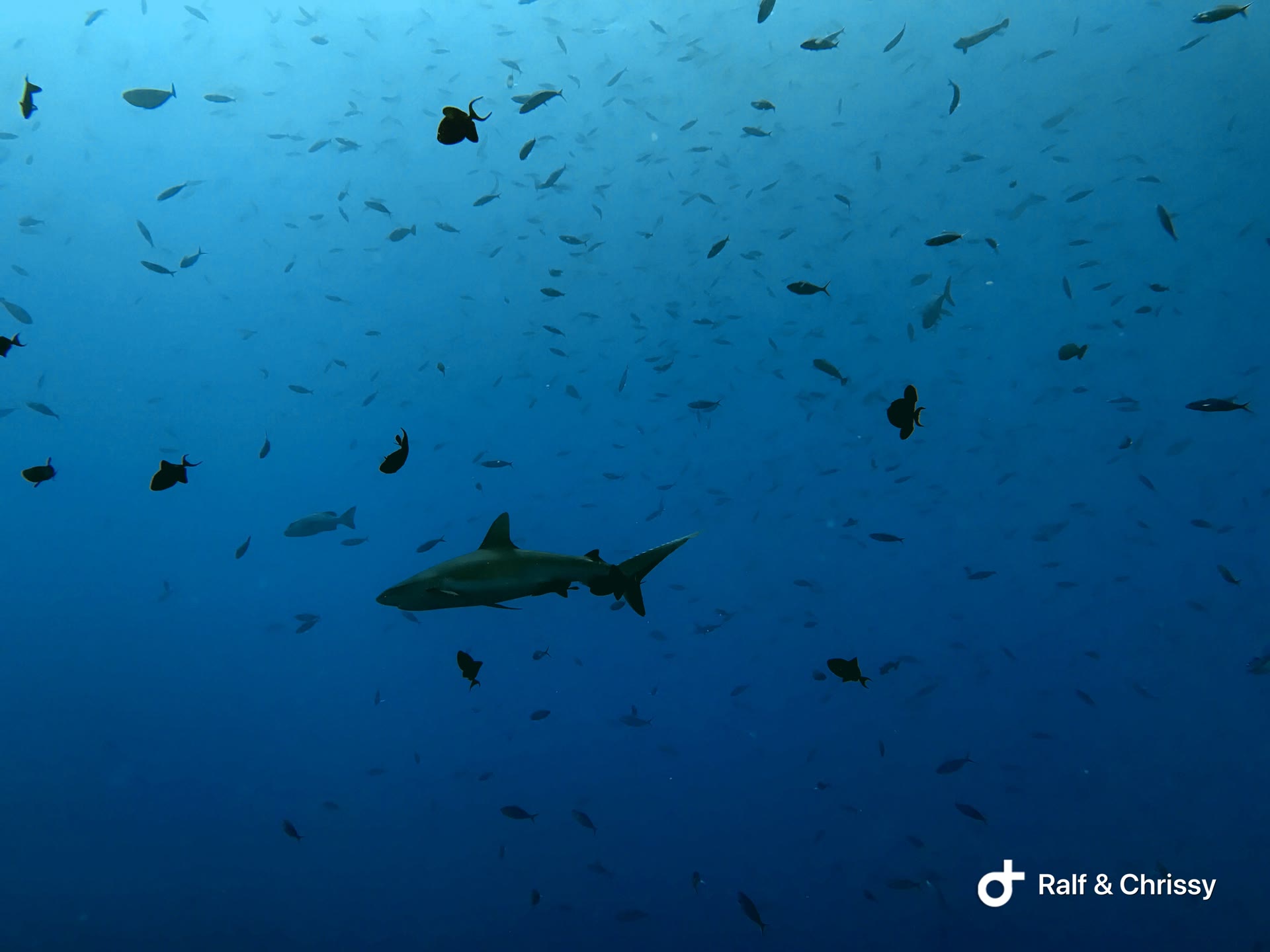
Blue Corner is Palau's most famous dive site and possibly its most exciting — well known for its strong currents and triangular plateau that drops into the deep blue ocean, attracting schools of barracuda, grey reef sharks, and eagle rays. Divers often hold onto the rocks near the reef and stay in one spot, allowing the current to present an unforgettable experience of witnessing marine life of such magnitude.
The process: enter the water, fight the current to reach the corner, find a rock at depth, deploy the reef hook, and stop moving. What follows requires nothing from you except attention. The current does its work. The marine life comes to you.
Blue Corner has incredible marine biodiversity, providing ample opportunities to encounter schools of jacks, grey reef sharks, and even pelagic species like eagle rays or hammerhead sharks. Its stunning coral formations provide shelter for countless reef fish and macro life. The Blue Corner is also known for its strong currents — while the current brings nutrient-rich waters that attract various marine life, divers are recommended to use reef hooks to stay in place.
Bluefin tuna cutting through the current. Grey reef sharks in steady patrol. Whitetip sharks resting on the sandy bottom below. Schools of barracuda in tight formation catching the light. Giant barracuda holding position alone. All of it happening simultaneously, the marine life living its life with complete indifference to the line of hooked-in divers watching from the wall. The dive does not feel like an observation — it feels like being briefly and temporarily allowed into something that was already happening.
We did Blue Corner on multiple dives across the trip. Every dive was different. The same species, different arrangements, different current angles, different light. We would have gone back every remaining day if the logistics had allowed.
Peleliu: The Better Base for the Best Sites
After our last organised dives with Palau Dive Adventures on December 29th, we wanted more — and Koror was not the right base for what we wanted more of. Peleliu Island, at the southern end of the archipelago, sits considerably closer to the key outer reef dive sites. It is quieter, has almost no tourists, and requires a short domestic flight from Koror.
Peleliu boasts dramatic, current-swept walls such as Yellow Wall and Peleliu Corner, making it an ideal location for spotting larger pelagic fish in a more remote and rugged environment. We found a local operator willing to take us to Blue Corner from the Peleliu side. We arrived before the boats from Koror. We were completely alone at one of the world's most famous dive sites on New Year's Day. The dive was everything the previous Blue Corner dives had been, plus silence.
The domestic flight between Koror and Peleliu also delivers something that cannot be accessed any other way: the aerial view of the Rock Island formations at low altitude. Many visitors specifically charter flights over the islands because the aerial perspective — the limestone mushrooms, the coral gardens visible through shallow water, the channels and passes — is one of the most visually extraordinary things the Pacific offers. The domestic flight gives you this as a practical necessity rather than an add-on. We ticked both boxes at once.
The Aerial Surprise: Above the Islands
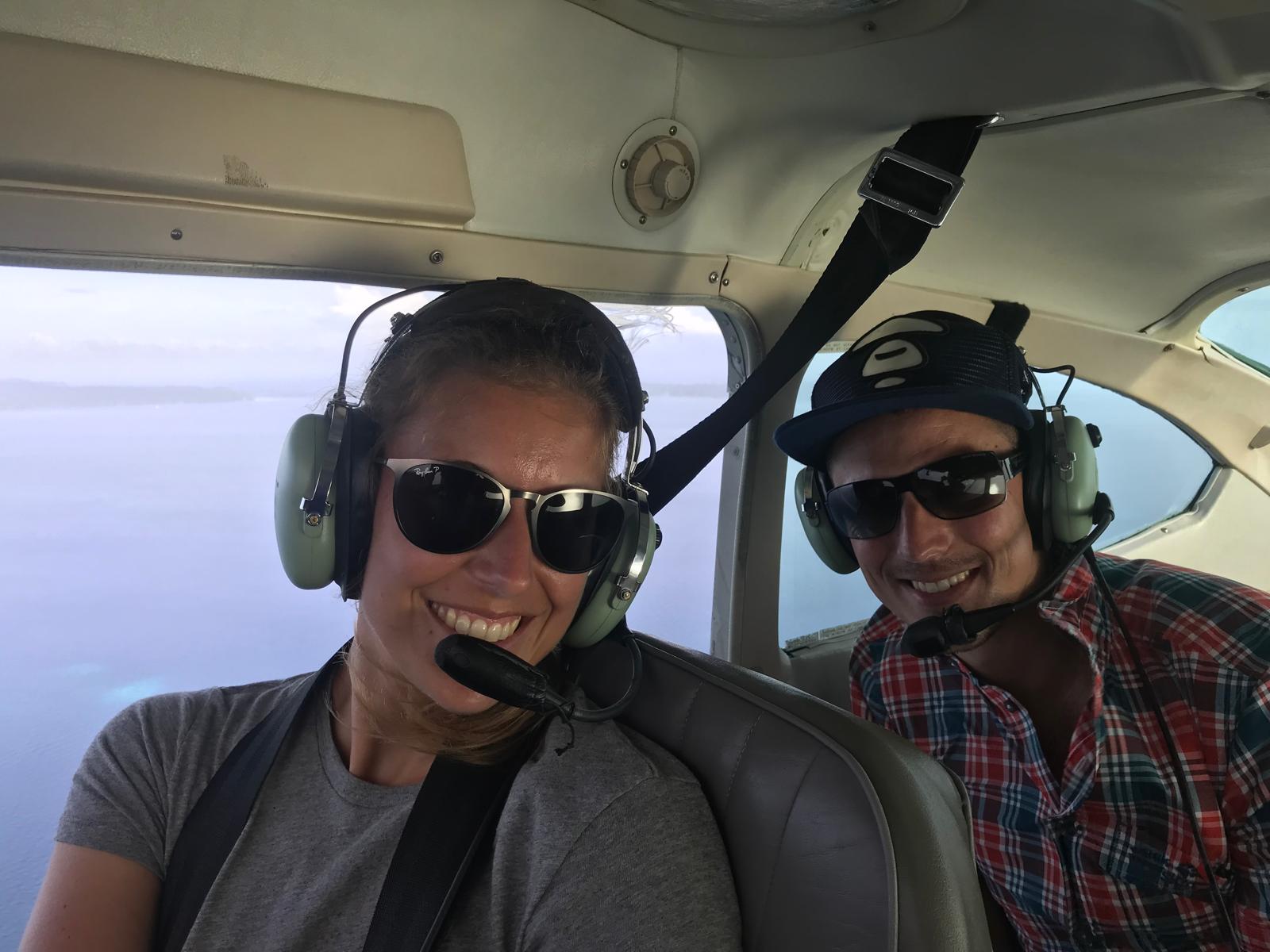
Before leaving, Palau Dive Adventures gave us a gift: a 30-minute flight over the archipelago in a small aircraft. We passed directly over the sites we had dived, over the Rock Islands from above, over the lagoon in its full extent. Chrissy took the controls briefly during the flight — a moment that is not easily described to someone who has not been handed the yoke of a small plane over one of the Pacific's most beautiful island chains.
There are experiences in travel that money can buy and that remain priceless regardless. This was one of them.
If We Went Back: The Liveaboard Case
The single change we would make on a return trip is the accommodation and diving base. Due to its remoteness, a liveaboard is the best option to explore Palau's dive sites. A liveaboard anchors close to the best sites, eliminating the long morning speedboat runs from Koror. Surface intervals happen on the boat rather than in transit. Night dives become possible at sites you cannot access as day trips. The overall number of dives increases significantly.
For a first visit, the land-based package from Koror works and delivers the main sites. For a return visit with the knowledge of which sites are worth multiple dives, the liveaboard is the correct format.
Palau Dive Adventures delivered well beyond what the package promised, and we recommend them without reservation for anyone based in Koror. But the island itself, and the ocean around it, is best experienced from the water — as close to the sites as possible, for as long as the schedule allows.