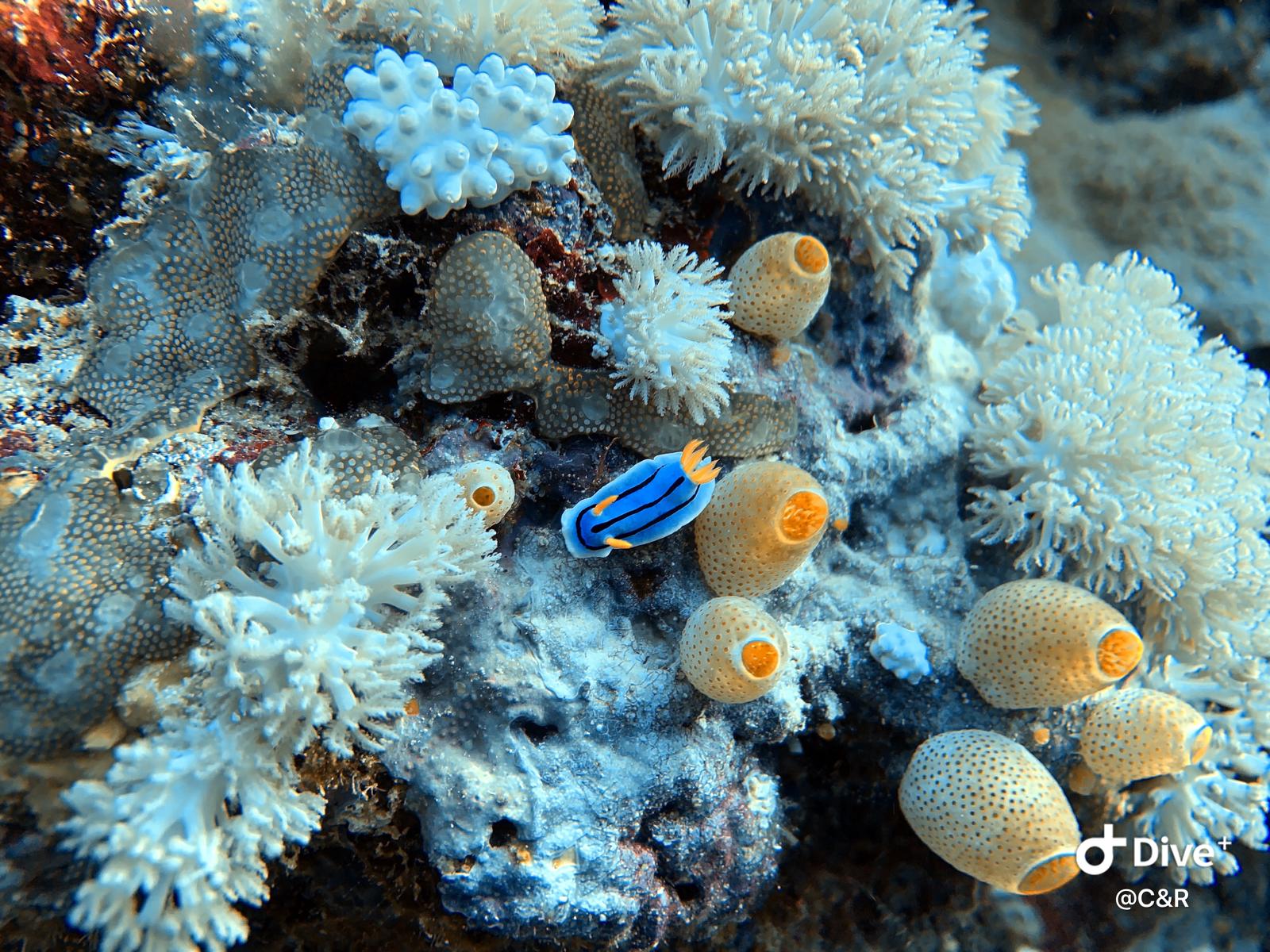
In 2017 we took three weeks in Malaysian Borneo. We came for the diving and stayed for everything else. Sipadan was the last dive of the trip and the first one that genuinely reset every expectation we had built across years of diving. Here is the full story — and why everything leading up to it mattered.
How We Got There
The trip started the way many of our best travel adventures have: Ralf was on a project for Mercedes in Shanghai, and Chrissy flew from Germany to Kuala Lumpur, where Ralf met her directly at the airport after the project wrapped. A few hours in transit, a domestic flight to Kuching, and Borneo began.
Kuching: The Cat City
Kuching, the capital of Sarawak on the island of Borneo, translates directly from Malay as "cat" — which is why you will find cat statues, cat museums, and cat murals distributed around the city with a cheerfulness that might seem excessive until you realise the city genuinely commits to the theme. The city sits along the Sarawak river and has an old town worth a day of exploration — colonial shophouses, waterfront promenades, and a food scene anchored in the Sarawakian culinary tradition.
We had fantastic seafood in Kuching — the city's proximity to the South China Sea and its Chinese-Malay culinary heritage combine well. Sarawak laksa for breakfast is a specific pleasure that justifies the flight from almost anywhere.
Bako National Park: Wildlife Before Water
A day trip from Kuching to Bako National Park was the right move. Bako is Sarawak's oldest national park, gazetted in 1957, covering 27 square kilometres of coastline and jungle accessible only by boat from the small village of Kampung Bako — about 40 minutes from the city. The park encompasses seven distinct ecosystems: mixed dipterocarp forest, mangrove, beach vegetation, cliff vegetation, heath forest, grassland and peat swamp — an unusual concentration of Bornean habitat types in a compact and accessible space.
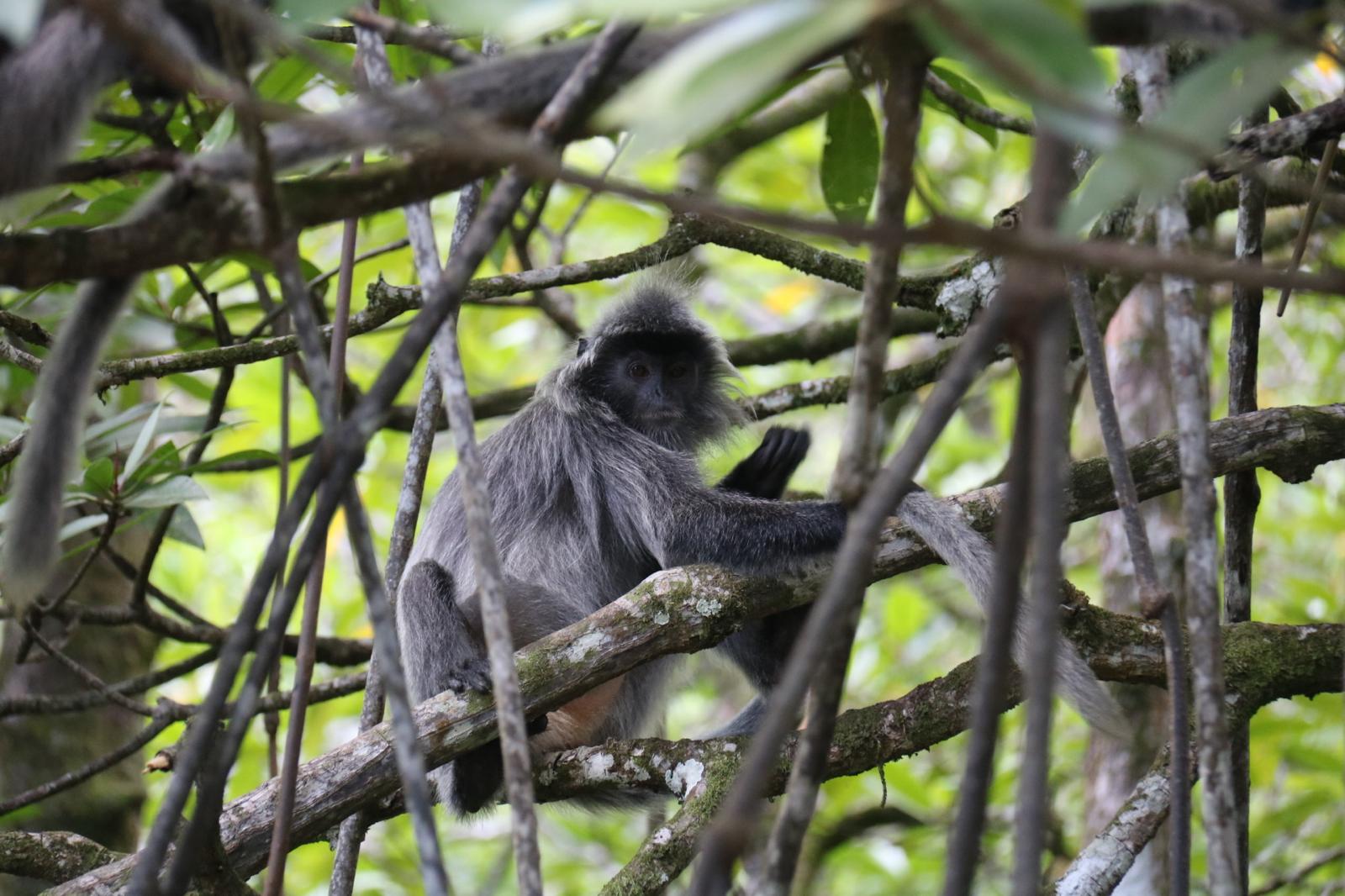
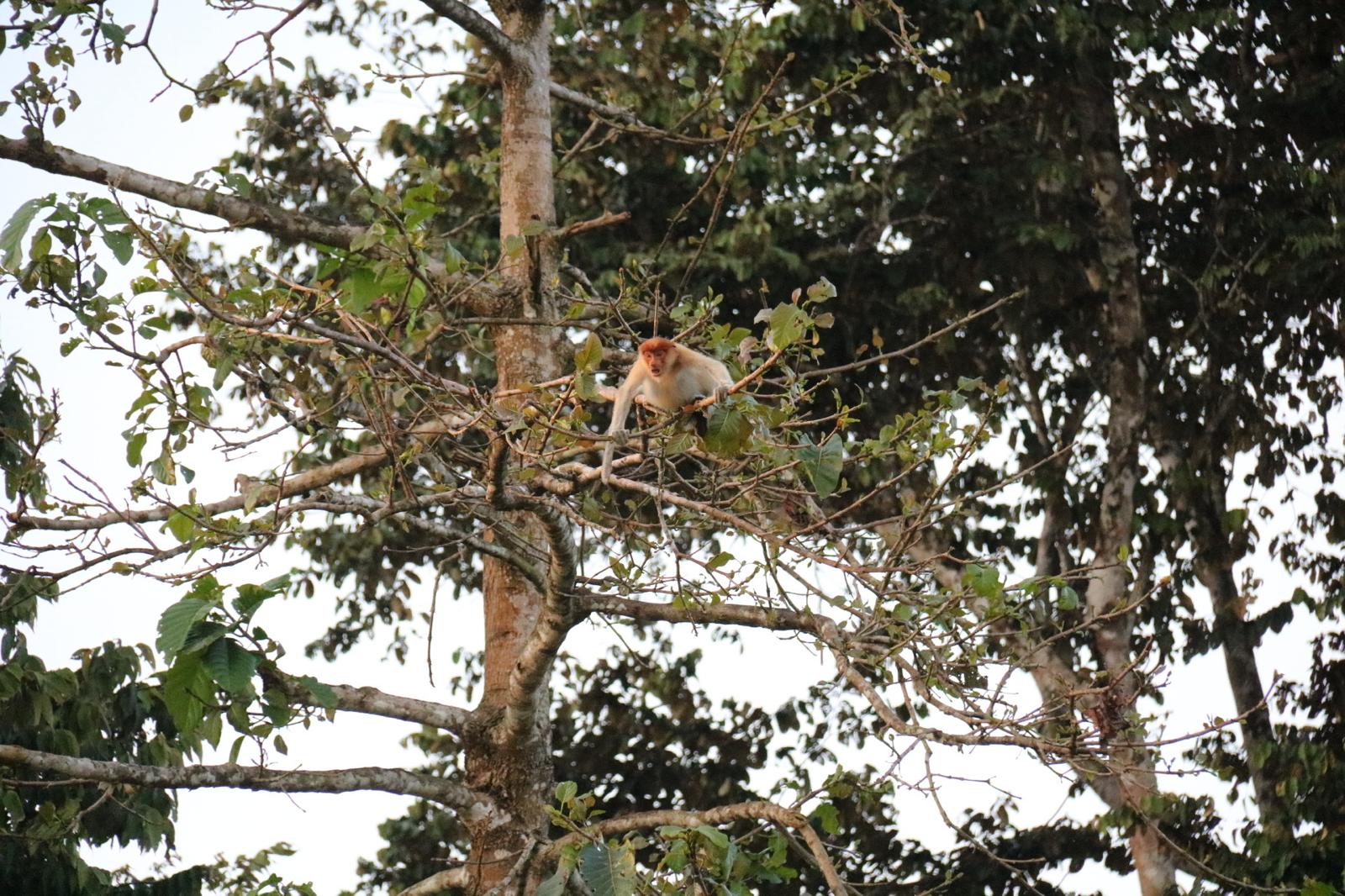
The star attraction is the proboscis monkey, endemic to Borneo, found nowhere else on earth. An estimated 275 proboscis monkeys live in Bako, with males identifiable by a large pendulous nose and considerable pot belly that makes them one of the more immediately recognisable primates on the planet. We saw them. Silver-leaf monkeys, bearded pigs, long-tailed macaques, monitor lizards — Bako delivers wildlife in the way that national parks this close to a city rarely do. The animals have been protected since 1957 and behave accordingly: curious rather than avoidant.
Kota Kinabalu and Into the Jungle
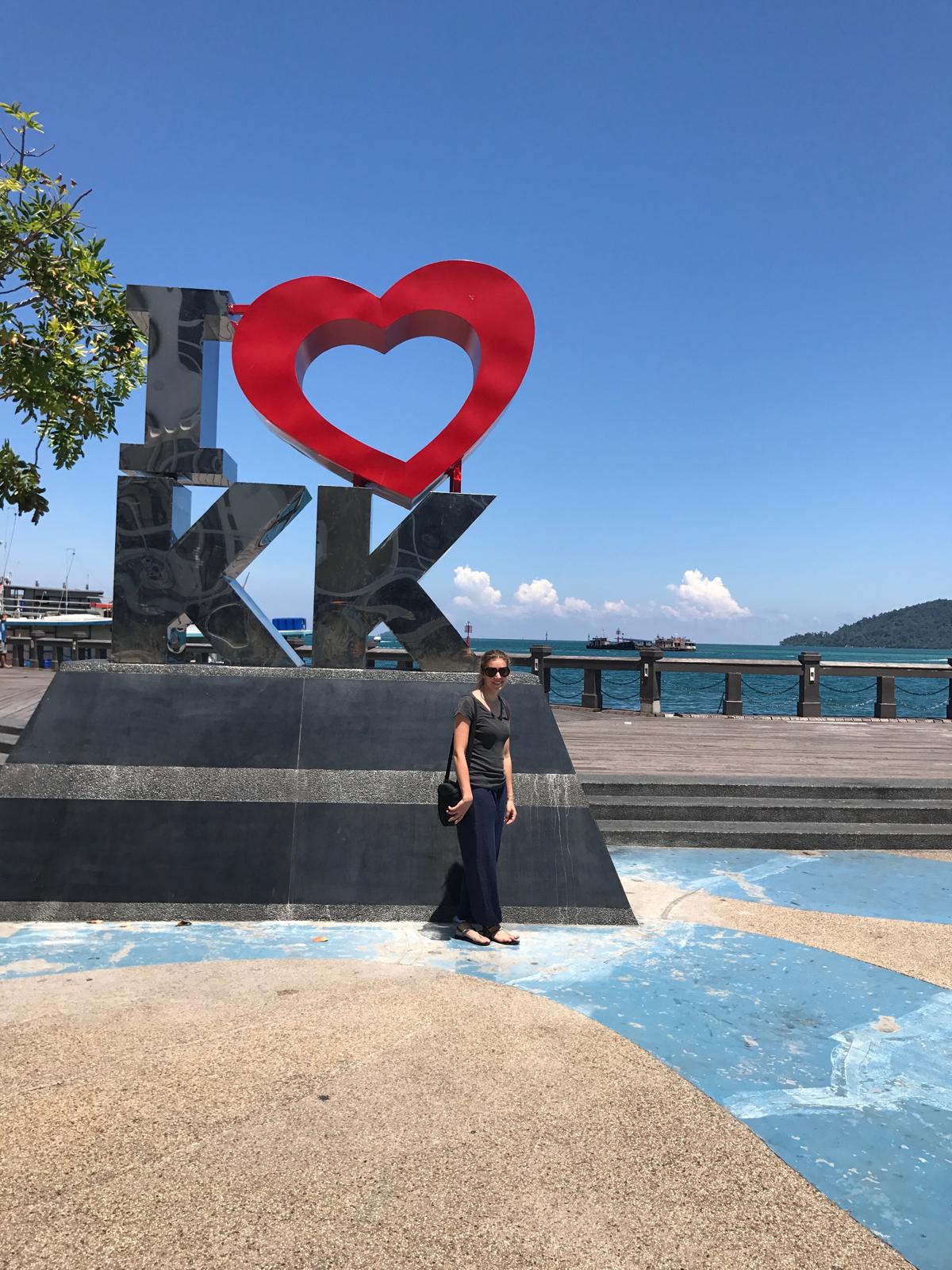
From Kuching a short flight north to Kota Kinabalu in Sabah, and two nights at a river lodge in the rainforest interior. The activities in this part of Sabah are what attract serious nature travellers: night walks through primary jungle tracking nocturnal species, river boat trips at dusk when the wildlife is moving, and the kind of dense humidity that makes you understand immediately why this ecosystem is so productive and so demanding simultaneously. Kota Kinabalu is also, importantly, where the major dive operations managing Sipadan access have their headquarters — which is where we went as soon as we had organised the jungle portion of the trip.
Organising Sipadan: Why You Cannot Just Turn Up
Dive tourism almost ruined Sipadan. It used to have a dive resort as well as large numbers of divers from surrounding resorts visiting daily. In 2004 a decision was made to close the resort and limit the number of divers to just 120 per day. The permit system that followed is what makes Sipadan both exceptional and logistically complicated.
Sabah Parks issues 176 permits daily, divided among the dive resorts and centres operating in the area, with larger resorts receiving more permits. Each permit allows one day of diving at Sipadan, with a maximum of two dives per visit. Advanced Open Water certification is the minimum standard required. The permits cannot be obtained directly — they come through licensed tour operators registered with Sabah Parks.
We arranged everything through Borneo Divers in Kota Kinabalu, one of the most established operators in the region. Our package guaranteed one day at Sipadan, with additional days possible depending on permit availability — which, in practice, depends on luck and timing. We arrived hoping for more than one day and prepared for the reality that we might get just the one.
Sandakan and the Orangutan Sanctuary at Sepilok
From Kota Kinabalu a short flight east to Sandakan — and here comes one of Malaysian Borneo's bureaucratic quirks: even though it is all part of Malaysia, each state within Borneo requires its own entry stamp, so the passport accumulates pages on a trip that never technically leaves the country. Sandakan was the base for two activities before the dive leg began properly.
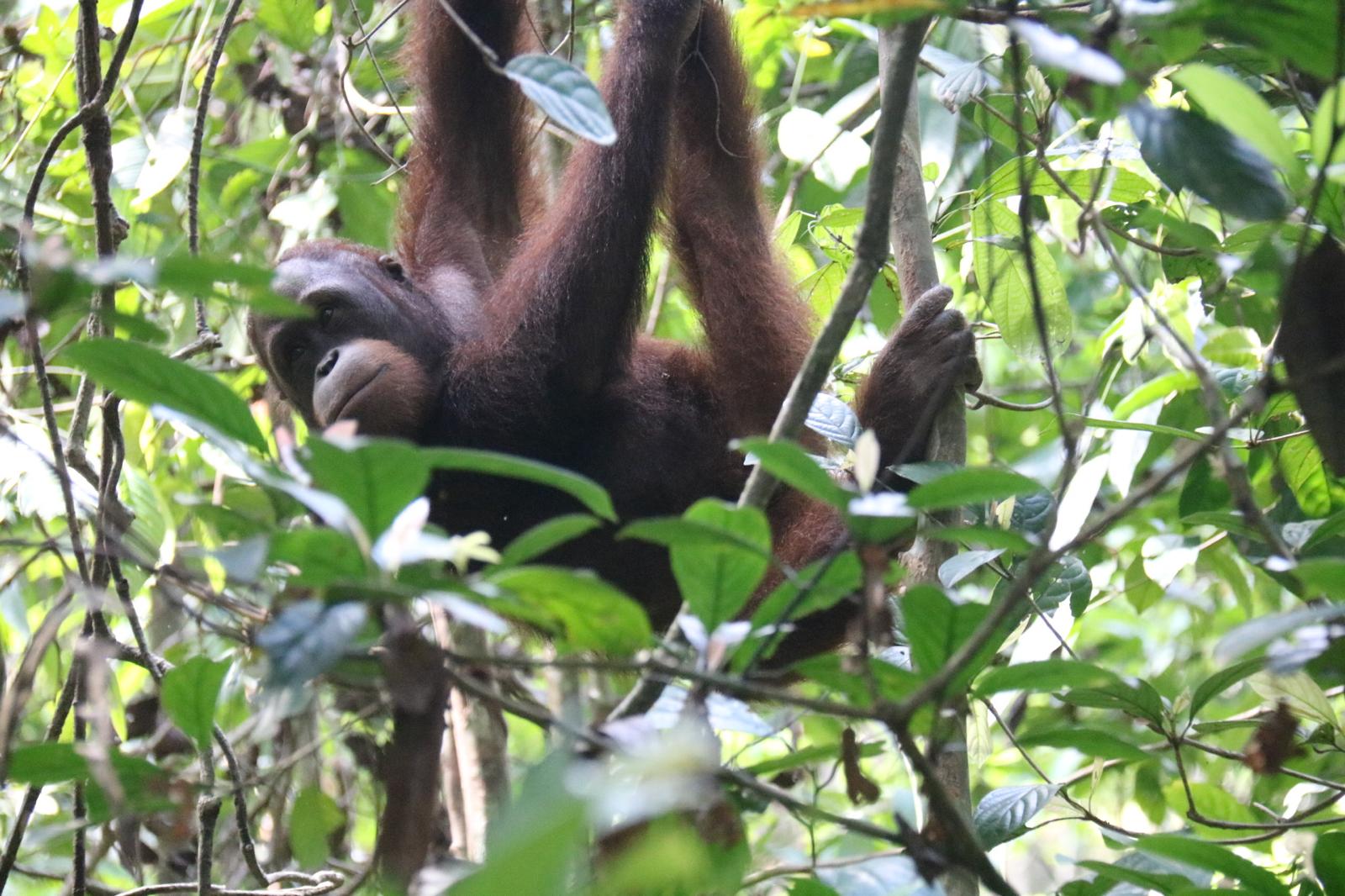
The Sepilok Orangutan Rehabilitation Centre is one of the world's most respected great ape rehabilitation programmes — rescued and orphaned Bornean orangutans are brought here and gradually prepared for return to the wild, with twice-daily feedings at a platform accessible to visitors. Watching a young orangutan swing down from the canopy and help itself to fruit while completely ignoring thirty cameras pointed at it is one of those wildlife moments that translates poorly to photographs and stays vivid in memory.
Lankayan Island: The Unexpected Treasure
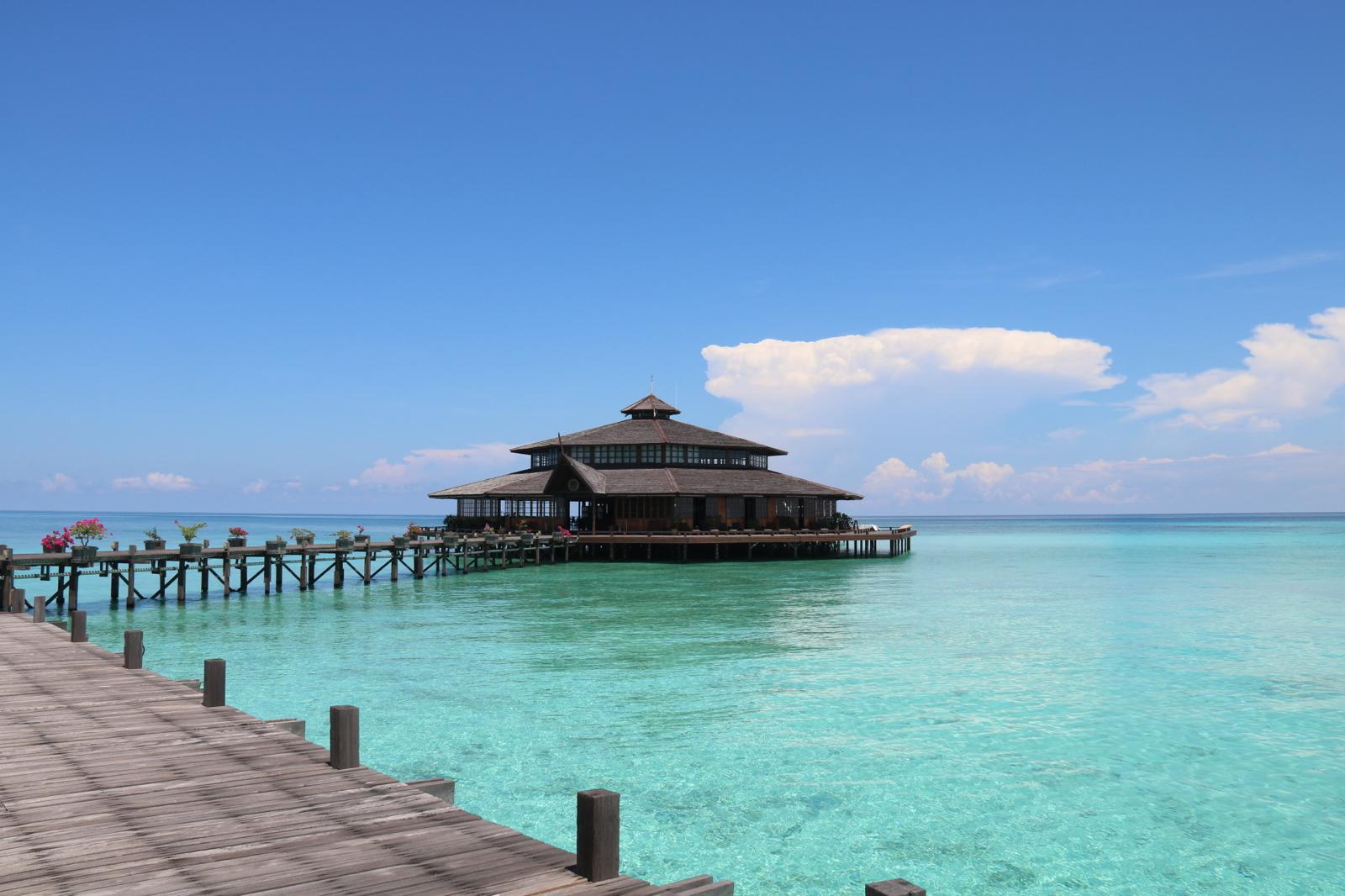
Before Sipadan, the programme included a few nights at Lankayan Island — a small, remote island in the Sulu Sea roughly two hours by boat from Sandakan. This was the first genuinely remote dive destination of the trip, and the journey there introduced something we had not fully anticipated: a heavily armed soldier on our boat, and a military escort vessel running parallel throughout the crossing.
The Sulu Sea between Malaysian Borneo and the southern Philippines has a history of piracy and kidnapping that the Malaysian authorities treat seriously. The armed escort was not theatre — it reflected the genuine security situation in this particular stretch of water. It was, in its own way, one of the more memorable parts of the trip.
Lankayan itself delivered completely. Lankayan Island is known also as Turtle Island, acting as a nesting site for turtles that are visible on almost every dive. We had endless turtle encounters — drifting alongside animals that showed no interest in us, resting on the sandy bottom at 15 metres, swimming up through the blue to the surface. Visibility exceeded 30 metres on most dives. We saw guitar sharks — a species that looks like the product of a creative accident between a shark and a ray, lying flat on the sand and difficult to spot until you are almost directly above them. We came back to the surface after each dive with the quiet conviction that it probably didn't get much better than this.
Sipadan proved us wrong.
The Journey to Sipadan: Tawau, Mabul, Patience
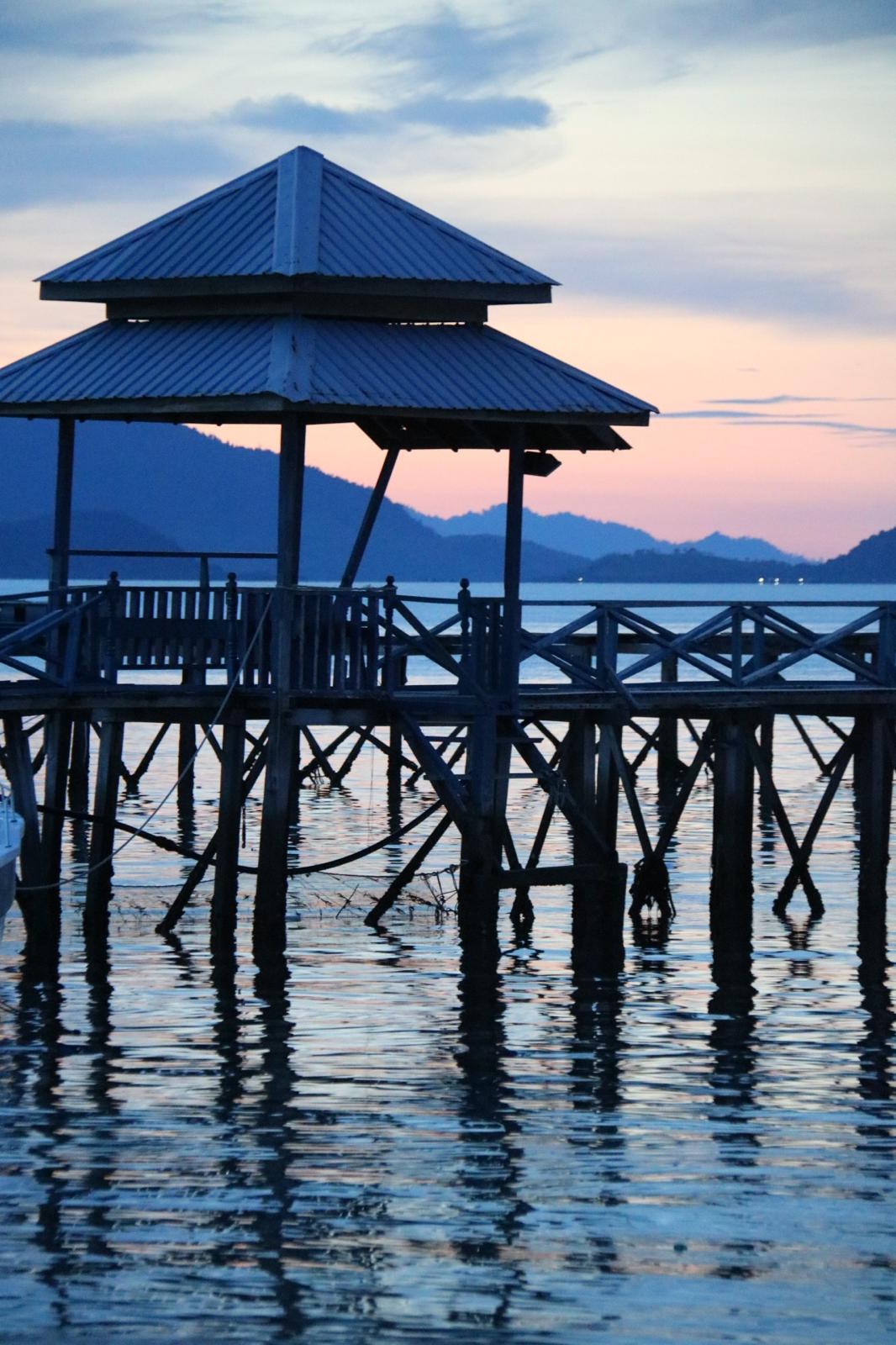
Back to Sandakan, then another small aircraft to Tawau in the far southeast of Sabah. Borneo Divers had organised a pickup — a drive to the coast, then a boat across the Celebes Sea to Mabul Island. Since 2004 there has been no accommodation on Sipadan Island itself, and no resort will be built there. Mabul is the closest island from which Sipadan is dived — a small, sleepy island with a few dive resorts, more resident fishermen than tourists back then, and the kind of unpretentious character that comes from a place that exists independently of the tourism around it.
The diving around Mabul itself is worth noting. Divers and divemasters who stay long term in the area often come to prefer the nearby islands to Sipadan itself — Sipadan is better for pelagics and large fish, while the surrounding islands offer rare and extraordinary macro marine life and different species of sea turtle on almost every dive. We had several Mabul dives while waiting for permit news. They were good. The muck diving and macro life that Mabul is famous for — pygmy seahorses, frogfish, blue-ringed octopus — kept us occupied and interested between the main event.
The main issue: the trash. The local fishing community on Mabul used the ocean as a disposal site in the way that communities without waste management infrastructure often do out of necessity rather than indifference. The contrast between the underwater world and the surface environment was stark enough to notice and worth noting honestly.
Sipadan: The Day That Reset Everything
The permit confirmation came. One day. We took it.
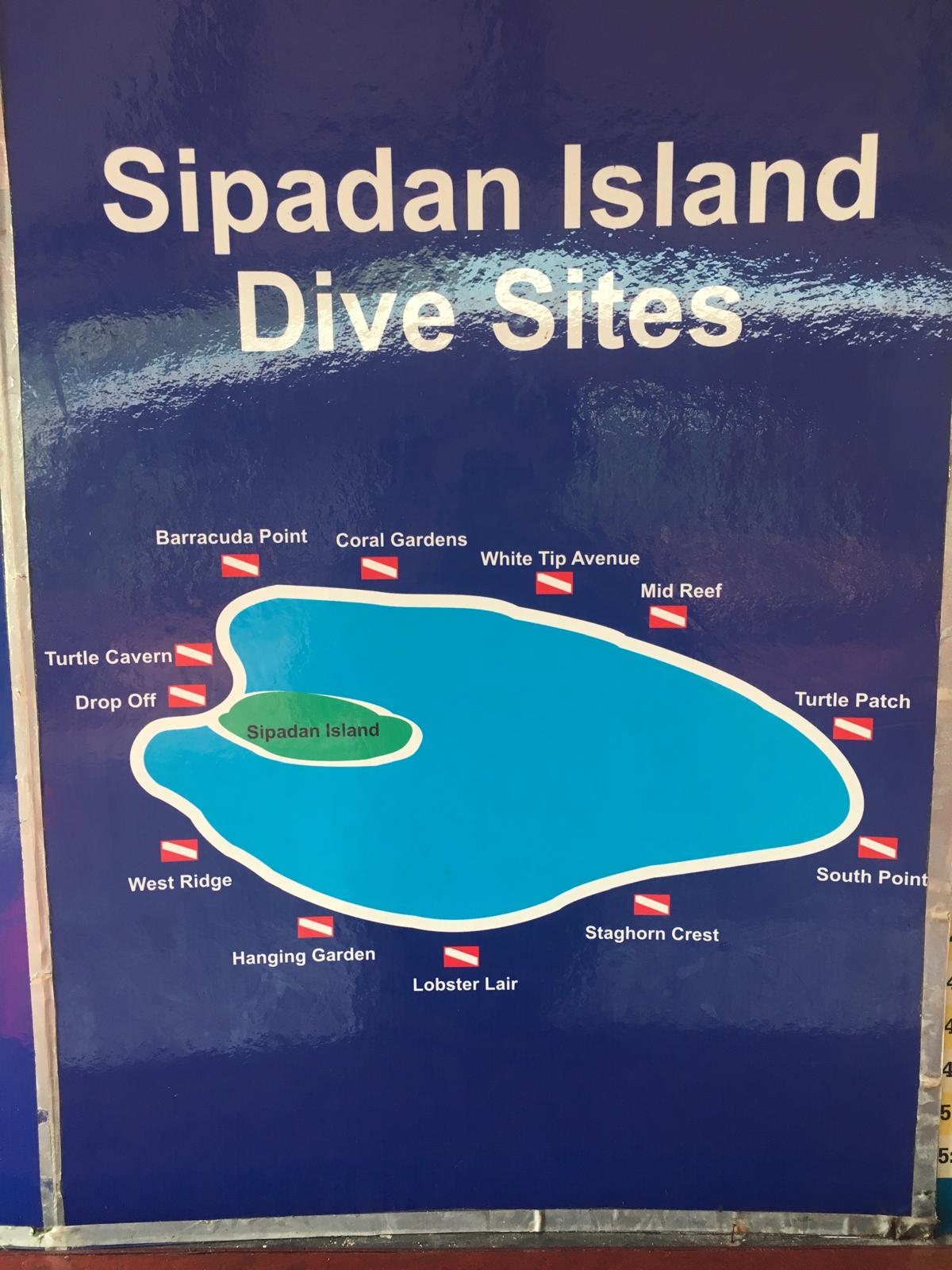
Sipadan is Malaysia's only oceanic island — a towering underwater pinnacle rising from 600 metres to break the surface, its walls draped in coral that has been developing for thousands of years, its waters home to more than 3,000 species of fish.
The first descent told us immediately that the hype was not hype. The visibility was extraordinary — the kind of visibility where you can see the curvature of the wall and the reef structure laid out below you as clearly as a diagram. The walls were densely coloured in a way that photographs approximate but do not fully capture — hard and soft corals, sea fans, overhangs hosting sleeping sharks, the constant movement of fish in volumes we had not seen outside the Indo-Pacific's most famous sites.
At Barracuda Point, divers enter a vortex of chevron barracuda spiralling above the wall — it is not guaranteed, but the chances are as good as anywhere on earth, and grey reef sharks patrol the perimeter continuously. We were in the middle of the formation. The current pushed through and the barracuda held their position, rotating slowly, the school so dense it created its own light effect as it moved between us and the sun.
Green turtles were everywhere — resting in overhangs, grazing on the reef, ascending to the surface past our bubbles in a steady procession that made counting pointless. The guides told us afterwards that 20 turtles on a single dive was unremarkable here. We stopped trying to track them individually and simply accepted that they were everywhere.
And then: a leopard shark. Lying in the corals at moderate depth, the distinctive spotted pattern of a species that is genuinely uncommon at Sipadan, long enough to require a second look to confirm what we were seeing. The dive guide's eyes went wide above their mask. Back on the boat, the reaction from the local divemasters confirmed it — not common, not expected, exactly the kind of encounter that Sipadan occasionally delivers to people who are paying full attention.
We did not get a second permit day. We spent the remaining time on Mabul, genuinely content rather than frustrated — which is itself a measure of what the one Sipadan day had delivered.
The Return and the Wedding
Back to Tawau, another flight to Kota Kinabalu, two more nights of outstanding Borneo seafood and the firm intention to return. Chrissy flew back through KL to Germany. Ralf flew to Shanghai to wrap the Mercedes project, then home to Stuttgart.
The timing was tight. Ralf landed at Stuttgart Airport at approximately 10am. Chrissy picked him up. They got ready, met family, and were at the notary in Stuttgart-Wilhelma at 2pm for the official ceremony that made them legally married under German law. No champagne tower, no hundred guests, no special wedding dress — that would come the following year in the Philippines with friends flying in from three continents. This was paperwork nicely wrapped, family, a brief celebration, and the knowledge that the bigger party was already being planned.
Ralf departed for the next chapter – life in Hong Kong – a few weeks later. Borneo remained on the list marked "return when possible."
Planning Your Sipadan Trip
Plan to stay between 4 and 14 days if you want to maximise your chances of multiple Sipadan permit days. The permit rotation system means that longer stays significantly improve the odds, as permits are not allocated on a first-come-first-served basis but through a system that gives each resort a daily allocation.
Book through a licensed operator well in advance — Borneo Divers and Scuba Junkie are among the most established operations with Sipadan permits. Base yourself on Mabul or Kapalai for access. Advanced Open Water certification is required; if you are not yet at that level, the Mabul macro diving provides ample reason to be there anyway.
The journey is long and the logistics are complicated. Do it anyway.